 How-to
How Do You Request a Tow in Melbourne Safely?
Last Updated: October 29, 2026
Quick Summary
To request a tow in Melbourne safely, move everyone behind a barrier away from traffic, confirm your exact location with a landmark, and describe your vehicle. Check who you are speaking to, confirm the company name and arrival time, and ask what you need to sign before agreeing to anything.
- Switch on hazard lights, pull as far left as you safely can, and turn wheels away from the road.
- Tell the operator four things: where you are, what happened, your vehicle, and the destination.
- Ask for the price or pricing basis before the truck is dispatched and get it confirmed in writing.
- Never hand your keys to a driver you did not call or who was not dispatched.
- If your car is stuck in a live traffic lane, call Triple Zero (000) first, then arrange the tow.
Table of Contents
- The First Five Minutes: Securing the Scene Before You Request a Tow
- How to Request a Tow in Melbourne Safely
- What to Tell a Tow Truck Operator on the Call
- Finding a Safe Place to Wait for a Tow Truck
- Verifying the Operator Before You Hand Over the Keys
- The Accident Towing Process, Step by Step
- Where to Tow a Damaged Car
- Request My Tow: Getting Help Moving
- Frequently Asked Questions
The First Five Minutes: Securing the Scene Before You Request a Tow
The most dangerous part of a breakdown is the time before help arrives. When you need to request a tow in Melbourne, your safety comes first, and the tow comes second.
Here is what to do in the first five minutes:
- Switch on your hazard lights straight away.
- Pull as far left as you safely can.
- Turn the wheels away from the road.
- Put your passengers behind a barrier, not beside the car.
Crash or Breakdown? The Two Different Paths
These are not the same situation, and they do not follow the same steps.
A breakdown is a mechanical failure. You choose who tows your car. You can call a local towing service, compare quotes, and pick your destination.
A crash is different. Under Victoria's accident towing rules, a tow from a crash scene is dispatched through the official allocation system.
That distinction shapes everything that follows.
How to Request a Tow in Melbourne Safely
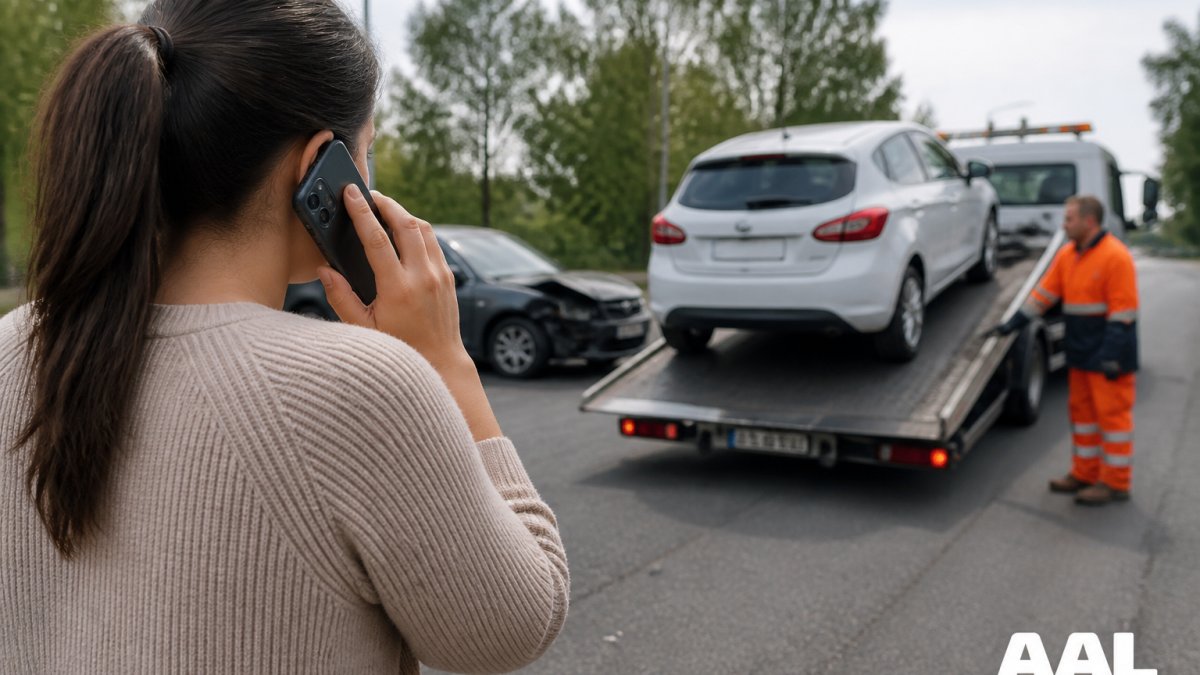
To request a tow safely, move everyone to safety, confirm your exact location, describe the vehicle, and check who you are speaking to before you agree to anything.
The steps below keep the process simple and calm. For a full breakdown of how tow trucks are dispatched after a crash, see Victoria's Accident Towing Allocation System Explained.
- Get yourself and passengers behind a barrier, away from traffic.
- Note the nearest cross street, bridge, or exit sign.
- Call a towing service and state clearly whether this is a crash or a breakdown.
- Confirm the operator's name, company, and expected arrival time.
- Ask what happens next, and what you need to sign.
- Wait somewhere safe, with your phone on.
If you need help outside business hours, the guide to accident towing service availability explains how 24/7 dispatch works and how to arrange a tow fast.
One detail most guides skip: give the operator a landmark, not just a street name.
What to Tell a Tow Truck Operator on the Call
Tell the operator four things: where you are, what happened, what kind of vehicle it is, and where you want it taken. Keep it short.
Have these ready before you dial:
- Your exact location and direction of travel, plus a landmark
- Whether it was a crash or a breakdown
- The make, model, colour and registration of the car
- Whether the car rolls, steers, or is locked up
- Whether anyone is hurt
Also say whether you have personal belongings in the car. If you are unsure whether your policy covers the tow, check before you book, this guide to checking if insurance covers accident towing covers who pays and what to ask your insurer.
A ready-made call script
Use this word for word if you are rattled:
"Hi, my name is [name]. I'm at [location and direction] near [landmark]. I've had a [crash/breakdown] in a [make, model, colour, registration]. The car [rolls/does not roll] and everyone is [out of the vehicle/safe]. I need it taken to [destination]. Can you confirm your company name, the truck's details, and how long until you arrive?"
Read it off your phone if you need to. Nobody will judge you for it.
What to confirm before you hang up
If you do not receive these details, ask:
- The company name and the driver's first name
- The truck's registration or fleet number
- An estimated arrival time, and what to do if it changes
- A contact number to call if you need to update your location
- Confirmation of the destination address in writing, by text or email if possible
What happens after you book
Keep your phone on and stay in your safe waiting spot. If the truck is delayed, call the number you were given rather than flagging down another operator.
If you feel unsafe where you are, say so on the call.
If an unsolicited truck arrives first
At crash scenes, tow trucks sometimes arrive before the one you or the dispatch system arranged. Do not hand over your keys to a driver you did not call or who was not dispatched. Confirm the company name, ask to see identification, and check the truck's business name and phone number before anything is loaded. The section below covers the full verification process.
Finding a Safe Place to Wait for a Tow Truck
The safest place to wait is behind a barrier and well back from the road, never in the car and never on the traffic side.
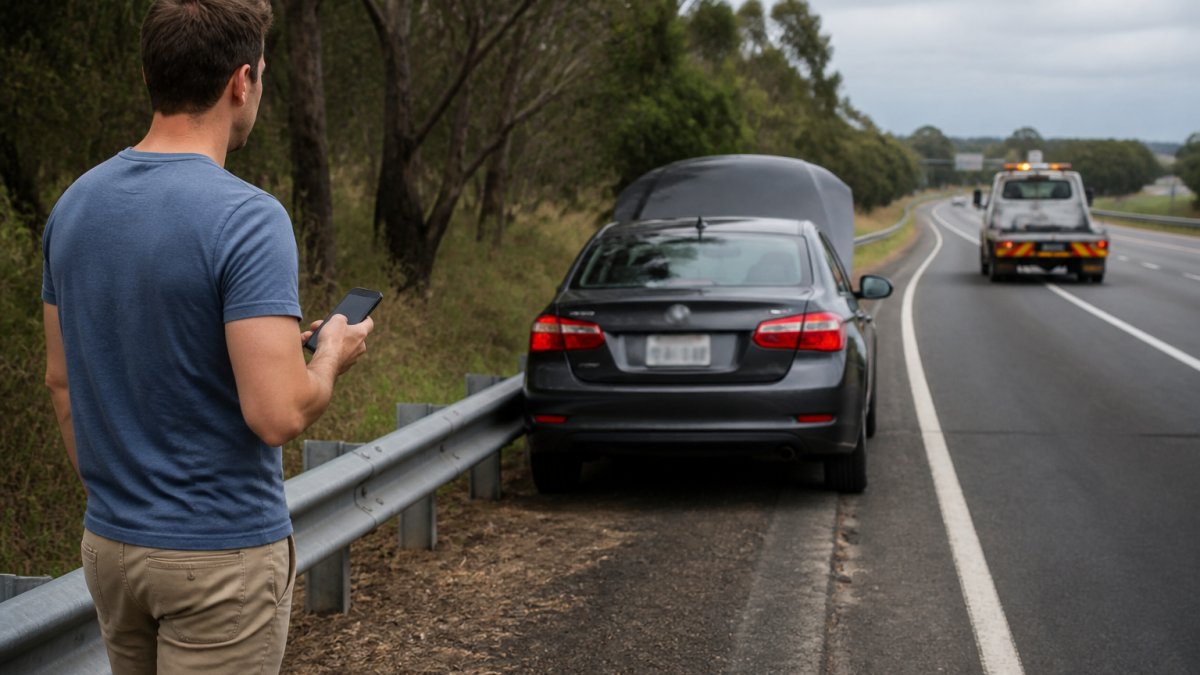
Watch out: standing near your boot to "keep an eye on the car" is how people get hit. A stationary vehicle is replaceable. You are not.
On a freeway or highway shoulder
Freeway shoulders are the highest-risk waiting spot because traffic is fast and drivers do not expect a stopped car. If you can roll the car to an emergency bay or behind a concrete barrier, do it. If you cannot, get everyone out on the passenger side, away from traffic, and move well back from the shoulder, up an embankment if there is one.
On a busy arterial road
On roads like the Nepean Highway or Plenty Road, the risk is passing traffic clipping an open door or a person standing on the road side. Pull as far left as you can, turn the wheels away from the road, and wait on the footpath or behind a fence line rather than on the nature strip.
In poor weather or at night
Rain, fog and darkness all reduce how far away a driver can see you. Keep your hazard lights on, and if you have a torch or your phone light, use it to make yourself visible to the tow truck without stepping toward traffic. High-visibility clothing in the boot is worth the small cost if you drive at night often.
If you have children, pets, or a passenger with mobility needs
Tell the operator on the call. Children and pets should be behind a barrier and held close, never left in the vehicle. Say so when you book.
Good places to wait:
- Behind a guardrail or concrete barrier
- Up an embankment, away from the shoulder
- Inside a nearby business, if one is open
- On the footpath, well back from the kerb
Bad places to wait:
- In the driver's seat
- On the traffic side of the car
- Standing between your car and oncoming traffic
- Walking along the shoulder to wave the truck down
Once you are in a safe spot, the next job is making the call count.
Verifying the Operator Before You Hand Over the Keys
Unsolicited tow trucks do turn up at crash scenes. Before you hand over your keys, confirm the company name, ask to see identification, and check that the operator is the one you or the dispatch system arranged.
Five checks worth doing every time:
- The company name matches who you called or who was dispatched
- The driver can show photo identification
- The truck has a visible business name and phone number
- You are told where the car is going before it is loaded
- You understand what you are signing
That last point matters most. Before you sign, read the five checks to make on a towing authority form.
A common mistake is signing to get it over with. Take the extra minute. Ask what the form authorises and who it authorises.
The Accident Towing Process, Step by Step
After a crash, the process follows a set order.
- Make the scene safe. Hazards on, passengers behind a barrier, emergency services called if anyone is hurt.
- Report the crash. If police attend, they manage the scene and the tow.
- The tow is allocated. Crashed vehicles are dispatched through Victoria's official allocation system rather than by you choosing at the roadside.
- The operator arrives and assesses. The driver checks the vehicle and confirms the destination.
- You sign the authority form. Read it first.
- The car is towed to a holding yard or repairer. Confirm which, and get the address.
- You collect your belongings. Ask before the car is loaded.
- Repair and insurance coordination begins. This is where the paperwork starts.
For a mechanical breakdown, you skip steps three and five. You choose the operator and agree the destination.
Where to Tow a Damaged Car
Send a damaged car to a repairer you trust, or to a holding yard if you have not decided yet.
Your options:
| Destination | Best for | Watch out for |
|---|---|---|
| Your chosen repairer | A car you want fixed properly | Confirm they can take it today |
| A holding yard | Waiting on an insurer decision | Ask about storage arrangements |
| Your home | Minor damage, drivable later | Check your insurer's view first |
| A dealership | Newer cars under warranty | Longer wait times |
Ask one question before the truck moves: "Where exactly is my car going, and who do I call to find it?" Write the answer down.
Request My Tow: Getting Help Moving
We connect you to a real person, 24/7, with no call queues. We arrange your tow through Victoria's official accident-towing allocation network, coordinate the repair, and liaise with your insurer on your behalf throughout the process.
We cover Melbourne, Geelong, and the Mornington Peninsula. If you are standing on a roadside right now, get 24 hour accident support.
Frequently Asked Questions
What information should I give when requesting a tow?
Have your location ready, including the road, direction of travel and nearest intersection or landmark. Add your vehicle's make, model, colour and registration, plus whether it rolls, steers or has damaged wheels. State your destination and whether anyone is injured or still inside the car. Ask for the operator's name and an arrival estimate.
How can I stay safe while waiting for a tow truck?
Move behind a barrier or well off the carriageway, keep your hazard lights on and stay visible. Leave the vehicle if it is safe to do so, but do not stand between your car and traffic. Keep passengers, especially children, away from the road edge.
Can I choose where my damaged car is towed?
In Victoria, accident towing is allocated through the official accident-towing allocation network, so the tow is assigned rather than picked freely at the roadside. For breakdowns rather than crashes, ask the operator about the destination. Decide whether the car goes to a repairer, your home or a holding yard, and confirm the destination with the operator before loading. If you are unsure, ask what happens to the vehicle after it is dropped off.
Should I call my insurer before arranging an accident tow?
You can call your insurer first. What matters is keeping records: the operator's details, the quote, the destination and any reference numbers. A coordination service can arrange the tow and liaise with your insurer on your behalf, so confirm your policy position directly with your insurer. Keep photos of the scene and damage for your records.
The roadside is no place to work out a process. Have the number saved, know your location, and let someone else coordinate the rest. Get started with Accident Assist Line and get your car, your repair, and your insurer moving in one call.