 blog
How to Check If Insurance Covers Accident Towing
Last Updated: October 25, 2026
Quick Summary
Accident towing is covered by many comprehensive car insurance policies in Victoria, but cover depends entirely on your policy wording, limits and conditions. Check your Product Disclosure Statement for the towing and storage benefit, the distance limit and any authorisation requirement before you need a tow.
- Accident towing moves a vehicle after a collision, while breakdown towing covers mechanical failure and is usually a separate product.
- Third-party property cover often excludes towing, and third-party fire and theft cover usually does not respond to a collision tow.
- Search your PDS for towing and storage, reasonable cost, nearest repairer and authorisation rather than reading cover to cover.
- Ask your insurer whether they pay the tow operator directly or reimburse you, because reimbursement means you find the money first.
- Request an itemised invoice showing base fee, tow distance, storage period and after-hours charges before disputing a tow bill.
Table of Contents
- Does Car Insurance Cover Accident Towing in Victoria?
- Accident Towing vs Breakdown Towing: Which Cover Applies?
- Who Pays for Towing After a Car Accident?
- How to Check Car Insurance Towing Cover Before You Need It
- What to Ask Your Insurer About Accident Towing
- When an Unsolicited Tow Truck Arrives at the Crash
- Disputing an Unexpected Towing or Storage Invoice
- Arranging Your Tow and Insurer Liaison in One Call
- Frequently Asked Questions
Does Car Insurance Cover Accident Towing in Victoria?
Accident towing is covered by many comprehensive car insurance policies in Victoria, but cover depends entirely on your policy wording, limits and conditions. This guide from Accident Assist Line explains how to check before you need it, because the answer at the roadside is too late to negotiate.
The Essential Services Commission Victoria separates regulated accident towing and storage charges from unregulated trade towing, so the fee framework does not apply to every tow (Final report on accident towing and storage fees). That distinction matters when you are standing on a road at dusk with a damaged vehicle.
Below, we show you exactly what to ask, what to check and how to avoid paying twice.
Accident Towing vs Breakdown Towing: Which Cover Applies?
Accident towing moves a vehicle after a collision or incident. Breakdown towing moves a vehicle that has failed mechanically. Insurers treat these as different events, and your cover conditions usually reflect that split.
Most comprehensive insurance policies describe towing after an accident or storm damage, while roadside assistance is a separate product for breakdowns. The two are not interchangeable, and claiming under the wrong one causes delays.
Use this decision framework:
| Situation | Likely cover path | What to check |
|---|---|---|
| Collision, car unsafe to drive | Comprehensive insurance towing benefit | Policy limits and nearest repairer clause |
| Storm or hail damage | Comprehensive insurance | Whether storm towing is listed |
| Flat battery or flat tyre | Roadside assistance | Whether you hold a separate policy |
| No comprehensive cover | Private towing at your cost | Fee schedule and authorisation |
For a closer look at how the two systems differ, read our comparison of towing regulations vs emergency roadside assistance.
Who Pays for Towing After a Car Accident?
Who pays depends on your policy, your level of cover and the circumstances of the collision. Comprehensive car insurance commonly includes an accident towing benefit, but the amount, the destination and the conditions vary by product. Third-party property cover often excludes towing altogether, and third-party fire and theft cover usually does not respond to a collision tow.
The payment path matters as much as the amount. There are three common arrangements:
- Insurer arranges and pays the operator directly. This is the smoothest outcome. Your insurer dispatches an approved operator, the tow goes to a nominated repairer, and you sign an authority form rather than a payment.
- You arrange the tow and the insurer reimburses you. You pay the operator at the scene or on invoice, then submit the receipt. This is where drivers get caught short at night or on a weekend, because reimbursement assumes you can front the cost.
- You pay privately with no insurance contribution. This applies where you hold third-party cover only, where the tow exceeds your benefit limit, or where the incident falls outside the policy definition.
A practical point most guides skip: the at-fault driver's compulsory third-party insurance covers injuries, not vehicle damage or towing. Recovery of your towing cost from an at-fault driver is a separate civil matter and is not something your insurer will necessarily pursue on your behalf. Accident Assist Line does not handle, manage, negotiate, settle, or pursue insurance claims.
Regulated accident towing fees apply to accident tows dispatched through the official allocation system, while private trade tows are priced commercially. That distinction affects who pays what and whether a fee can be challenged. For a clearer picture of costs and rights, see our breakdown of private towing vs insurance towing services.
How to Check Car Insurance Towing Cover Before You Need It
Checking towing cover takes about ten minutes if you know where to look. Start with the Product Disclosure Statement rather than the marketing page, because the benefit, the limit and the exclusions sit in the policy wording and the PDS, not the brochure.
Search the document for these terms rather than reading cover to cover:
- Towing and storage, the benefit name varies between insurers, so search both words separately.
- Reasonable cost, many policies cap the benefit at a reasonable cost rather than a fixed dollar figure, which means the limit is discretionary.
- Nearest repairer or nearest approved repairer, this clause determines how far the tow will be paid for.
- Authorisation, some policies require you to call before the tow is arranged, or the benefit is reduced.
- Exclusions, look for exclusions around unregistered vehicles, vehicles outside a defined area, or tows arranged without insurer consent.
Work through this checklist with the wording open:
- Find the towing and storage benefit and note whether the limit is a dollar amount or a reasonable-cost cap
- Check the distance limit and whether it runs from the accident scene or to the nearest repairer
- Confirm whether after-hours, weekend and regional tows are treated differently
- Look for the nearest authorised repairer clause and whether you can nominate your own repairer
- Note the storage period before daily charges begin and who pays them
- Check whether you must get authorisation before the tow is arranged
- Confirm whether the benefit is paid to the operator or reimbursed to you
Two documents are often confused. The Target Market Determination describes who the policy is designed for; it does not set out your entitlements. The PDS and the policy wording are the documents that govern what is paid. If the PDS refers to a separate policy booklet, check the booklet, because the towing clause is often there.
If you are still choosing a policy, our Australian car insurance guide explains cover types and excess in plain language.
What to Ask Your Insurer About Accident Towing
Ask five direct questions and write down the answers. Insurers answer these every day, and the responses tell you more than any brochure.
- Does my policy include accident towing, and what is the limit?
- Must I use your nominated tow operator, or can I choose?
- Will you pay the tow operator directly or reimburse me?
- What is the storage period covered, and where is the vehicle taken?
- Does using my towing benefit affect my premium at renewal?
What most guides miss is question three. Reimbursement means you find the money first, which matters at 2am.
When an Unsolicited Tow Truck Arrives at the Crash
An unsolicited tow truck can arrive because Victoria's accident towing allocation system dispatches operators to reported crashes. Understanding who dispatched the truck, and what fees apply, protects you from signing for a service you did not request.
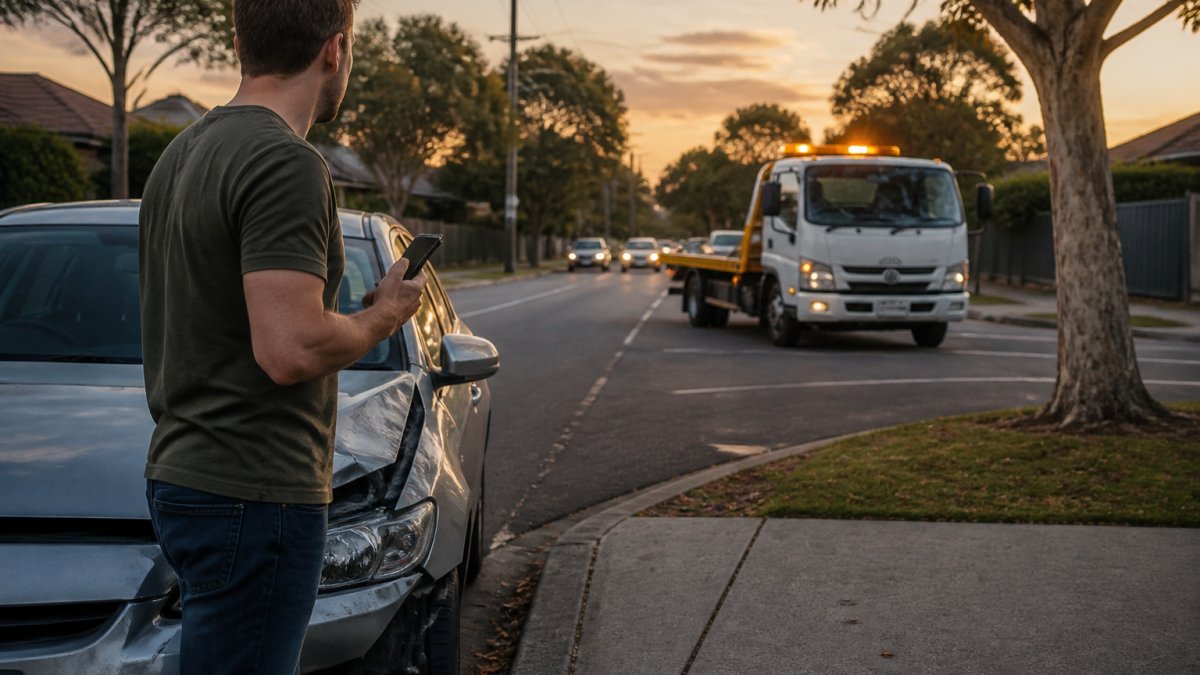
You have the right to ask who sent them, where the vehicle is going and what the fee is before you sign. Regulated accident towing fees exist for a reason, and a legitimate operator can explain them. For the full picture of how dispatch works, read how the accident towing allocation system works in Victoria.
Disputing an Unexpected Towing or Storage Invoice
Disputing a towing or storage invoice starts with the paperwork, not the phone call. Request an itemised invoice showing the base fee, tow distance, storage period and any after-hours charges.
Then take these steps:
- Compare the charge against the regulated fee schedule if the tow was an accident tow
- Put your objection in writing to the operator within a reasonable time
- Ask your insurer whether the charge falls within your benefit limit
- Escalate to Consumer Affairs Victoria if the operator will not respond
Consumer protection rules apply to towing services, and a fee review is available where charges look inconsistent with the schedule. Keep every message and photograph the vehicle's condition on arrival.
Arranging Your Tow and Insurer Liaison in One Call
Arranging a tow and coordinating with your insurer can happen in one call. At Accident Assist Line, we connect you to a real person 24/7 with no call queues, arrange your tow through Victoria's official accident-towing allocation network, coordinate the repair and liaise with your insurer on your behalf throughout.
We cover Melbourne, Geelong and the Mornington Peninsula. We do not manage or settle claims, but we make sure the tow, the repairer and the paperwork line up so nothing stalls.
Best for: drivers who want one point of contact after a collision. Skip if: you have already authorised a tow and signed a storage agreement.
Our step-by-step guide to arranging towing after an accident covers what to verify before you sign.
Frequently Asked Questions
Does car insurance cover accident towing in Victoria?
It depends on your policy. Comprehensive car insurance often includes towing after an accident or storm damage, but the benefit, distance limit and destination rules vary between insurers. Some policies only cover transport to the nearest authorised repairer. Check your policy wording or call your insurer to confirm what accident towing cover you hold before you arrange a tow.
Who pays for towing and storage after a crash?
If you have no cover, or the tow falls outside your policy conditions, you pay. Keep every invoice and ask the tow operator for an itemised receipt so costs can be assessed.
Can I choose who tows my car after an accident?
In Victoria, accident towing in the metropolitan area runs through an official allocation network, so the tow is generally dispatched rather than chosen. You can still ask questions before signing anything: who authorised the tow, where the car is going, and what the storage arrangements are. Confirm with your insurer whether the destination repairer is approved under your policy.
What should I ask my insurer about accident towing?
Ask four things: whether accident towing is included and up to what distance, whether you can nominate the repairer, how storage fees are treated while the car waits for assessment, and what authorisation the insurer needs before the tow proceeds. Get the answers in writing or note the reference number, so there is no dispute later about what was agreed.
The gap between what your policy says and what happens at the roadside is where costs appear. Get the tow arranged, the repair coordinated and the insurer liaison started with one call. Get started with Accident Assist Line and get your vehicle moving again without the queue.