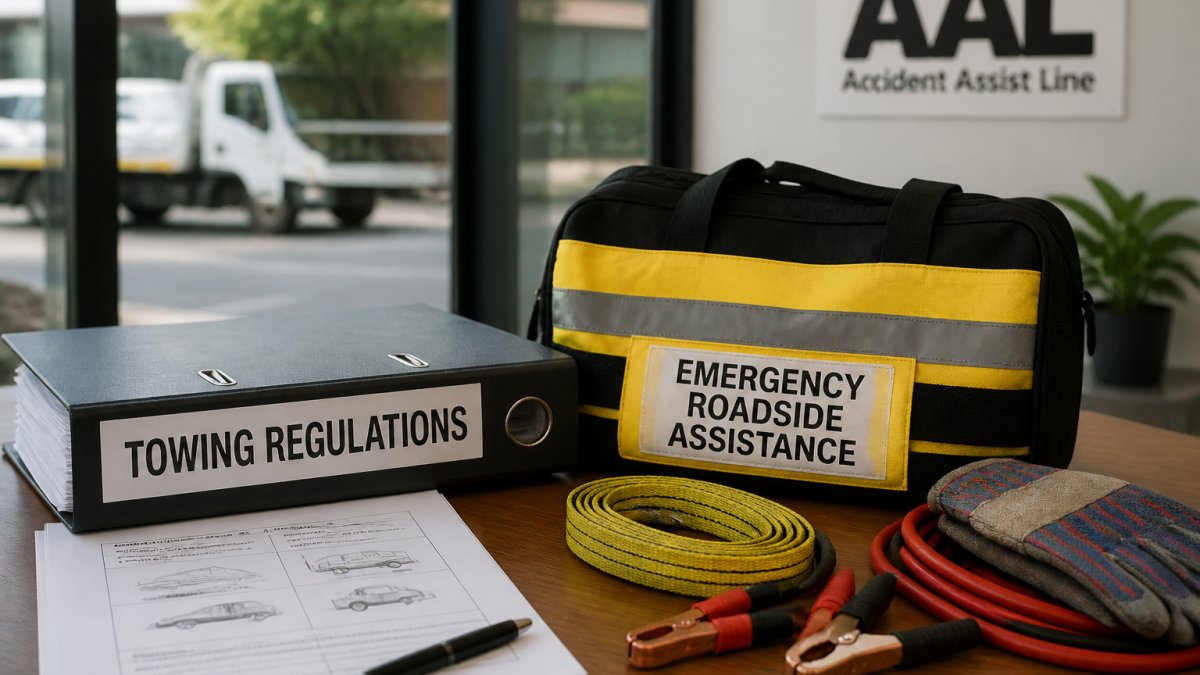
 blog
Towing Regulations vs Emergency Roadside Assistance
Table of Contents
- Towing Regulations vs Emergency Roadside Assistance: What's the Difference?
- Roadside Assistance vs Towing: Two Different Jobs
- Emergency Towing After a Car Accident: When Your Vehicle Can't Stay on the Road
- Roadside Assistance Towing Cover: What's Included and What's Not
- What to Do After a Car Accident in Victoria: A Decision Flow
- Towing Operator Licensing, Compliance and Your Rights
- Frequently Asked Questions
Last Updated: October 13, 2026
Towing Regulations vs Emergency Roadside Assistance: What's the Difference?
Towing regulations are the laws that govern how a vehicle can be towed, who may tow it, and what you must be told before the keys change hands. Emergency roadside assistance is a service you choose to buy, and it covers help at the scene rather than the removal of your car. In practice, one is a legal framework and the other is a product.
At Accident Assist Line, we coordinate tows, repairs and insurer liaison for drivers across Melbourne, Geelong and the Mornington Peninsula. We see the confusion up close, usually at the worst possible moment. This guide separates the rules you must follow from the cover you may already hold.
Below, we break down what each one actually does, where they overlap, and how to decide what to do in the first ten minutes after a collision.
Legal Requirements vs Optional Services
The clearest way to think about it: towing regulations are compulsory, while roadside assistance is a subscription. You cannot opt out of the law. You can absolutely opt out of a membership.
Legal requirements cover things like:
- Who is authorised to tow your vehicle after a crash
- What a towing operator must tell you before starting work
- How your vehicle must be stored and released
- What happens if you never collect the car
Optional services cover things like:
- A jump-start, flat tyre change or fuel delivery at the roadside
- A tow to a repairer of your choosing
- A hire car while yours is off the road
One protects you from penalties and disputes. The other protects your schedule.
Roadside Assistance vs Towing: Two Different Jobs
Roadside assistance is help delivered at the scene, and towing is the transport of your vehicle to another location. A roadside provider may fix the problem on the spot and send you on your way. A tow operator moves the car when it cannot safely move itself.
Most people assume these are the same call. They are not.
| Situation | What you need | Why |
|---|---|---|
| Flat battery in a car park | Roadside assistance | A jump-start usually gets you moving |
| Flat tyre with a spare onboard | Roadside assistance | A change takes minutes |
| Blown tyre, no spare | Towing | The car cannot be driven safely |
| Engine overheated, coolant gone | Towing | Driving on will cause more damage |
| Car will not start, no obvious cause | Roadside assistance first | Diagnosis before removal |
| Vehicle in a live traffic lane | Emergency towing | Safety comes before diagnosis |
The distinction matters because your cover may pay for one and not the other. It also matters because a roadside provider who cannot fix the fault will usually arrange the tow for you, sometimes at an extra cost.
What Roadside Assistance Can Do at the Scene
Standard on-scene help covers a short list of common faults. Most providers handle the following:
- Battery jump-start for a flat battery
- Flat tyre change using your spare
- Lockout service if keys are locked inside
- Fuel delivery if you have run dry
- Mechanical fault diagnosis and minor adjustment
What it typically will not do is repair a major mechanical failure, replace parts, or recover a vehicle from a crash scene. That is where towing takes over.
Emergency Towing After a Car Accident: When Your Vehicle Can't Stay on the Road
Emergency towing applies when your vehicle cannot legally or safely remain where it is. That includes crash damage, a blocked traffic lane, a fluid leak, or a wheel that will not turn.
In these cases the priority order is simple: people first, traffic second, vehicle third.
When to Call Police vs a Tow Truck
Call emergency services first if anyone is injured, if the road is blocked, or if another driver leaves the scene. In Victoria, you must report a crash to police if anyone is injured, if a driver fails to stop and exchange details, or if there is significant property damage.
Call a tow truck when:
- The vehicle cannot be driven safely
- It is sitting in a dangerous position
- You need it moved to a repairer or holding yard
If you are unsure, call emergency services and let them guide you. They will tell you whether a tow is needed.
Roadside Assistance Towing Cover: What's Included and What's Not
Roadside assistance towing cover is the part of a membership that pays for your car to be moved. It is almost always capped, and the caps are where people get caught out. Understanding the mechanism, not just the list, is what keeps you out of pocket.
The four caps that decide your out-of-pocket cost
Most memberships limit cover in four separate ways, and hitting any one of them shifts cost to you:
- Distance cap. A tow to a nominated repairer within a set radius is covered. Beyond that radius, you pay the per-kilometre difference. The radius is measured from where the vehicle is collected, not from your home.
- Callout cap. A set number of callouts per year. Once exhausted, further callouts are charged as a standard service.
- Event type. Breakdown cover and collision cover are often separate. A vehicle damaged in a crash may fall outside a standard breakdown membership entirely.
- Location type. Recovery from off-road, underground, or inaccessible locations is frequently excluded, or treated as a specialist recovery rather than a standard tow.
Inclusions you can usually rely on
- A tow to a nominated repairer within the covered distance
- After-hours and weekend callouts, though some providers apply a surcharge outside business hours
- A limited number of callouts per year
- Basic on-scene help before a tow is called, jump-start, tyre change, fuel delivery
Exclusions that catch drivers most often
- Tows beyond the covered distance, charged per kilometre
- Recovery from off-road or inaccessible locations
- Vehicles damaged in a collision, which many policies treat as a separate event
- Costs already covered by another policy, such as a comprehensive motor policy with its own towing benefit
- Vehicles that are unregistered, unroadworthy, or being transported rather than recovered
Consent, destination and disputes: the steps before the hook goes on
This is the part most guides skip, and it is where disputes actually start.
Before you authorise a tow, confirm and, where possible, record:
- The destination, the exact repairer or holding yard, not a suburb
- The price, the callout charge and any per-kilometre rate beyond the cap
- Who is paying, you, your provider, or your insurer
- The condition of the vehicle, photograph it from all angles before it is loaded
- The operator's details, business name, licence number, and a contact number
If an operator will not confirm the destination or the price before starting, that is a red flag. Ask again, and if they still will not answer, call someone else.
If a charge later looks wrong, the practical sequence is:
- Ask the operator for an itemised invoice showing the callout and any distance charge.
- Compare it against the terms of your membership or policy.
- Raise it in writing with the provider first, keeping the invoice and your photographs.
- If it is unresolved, escalate to Consumer Affairs Victoria, which handles towing and consumer disputes in this state.
Documenting the vehicle before it moves is the single most effective protection. Once the car is on the truck, your ability to dispute its condition or its destination drops sharply.
For official detail on what applies in Victoria, check VicRoads towing and vehicle information and the Consumer Affairs Victoria guidance on towing.
What to Do After a Car Accident in Victoria: A Decision Flow
Work through this in order. Do not skip steps because you are in a hurry.
- Stop and check for injuries. Call emergency services if anyone is hurt.
- Move to safety if the vehicle can be driven clear of traffic.
- Turn on hazard lights and set up warning triangles if you have them.
- Call police if there are injuries, a failure to stop, or significant damage.
- Exchange details with the other driver: name, address, licence, registration, insurer.
- Photograph everything: vehicle positions, damage, road conditions, signage.
- Call your tow provider once it is safe to do so.
- Tell the operator where the car is going before they hook it up.
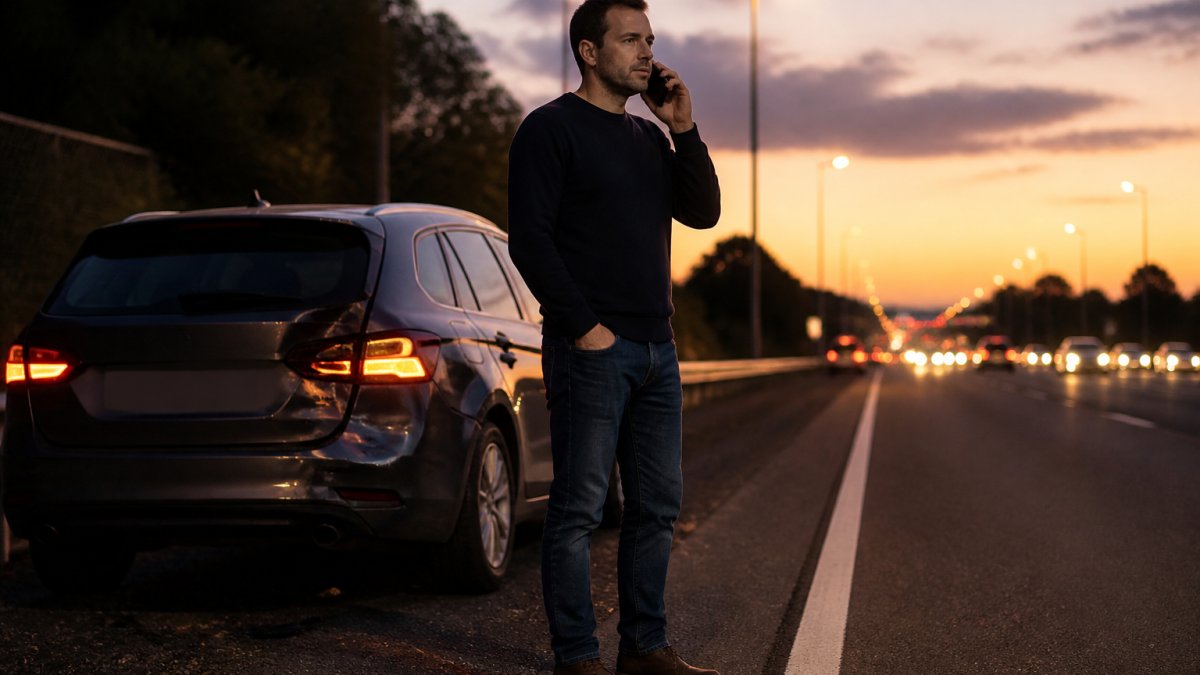
That last step matters more than most people realise. Once a vehicle is on a tow truck, you have very little say in where it ends up unless you have already said so.
Towing Operator Licensing, Compliance and Your Rights
Towing operators must be licensed to work in Victoria, and licensing is enforced by the state regulator. Trade towing, which covers crash scenes, sits under a specific allocation system rather than open competition.
Your rights as a vehicle owner include:
- Price disclosure before work begins
- Customer consent for the tow and the destination
- Clear information about where the vehicle is stored
- A complaint process if something goes wrong
If an operator will not tell you the destination or the cost before starting, that is a red flag. Ask again, and if they still will not answer, call someone else.
For official detail on what applies in Victoria, check VicRoads towing and vehicle information and the Consumer Affairs Victoria guidance on towing.
Frequently Asked Questions
What is the difference between towing and roadside assistance?
Roadside assistance covers on-scene fixes like a battery jump-start, flat tyre change, lockout service or fuel delivery. Towing moves your vehicle to a repairer or safe location when it cannot be driven. Towing regulations govern how that tow is carried out, including operator licensing, price disclosure and consent requirements. Roadside assistance is an optional service you buy; towing regulations are legal requirements that apply whether you have a membership or not.
When should I call a tow truck instead of roadside assistance?
Call a tow truck when your vehicle has structural damage, a blown tyre with no spare, fluid leaks, or any mechanical fault that makes driving unsafe. Roadside assistance can handle minor issues at the scene, but if the car cannot be driven safely, you need emergency towing. After a collision, the priority is getting everyone to safety, then arranging a tow through the correct channel.
Does roadside assistance cover accident towing?
Some roadside assistance towing cover includes a set towing distance after an accident, but many policies exclude collision-related tows or cap the distance. Check your membership coverage for exclusions, callout fees and after-hours service limits. If your cover does not extend to accident towing, you may face out-of-pocket costs. In Victoria, accident tows are allocated through an official network, so the process differs from a standard breakdown callout.
Who arranges a tow after a road accident in Victoria?
In Victoria, accident towing is managed through an official allocation network. Police or emergency services may request a tow through this system, or you can contact a coordinator who arranges the tow on your behalf. Accident Assist Line, for example, connects you with a real person 24/7, arranges the tow through the official network, and coordinates the repair and insurer liaison. You retain the right to consent to the tow and to know the fees before work begins.
A crash already costs you enough time and stress. Sorting out the tow, the repairer and the insurer should not add to it. Accident Assist Line arranges your tow through Victoria's official accident-towing allocation network, coordinates the repair with a workshop, and liaises with your insurer so you are not stuck making calls from the roadside. One call connects you to a real person, 24/7, with no call queues. Get started with Accident Assist Line and get your car, and your week, moving again.