 How-to
Mornington Peninsula Accident Towing Services: What to Do
Table of Contents
- What to Do After a Car Accident on the Mornington Peninsula
- How Mornington Peninsula Accident Towing Services Get You Moving
- Victoria Accident Towing Allocation: Who Sends the Tow Truck
- Accident Repair Coordination: Choosing a Safe Destination
- Hire Car After an Accident: Getting Back on the Road
- How to Request a Tow and What It Costs
- Frequently Asked Questions
Last Updated: October 12, 2026
What to Do After a Car Accident on the Mornington Peninsula
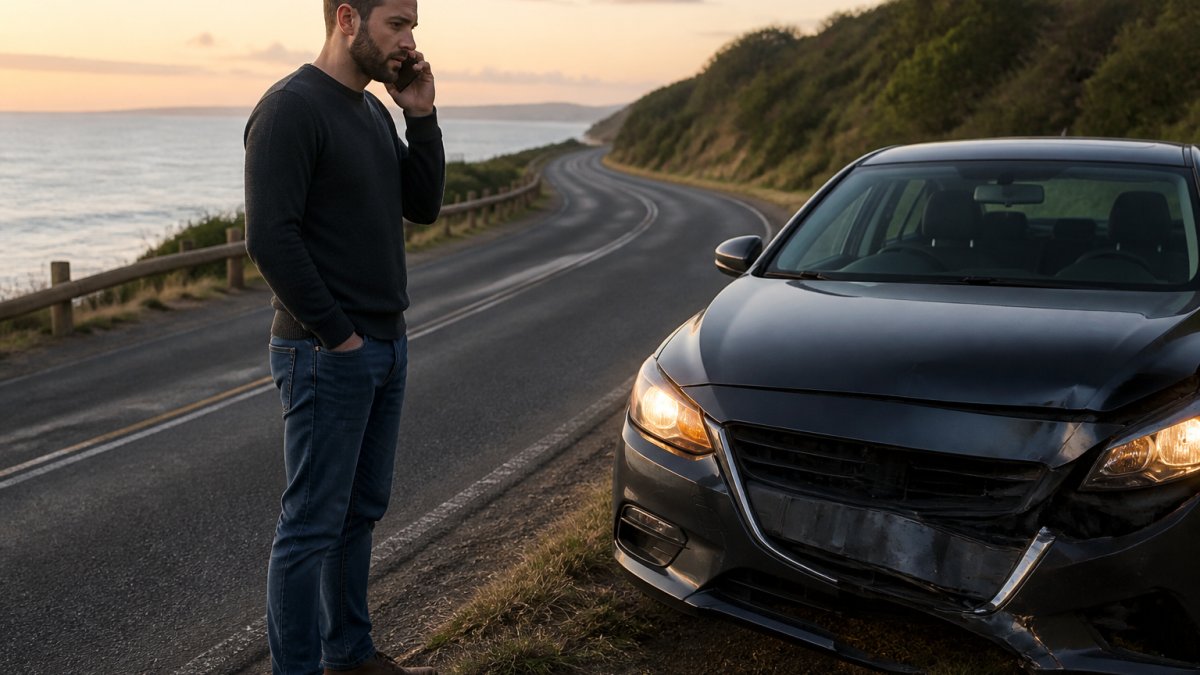
A car accident is disorienting anywhere. On a coastal road at dusk, with traffic building behind you, it feels worse. This guide from Accident Assist Line walks through what to do in the first few minutes, how Mornington Peninsula accident towing services actually get dispatched, and how to keep the repair and hire car side of things from dragging on for weeks.
The single most important thing to understand: in Victoria, accident towing is not a free market. It runs through an official allocation system, and that changes who you call and what you're entitled to.
First 10 Minutes: Safety, Hazards and Emergency Calls
Safety comes before paperwork, photos, or phone calls to anyone except emergency services.
- Stop and check yourself and passengers for injuries. Call Triple Zero (000) if anyone is hurt.
- Switch on hazard lights. If the car is drivable and it's safe, move it off the traffic lane.
- Set up warning triangles if you have them, particularly on blind bends and crests.
- Get everyone behind a barrier or well off the road. Never stand between two vehicles.
- Call the police if anyone is injured, if a driver has left the scene, or if the road is blocked.
Victoria Police can be reached on 131 444 for non-urgent matters (Contact Victoria Police). For road emergencies and hazards, call the VicRoads traffic management centre on 13 11 70.
Details to Collect Before the Tow Truck Arrives
While you wait, gather what you'll need later. This is the part most people rush and regret.
Exchange names, addresses, phone numbers, licence details, registration numbers and insurer names with the other driver. Photograph the position of both vehicles, the damage from several angles, the road surface, and any signage or skid marks. Note the time, the weather and the traffic conditions.
If there are witnesses, ask for their contact details. Witness statements are difficult to recover days later.
How Mornington Peninsula Accident Towing Services Get You Moving
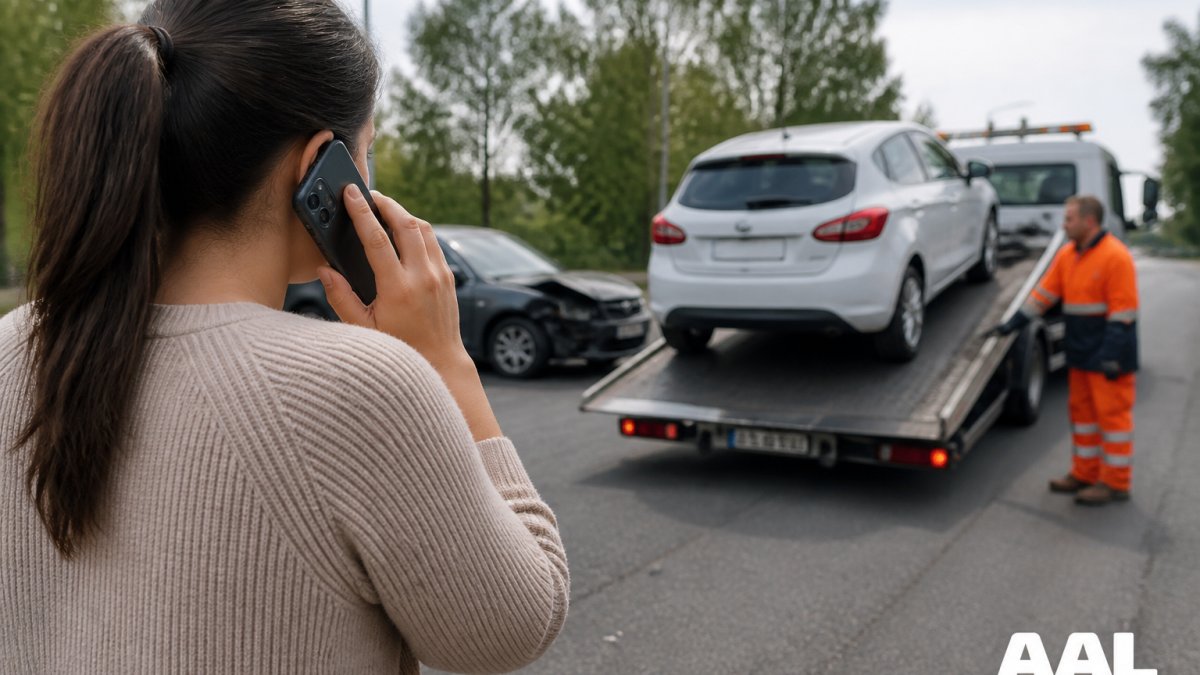
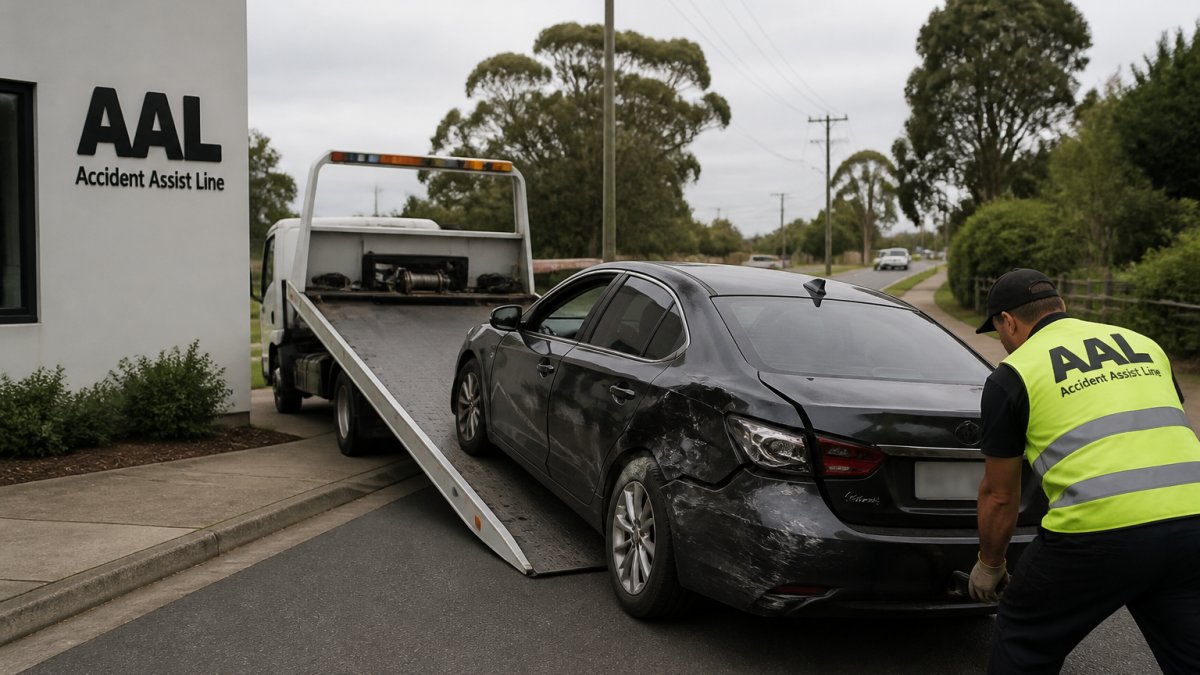
Accident towing is the recovery and transport of a vehicle that has been damaged in a collision, arranged through Victoria's official allocation system rather than by shopping around for the cheapest operator. On the peninsula, that means a tow truck is dispatched to your location based on where the accident happened and which operator holds the allocation for that area.
Once you're safe, the tow is the next practical problem. A damaged vehicle can't sit on the roadside indefinitely, and leaving it there creates a hazard for everyone else.
Here's what a tow operator will typically need from you:
- Your exact location, including the nearest cross street or landmark
- Whether the vehicle is drivable, or whether it needs to be winched or lifted
- The make, model and registration
- Whether anyone is still inside the vehicle
Response times vary with traffic conditions, distance and how busy the network is. On a quiet stretch near Rosebud or Somerville, a truck may arrive quickly. On a Friday afternoon on the Nepean Highway, expect longer. Ask for an estimated arrival time when you call, and ask them to confirm when the truck is dispatched.
Victoria Accident Towing Allocation: Who Sends the Tow Truck
Victoria accident towing allocation is the system that decides which tow truck comes to your accident. It exists to stop tow truck drivers racing each other to crash sites, a practice that once caused serious safety problems. Under the allocation arrangements, accident tow assignments are distributed among accredited operators rather than auctioned to whoever arrives first.
The practical consequences for you are worth knowing:
| What people assume | What actually happens |
|---|---|
| You can call any tow company you like | Allocation determines which accredited operator attends |
| The first truck on scene gets the job | Attendance is assigned, not raced for |
| You have no say in the matter | You can decline and arrange your own tow in some circumstances |
| Towing is always free | Costs depend on the circumstances and your cover |
If a tow truck arrives and you are unsure whether they are the allocated operator, you are entitled to ask. You do not have to hand over your keys to someone who has not identified themselves properly.
Accident Repair Coordination: Choosing a Safe Destination
Accident repair coordination is the process of getting your vehicle from the crash site to a repairer who will actually fix it properly, and keeping that repair on track. Where your car ends up matters more than most drivers realise at the time, and the decision is usually made in the first few minutes, when you are least equipped to make it.
You generally have a choice about the repair destination. Your insurer may have a preferred repairer network, and using it can simplify the process. You may also be entitled to nominate your own repairer. Check your policy documents or ask your insurer directly, because the rules differ between policies.
Confirm the destination before the vehicle leaves. Ask the tow operator to state the destination address out loud, and confirm it by text message or in writing. A vehicle taken to a yard you did not choose can attract storage charges while you sort out where it should have gone. If you are unsure, ask the operator to wait while you confirm with your insurer.
Compare repair options on more than price. A cheaper quote is not a better outcome if the repairer cannot handle your vehicle type, is booked out for weeks, or will not deal directly with your insurer. Ask each repairer:
- Is this a licensed repairer with the equipment to handle my vehicle type?
- Will the repairer deal directly with my insurer, or will I be paying upfront?
- How long is the expected turnaround, and is there a queue?
- Where will the vehicle be stored in the meantime, and does storage attract a daily charge?
- Will the repairer provide a written quote and a completion estimate?
Record the vehicle's condition and belongings before it is towed. Walk around the car and photograph the interior and exterior, including the odometer reading and fuel level. Remove valuables, toll tags, dash cams and personal items if you can do so safely. If you cannot remove them, photograph where they are and note them in a list. This record protects you if items go missing or if there is a dispute about pre-existing damage.
VicRoads information on written-off vehicles explains how vehicles are assessed and what happens if your car is deemed a write-off, which affects whether repair is even an option.
This is where a coordination service earns its place. Accident Assist Line arranges the tow through the official allocation network, coordinates the repair, and liaises with your insurer throughout.
Hire Car After an Accident: Getting Back on the Road
A hire car after an accident depends on your policy. Some comprehensive policies include a hire car benefit while your vehicle is being repaired. Others offer it as an optional extra. Some include nothing at all.
Check three things in your policy:
- Whether a hire car is included, and for how many days
- Whether it kicks in immediately or only once the repair is authorised
- Whether there is a daily cap and an excess
If your policy doesn't cover it, ask your insurer whether the at-fault party's insurer will arrange one. If you were not at fault, this is often possible, though it is not automatic and can take time to confirm.
The practical risk is the gap. If your preferred repairer is booked out, you may be waiting for a hire car that only starts when the repair does. Ask about this before agreeing to a repairer.
How to Request a Tow and What It Costs
Requesting a tow is straightforward: call, give your location and vehicle details, and confirm the destination. The cost is the part with more variables.
Towing charges depend on the distance travelled, the time of day, whether the vehicle needs special equipment, and whether storage is involved. There is no single figure that applies to every accident, and anyone quoting you a flat number before knowing your location is guessing.
What we can tell you is how to avoid surprise charges:
- Ask for the call-out fee, the per-kilometre rate and any storage rate before you agree
- Confirm the destination address in writing or by text message
- Ask whether the fee is billed to you or to your insurer
- Keep the tow docket. You will need it for any reimbursement
If your policy covers towing, the cost may be recoverable. Keep every receipt.
To request a tow, call Accident Assist Line. One call connects you to a real person, 24/7, with no call queues, and we cover Melbourne, Geelong and the Mornington Peninsula.
Frequently Asked Questions
How do I arrange a tow after a car accident?
Pull over safely, switch on your hazard lights and call for help. In Victoria, accident towing in certain areas is arranged through the official accident-towing allocation system, so the tow truck you get may be dispatched by that system rather than chosen by you. A coordination service such as Accident Assist Line can arrange the tow through that network, then coordinate the repair and liaise with your insurer. Have your location, vehicle details and a contact number ready when you call.
Can I choose where my damaged car is towed?
Your options depend on where the accident happened. In areas covered by Victoria's accident-towing allocation arrangements, the tow is allocated through the official system and you may not be able to pick a specific operator on the spot. You can still say where you want the vehicle taken, such as a repairer you trust, and a coordination service can arrange the destination and the repair booking. Ask about storage arrangements if the car cannot be assessed immediately.
What information should I give an accident towing service?
Give the exact location including the nearest cross street or landmark, the make, model and colour of your vehicle, whether it is drivable, and whether anyone is injured. Note any fluid leaks, deployed airbags or wheels that will not turn, because these affect how the vehicle is recovered. Provide your name and a mobile number, and mention if you are in a hazardous spot such as a blind corner or a busy intersection so the tow is prioritised.
How can I arrange transport while my car is being repaired?
Ask about a hire car as early as possible. Many comprehensive policies include a hire car after an accident, either as a standard benefit or an optional extra, so check your policy or ask your insurer what you are entitled to. A coordination service can arrange the hire car booking alongside the tow and repair so you are not chasing separate providers. If your policy does not include one, compare short-term rental options near you while the repair is booked in.
A crash on the peninsula already costs you a day. It shouldn't cost you a fortnight of phone calls as well. Accident Assist Line arranges your tow through Victoria's official accident-towing allocation network, coordinates the repair, and liaises with your insurer on your behalf, with a real person answering the phone at any hour. Get started with Accident Assist Line and get your vehicle, your repair and your next steps sorted in one call.