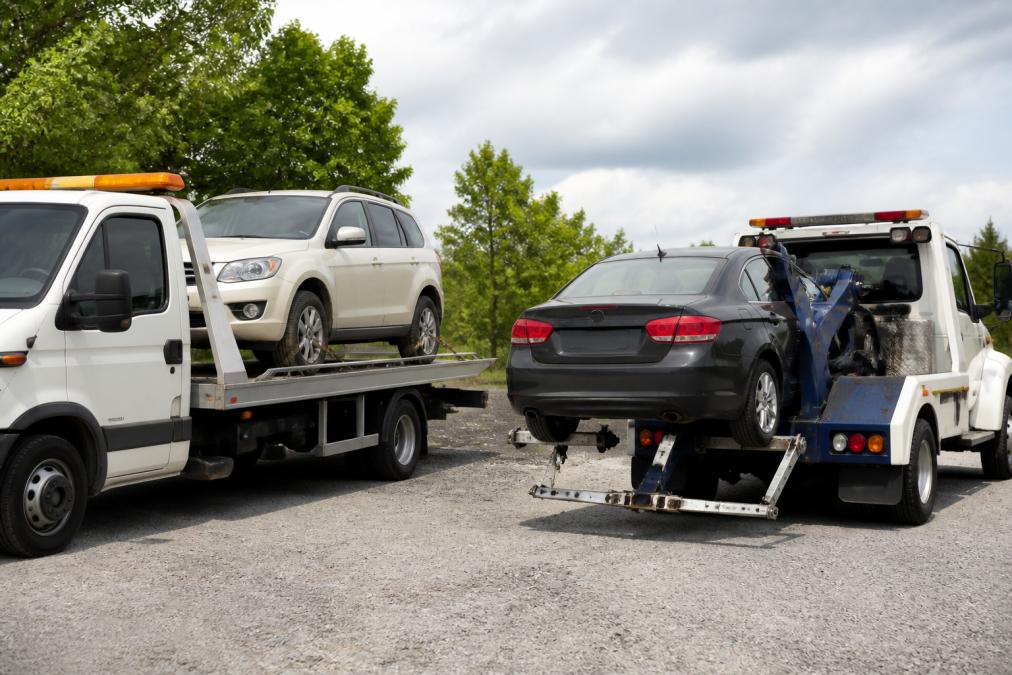
 comparison
Private Towing vs Insurance Towing Services Compared
Table of Contents
- Private Towing vs Insurance Towing Services: The Core Differences
- Comparison Table: Private vs Insurance Towing
- Your Accident Towing Rights at the Scene
- Towing and Storage Fees After an Accident
- How to Avoid Repair Shop Kickbacks
- When to Use Private Towing vs Insurance Towing
- Conclusion
- Frequently Asked Questions
Last Updated: September 13, 2026
Private Towing vs Insurance Towing Services: The Core Differences
The difference between private towing vs insurance towing services comes down to who controls the job: you or your insurer. Private towing means you call an independent operator or accident management service and pay them directly. Insurance towing means your insurer dispatches a tow under your policy, usually to an authorised repairer in their network. At Accident Assist Line, we handle the private side of that split every day.
Call your insurer first and you hand over control of where your car goes and how fast it gets assessed. Call an independent service and you keep that control but take on the coordination yourself. Neither is automatically better, the right choice depends on what broke, where you are, and what your policy says.
How Insurance-Arranged Towing Works
Insurance-arranged towing starts with a call to your insurer's claims line. They log the incident, dispatch a tow truck from their panel, and direct your vehicle to an authorised repairer. You usually pay nothing upfront if towing is included in your comprehensive cover, though the cost is absorbed into your premium over time.
The trade-off is speed and choice: panel dispatch can be slow after a major incident, and you usually lose the right to choose your own repairer.
One more thing most drivers miss: insurer-arranged towing is often tied to a claim, which can affect your no-claim bonus depending on fault. Ask before you agree to anything.
How Independent Towing Services Operate
Independent towing services operate outside insurer networks. You contact them directly, they dispatch a truck, and you decide where the vehicle goes. Many also coordinate repairs and hire cars, removing the back-and-forth that slows insurer-led recoveries.
The catch is verification. Because anyone can call themselves a towing operator, confirm the business is legitimate before they hook up your car. Ask for the operator's name, licence details, and a written quote before the truck moves.
Comparison Table: Private vs Insurance Towing
| Factor | Private Towing | Insurance Towing |
|---|---|---|
| Who you call | Independent operator or accident service | Your insurer's claims line |
| Choice of repairer | You decide | Usually their authorised network |
| Upfront cost | You pay, then claim back if covered | Often covered under policy |
| Speed of dispatch | Varies; independent services can be faster | Depends on network load |
| Impact on no-claim bonus | Only if you lodge a claim | Tied to the claim you lodge |
| Best for | Drivers wanting control and speed | Drivers wanting zero upfront hassle |
Your Accident Towing Rights at the Scene
Your accident towing rights at the scene are clearer than most drivers realise: you can choose your own tow operator, refuse an unsolicited tow, and know where your vehicle is being taken before it leaves.
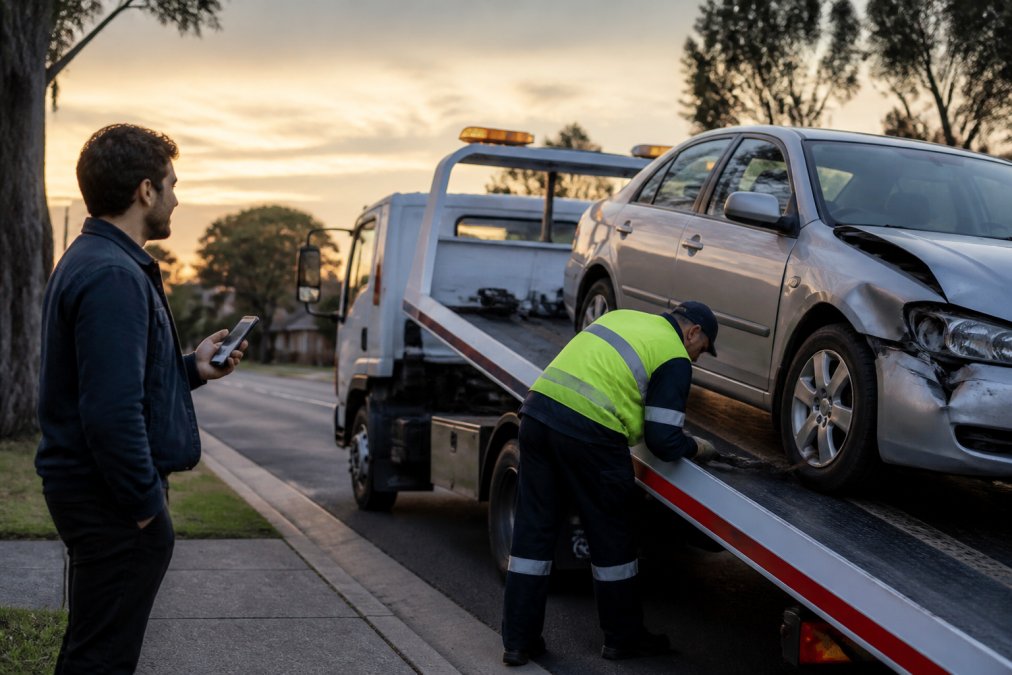
What you should do immediately after a crash:
- Make the scene safe and check for injuries
- Call emergency services if anyone is hurt
- Exchange details with the other driver
- Photograph vehicle positions and damage
- Decide whether you are calling your insurer or an independent service
- Get the tow operator's name, licence, and destination in writing before they hook up
A common mistake is letting the first truck that arrives take the job because you feel pressured. Take thirty seconds to confirm who you are dealing with.
Towing and Storage Fees After an Accident
Towing and storage fees after an accident vary by distance, vehicle type, time of day, and how long your car sits in a holding yard. Storage is where costs quietly pile up: a week in a yard can accumulate fees that dwarf the original tow. In some states storage fees are capped by regulation; in others they are set by the market.
What actually drives the fee
Four variables set the price of a tow:
- Distance, a short metro tow costs far less than a regional recovery. Most insurers cap the included tow distance, commonly at a set kilometre radius from the incident or your home address.
- Vehicle type and condition, a low-clearance sedan needs a flatbed; a four-wheel drive off the road may need a winch and a heavier truck. Both push the price up.
- Time of day, after-hours, weekend, and public holiday call-outs attract surcharges. A tow at 2am on a Sunday is not priced like a tow at 10am on a Tuesday.
- Storage, the daily rate a yard charges once your vehicle is off the truck. This line item catches drivers out because it accrues silently while you argue with your insurer.
State-by-state variation you should know about
Towing and storage regulation is a state responsibility, so rules are not uniform. The practical differences:
- New South Wales, tow truck operators must be accredited, and there are prescribed maximum fees for certain tows and storage. Transport for NSW publishes the current schedule, and operators must display their fees.
- Victoria, the tow truck industry is regulated under a dedicated Act, with accreditation requirements and a code of practice covering fees, storage, and release of vehicles.
- Queensland, towing is regulated, with prescribed maximum charges for accident tows and storage, and a requirement that operators be accredited.
- Western Australia, South Australia, Tasmania, the ACT, and the Northern Territory, regulation is lighter or handled through general consumer law and fair trading bodies rather than a dedicated towing Act. In these jurisdictions, the written quote is your main protection.
If unsure which regime applies, call the fair trading or consumer affairs body in your state before authorising a tow. They can confirm current maximums and whether the operator is accredited.
The reimbursement process if you pay upfront
If you pay a private tow operator upfront and your policy includes towing, you can usually claim the cost back, but only if you follow the process:
- Get an itemised tax invoice from the tow operator, showing their business name, ABN, the date, the pickup and drop-off locations, the distance, and the storage component if any. A handwritten receipt is usually not enough.
- Keep the original and send a copy. Insurers routinely require the original or a certified copy for reimbursement.
- Lodge the claim through your insurer's claims line or app, selecting the towing benefit rather than the accident claim if your policy separates them. This distinction matters, see the no-claim bonus note below.
- Provide the destination details, where the vehicle was taken and why. If you chose your own repairer, the insurer may ask for a quote before releasing funds.
- Wait for assessment. Reimbursement is typically paid once the insurer confirms the tow was necessary and the amount reasonable. If it exceeds your policy's towing cap, you receive the cap and absorb the difference.
Does using insurance towing affect your no-claim bonus?
The answer depends on how the tow is coded. A tow processed as a standalone roadside assistance or towing benefit, separate from an accident claim, generally does not affect your no-claim bonus, because you are not claiming against the policy's accident cover. A tow bundled into an accident claim is different: the claim itself, not the tow, can affect your no-claim bonus, depending on fault and your insurer's rating structure.
Before you authorise anything, ask your insurer: if I use the towing benefit, will it be recorded as a claim? Get the answer before the truck moves. If it will be coded as a claim, you may prefer to pay privately and claim reimbursement separately, or absorb the cost to protect your bonus.
Two questions to ask before any truck moves
Ask two questions before any truck moves: what is the total tow fee to my chosen destination, and what is the daily storage rate if the vehicle cannot be collected immediately? Get both in writing. If the operator will not put numbers on paper, call someone else.
If your policy includes towing, your insurer typically covers the tow to their nominated repairer but may cap the distance. Beyond that cap, you pay the difference. Check your product disclosure statement for the limit before you assume you are covered.
How to Avoid Repair Shop Kickbacks
Kickbacks happen when a tow operator or accident management service steers your vehicle to a repairer in exchange for a referral fee. The repairer recovers that fee through your claim, so you may pay more or receive a lower-quality repair. Avoiding repair shop kickbacks comes down to transparency.
Ask the operator directly: do you have a financial relationship with the repairer you are recommending? A legitimate independent service will answer plainly. A service earning a referral fee will usually deflect.
Three checks that protect you:
- Confirm the repairer is on your insurer's approved list if you plan to claim
- Ask for a written quote before authorising any work
- Request the old parts back if major components are replaced
An independent service has no incentive to push you toward a specific shop, because their income comes from coordinating your recovery, not referral fees.
When to Use Private Towing vs Insurance Towing
Use insurance towing when the incident is a straightforward claim and you want zero upfront cost. Use private towing when you need speed, want to choose your own repairer, or the incident does not warrant a claim. The right call depends on four variables: what happened, who is at fault, what your policy covers, and which state you are in.
The decision tree
Work through these questions in order. The first one that produces a clear answer usually settles it.
- Is anyone injured or is there third-party property damage? If yes, you are in accident territory. You will likely need to lodge a claim, and the tow is part of that process. Call your insurer first, but confirm whether the tow is coded as a claim or as a standalone benefit before you authorise it.
- Is it a mechanical breakdown with no collision? This is a roadside assistance job, not an insurance claim. Your roadside assistance membership, whether through NRMA, RACV, RACQ, RAA, RACWA, or a similar state-based motoring body, usually handles the tow. Using it does not touch your no-claim bonus because it is not an insurance claim.
- Do you want to choose your own repairer? If yes, private towing is the practical route. Insurer-arranged towing typically directs your vehicle to an authorised repairer in their network, and you lose the right to nominate your own shop in most cases.
- Can you wait? Panel dispatch can be slow after a major incident when multiple claims hit the same network. If you need the vehicle moved now, an independent operator is often faster for the recovery itself, with the claim running in parallel.
- Will a claim affect your no-claim bonus? If the tow would be coded as an accident claim and you have a protected no-claim bonus, the impact may be nil. If your bonus is not protected, weigh the tow cost against the premium increase before you lodge.
Breakdown versus accident changes the answer
A mechanical failure on the roadside is a breakdown recovery job. Your roadside assistance membership handles it, and the tow is usually included up to a distance limit. An accident with third-party property damage is different: you are dealing with a claim, a possible excess, and a repair process that benefits from independent coordination.
The two are governed by different parts of your policy and, in some states, different regulations. Accident towing is the more heavily regulated, with accreditation requirements and prescribed maximum fees in several jurisdictions. Breakdown towing is generally a consumer service, governed by general consumer law and your roadside assistance membership terms.
What to confirm with your insurer before you decide
Three questions, asked in this order, will tell you whether insurance towing is the right call:
- Is towing included in my level of cover? Comprehensive policies usually include it; third-party property and third-party fire and theft policies often do not (moneysmart.gov.au).
- What is the distance cap? Most policies cap the included tow at a set kilometre radius. Beyond that, you pay the difference.
- Will using the towing benefit be recorded as a claim? This is the no-claim bonus question. Get a clear answer before the truck moves.
If unsure, call your insurer first to confirm what your policy covers, then decide. Many drivers find an independent service is faster for the recovery itself while the claim runs in parallel, the two are not mutually exclusive. You can use a private tow to get the vehicle to a safe location, then lodge the claim once you have the invoice.
Conclusion
The choice between private and insurance towing is really about control, speed, and cost. Insurance towing suits drivers who want the paperwork handled and do not mind waiting. Private towing suits drivers who want their car moved now and their repairer chosen by them.
If you have just been in an accident and need a tow, a repairer, and a hire car sorted without the wait, Accident Assist Line is built for exactly that. We operate 24/7, provide a callback in under 30 seconds, and coordinate towing, repairs, and hire cars as an independent service with no insurer ties. Get started with Accident Assist Line and get back on the road faster.
Frequently Asked Questions
What are my rights if a private tow truck arrives at an accident scene?
You have the right to decline unsolicited towing services. In most states, tow truck operators cannot tow your vehicle without your clear consent, and they must provide identification and a written quote before starting work. If you feel pressured, call your insurer or an independent coordination service. Never hand over your keys until you understand the fees, the destination, and whether the operator is authorised. Recording the operator's details and the vehicle's condition before it leaves is also wise.
Can I choose my own repairer if I use a private towing service?
Yes, you can generally choose your own repairer, but your insurer may only guarantee the work and lifetime repairs at their authorised repairer network. If you choose your own, you may need to get quotes and approval first. Some insurers also limit how much they will pay for towing to a non-preferred repairer. Check your policy's product disclosure statement for the specific conditions that apply to your cover.
Does comprehensive car insurance always cover the cost of towing?
Not always. Many comprehensive policies include emergency towing as a standard benefit, but coverage limits apply, such as a maximum dollar amount or distance. Some policies only cover towing to the nearest authorised repairer, not your home or a repairer of choice. Third-party property damage cover typically excludes towing for your own vehicle. Check your policy exclusions and coverage limits before you need to claim.
How do towing and storage fees after an accident work if I use an independent service?
Independent towing services usually charge a call-out fee plus a per-kilometre rate, and storage yards charge daily fees until you collect the vehicle. These costs can add up quickly if your insurer is slow to authorise collection. Some independent coordination services include towing in their service and handle the insurer reimbursement for you. Always ask for a written breakdown of fees before the vehicle is moved and keep all receipts for your claim.