 How-to
Accident Claims Management Phone Calls: A Practical Guide
Table of Contents
- Why You Are Getting Calls About Accident Claims
- Warning Signs of a Claim-Farming Scam
- A Car Accident Call Script You Can Follow
- How to Verify an Insurance Caller Before You Share Anything
- Consent, Privacy and Your Accident Details
- How to Report Scam Calls and Suspicious Activity
- What to Do If You Already Spoke to a Caller
- Frequently Asked Questions
Last Updated: October 19, 2026
Why You Are Getting Calls About Accident Claims
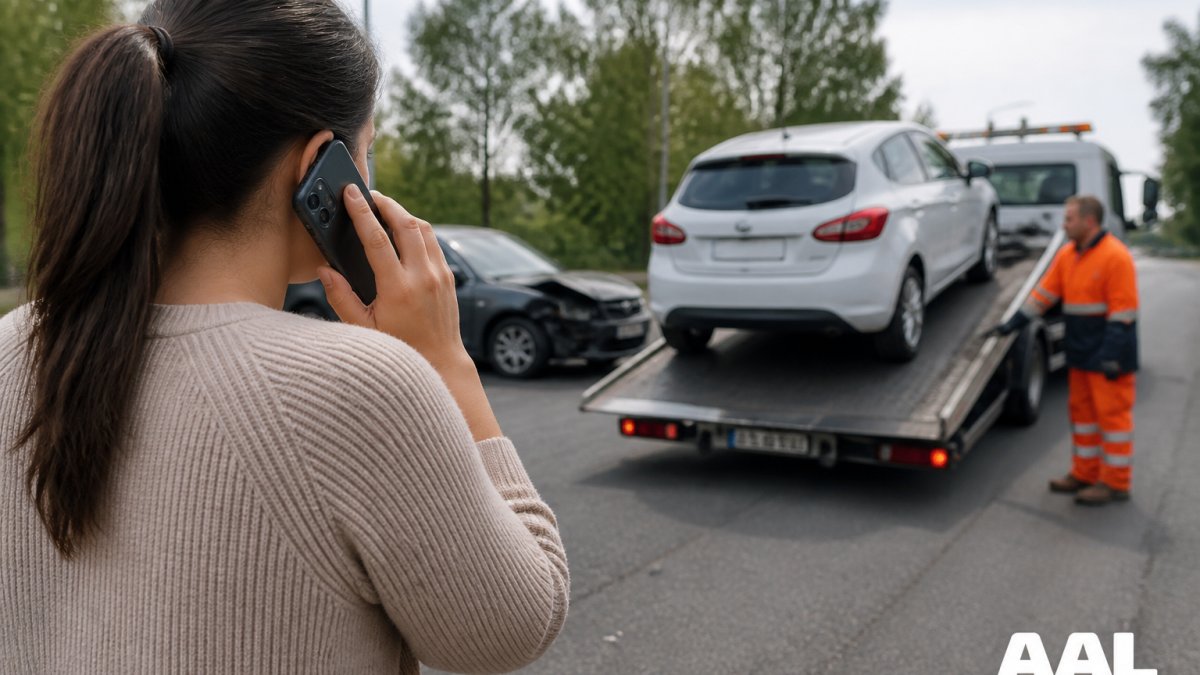
A stranger rings minutes after a crash and already knows your name, your car and where you were hit.
Many drivers now treat every post-crash call as a threat. Some are legitimate; most are not.
Hanging up protects you for one call; knowing how the calls work protects you for every call that follows.
At Accident Assist Line, we coordinate tows, repairs and insurer contact for drivers in Melbourne, Geelong and the Mornington Peninsula.
How Unsolicited Accident-Claim Calls Work
An unsolicited call about your crash usually runs in a set order: the caller confirms your identity, mentions your accident, then offers to "help" with your insurance claim.
Your information moves through a chain: a tow operator or repairer records your name and number, it is sold or shared as a lead, a claims management company buys it, and a caller rings you, often within hours.
The caller's goal is consent. Once you agree to let them act for you, they can direct your vehicle, your repairs or your replacement vehicle.
Warning Signs of a Claim-Farming Scam
Pressure is the clearest signal. Legitimate businesses give you time to think. Scam callers cannot afford that.
Watch for these warning signs:
- Urgency: "We need your decision in the next ten minutes."
- Vague identity: no company name, no ABN, no address
- Pressure to sign: a form sent by text or email while you are still on the call
One red flag is easy to miss: a caller who pushes you toward one specific repair shop, and only that shop, usually has a commercial arrangement with it. If two or more of these appear, end the call. You owe the caller nothing.
A Car Accident Call Script You Can Follow
You do not need to be rude, just a short script you can read from a note in your phone, repeated word for word.
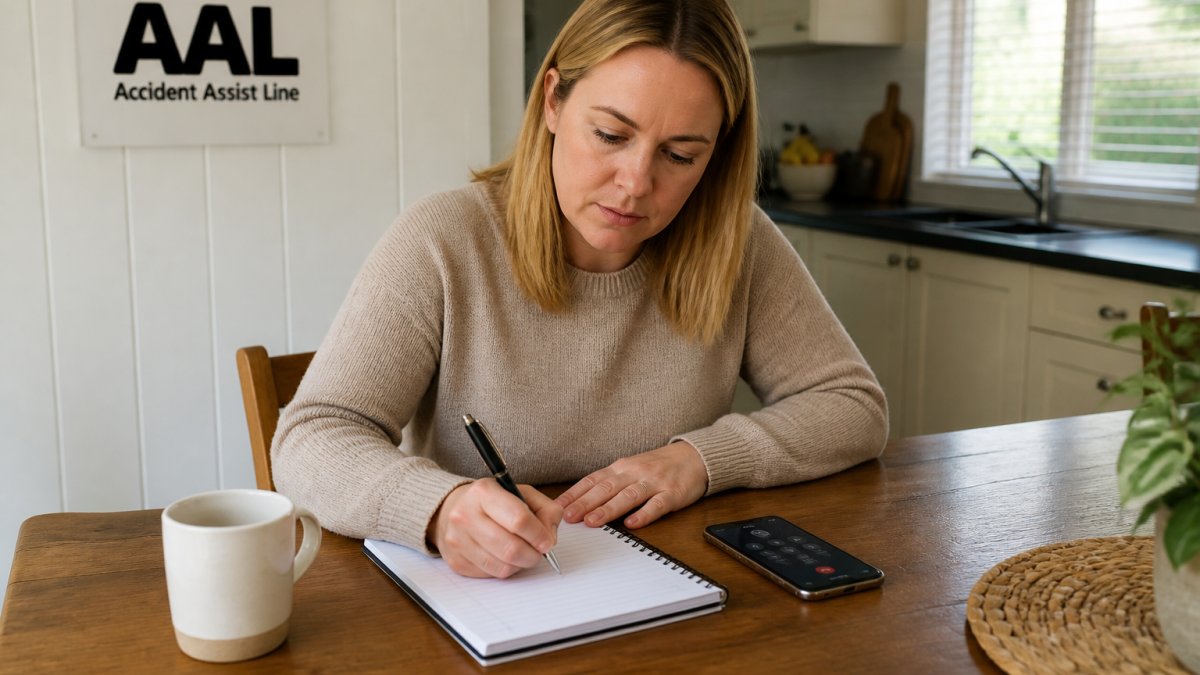
Your script:
- "Thanks for calling. Which company are you from, and what is your ABN?"
- "How did you get my phone number?"
Then make a decision:
| What the caller does | What you do |
|---|---|
| Gives a clear company name and ABN, and agrees to email details | Take the details, end the call, verify before replying |
| Refuses to give a company name or ABN | End the call, note the number, report it |
| Demands a signature or payment on the call | End the call, report it |
| Says they are from your insurer | Hang up, ring your insurer on their published number |
| Says they are from a tow or repair service | Ask for the job number, then verify with your insurer |
Write down the time, the number and what was said, a short note matters later.
How to Verify an Insurance Caller Before You Share Anything
Never verify a caller using the number they give you. Use this order instead:
- Take the caller's name and company. Write both down.
- Hang up. Nothing bad happens. Genuine businesses expect it.
- Find the company yourself. Search the name, check the ABN on the Australian Business Register, and look for a real address.
- Ring the company's published number, not the one on your screen.
- Ask if the person who called you works there and whether they were assigned to your matter.
- Ring your insurer separately on the number on your policy or their official website.
The Australian Cyber Security Centre publishes plain guidance on recognising and reporting scam calls, and the ACCC's Scamwatch service tracks current call patterns. Both are worth a look before you return any call.
If the caller claims to be from your insurer, this step is not optional. Insurers contact policyholders, but a caller who cannot be matched to a real staff member or a real reference number is not your insurer.
Consent, Privacy and Your Accident Details
Your accident details are personal information. Who holds them, and who you let act on them, is your decision, but only if you understand what you are agreeing to.
Under Australian privacy law, organisations must handle your personal information in line with the Privacy Act 1988 and the Australian Privacy Principles. The Office of the Australian Information Commissioner sets out what those principles require of businesses, including limits on using your details for purposes you never agreed to, and rules on collecting information from someone other than you.
What consent actually means on a claims call
Consent is not a single yes. On an accident-claims call there are usually three separate things a caller wants:
- Consent to keep talking. Agreeing to stay on the line is not agreeing to anything else. You can listen and still say no.
- Consent to share information. This is permission for the caller to pass your name, crash details or vehicle information to a repairer, a hire-car provider or an insurer. It is limited to what you actually agreed to.
- Consent to act on your behalf. This is the big one. It usually comes as an authority form, sometimes texted or emailed mid-call, that lets a company deal with your insurer, direct your repairs, arrange a replacement vehicle and charge for the work. Signing one can create obligations that outlast the phone call.
A caller who blurs these three together is either poorly trained or deliberately confusing you. Slow it down.
What is reasonable to share, and what is not
Before you have verified anyone, very little is reasonable to share:
- Reasonable to give a verified caller: your name, the fact that you were in a crash, and a callback number you are comfortable with.
- Give only after you have verified the company yourself: your policy number, your vehicle registration, and the location and time of the crash.
- Do not give over the phone at all: bank account details, your driver licence number, Medicare number, date of birth, passwords or one-time codes. No legitimate claims process needs these to start a conversation.
If a caller says they cannot proceed without your bank details on the first call, end the call rather than comply.
How consent to be represented works, and how to withdraw it
An authority form is a contract-like document. Read it for four things before signing:
- Who it authorises, the exact company name and ABN, not a trading name you cannot check.
- What they can do, deal with your insurer, choose a repairer, arrange a hire car, charge a fee, or all of the above.
- How long it lasts, until the work is done, until a date, or until you cancel.
You can withdraw consent. Put it in writing: email the company, state that you withdraw any authority and consent, ask them to stop contacting you and delete information they no longer need, and keep a copy. Tell your insurer the same day.
If a caller will not tell you who they are, how they got your number, or what they will do with your details, that is a privacy problem in itself. You can raise it with the OAIC, and the Privacy Act gives you the right to ask any organisation holding your details where they got them.
How to Report Scam Calls and Suspicious Activity
Reporting takes a few minutes and helps shut down the operation behind the call, but different agencies do different things with your report.
Where to send it, and what each one does
- Scamwatch, run by the ACCC, collects reports of scam calls and misleading tactics. It uses them to track patterns and warn the public; it does not investigate your individual call or recover money.
- ReportCyber, run by the Australian Cyber Security Centre, is for calls that involved a fake website, a text message, a link or stolen account details. Use it when the scam crossed from a phone call into something online.
- Your insurer, if someone claimed to represent them. Ring the number on your policy or their official website and ask them to note the contact on your file.
What to include in a report
The more specific your report, the more useful it is: the phone number exactly as it appeared, the time and date, the company name and ABN the caller gave, what they asked for and what you said, and any text, email or link they sent. Keep screenshots of the call log and messages even after you report.
Reporting the crash itself
A scam call is not the same as the crash. If you need to report the collision, do that separately. For non-urgent matters you can contact Victoria Police through the Police Assistance Line. If anyone is injured, in danger, or the crash has just happened, call Triple Zero.
Your insurer will also want the crash reported to them directly, on their published number, with the other party's details and any police report number.
What happens after you report
Expect little visible follow-up. Scam reports feed pattern-tracking and public warnings rather than individual investigations, so you may not hear back, that is normal and does not mean the report failed. Block the number, then expect one more attempt from a different number; callers rotate numbers, and a second call is not a sign your report was ignored. Keep reporting each new number.
What to Do If You Already Spoke to a Caller
Do not panic. One phone call rarely locks you in, and there are steps you can take today:
- Write down what you agreed to. Even a rough memory of the words used helps.
- Check for anything you signed or clicked. Look through your texts and email.
- Cancel in writing. Email the company and state that you withdraw any consent. Keep a copy.
If money has changed hands or your identity details were shared, contact your bank and IDCARE, a free national identity support service.
This is where a coordinator helps. Accident Assist Line arranges tows through Victoria's official accident-towing allocation network, coordinates the repair, and liaises with your insurer so you have one point of contact.
A phone call after a crash should not be the hardest part of your week. If you are dealing with pressure from a caller, or you simply want the tow, the repair and the insurer contact sorted by one team, we can take that off your hands.
Frequently Asked Questions
Why am I suddenly getting a bunch of spam calls about insurance?
Your number may have been added to a list sold or shared between marketers, or it was scraped from a form or database. Some operators cold call hoping to sign people up for accident claims management services. You do not have to engage. Ask for the caller's name, company and ABN, then hang up and verify independently. Never confirm your policy number or address to an unsolicited caller, even if they already know your name.
How can I check whether an accident-related caller is legitimate?
Take the caller's name, company name and ABN, then hang up and look up the business independently. Ask for a callback number and ring it yourself using a number you find on the company's official website, not the one they gave you. A legitimate insurer or claims management company will not pressure you to decide on the spot. If they cannot provide a verifiable ABN or become aggressive when you ask, treat the call as suspicious.
What should I avoid telling an insurer after an accident?
Avoid guessing about fault, estimating speeds or damage you are not qualified to assess, and speculating about injuries. Stick to facts you observed. Do not share your bank details, Medicare number or policy login over an unsolicited call. If you are unsure whether a caller is legitimate, ask them to put the request in writing or call your insurer directly using the number on your policy documents.
What should I do if I already gave personal details to a suspicious caller?
Write down what you shared, when, and with whom. Contact your insurer using the number on your policy documents and tell them what happened. If you shared banking details, contact your bank immediately. You can report the call to Scamwatch, and if you believe your identity has been compromised, contact IDCARE or the police. Keep a record of the caller's number and any reference they gave you.