 listicle
How to Find Reliable Repair Shops in Australia
Table of Contents
- Why Finding Reliable Repair Shops Matters After an Accident
- Where to Start Your Search for Reliable Repair Shops
- How to Check Mechanic Credentials Properly
- What to Ask a Mechanic Before Repairs Begin
- A Checklist for Evaluating Repair Shops
- Red Flags That Signal an Unreliable Repair Shop
- How Accident Assist Line Connects You With Trusted Repairers
- Conclusion
- Frequently Asked Questions
Last Updated: September 7, 2026
Why Finding Reliable Repair Shops Matters After an Accident
The hours immediately after a collision are stressful, and the pressure to accept the first tow truck driver or workshop that offers help can lead to a poor decision. Knowing how to find reliable repair shops before you need one is the difference between a proper, safe repair and a rushed job that compromises your vehicle. A poor repair not only affects resale value but can create serious safety risks on the road, which is why vetting your options matters as much as the repair itself.
This guide from Accident Assist Line walks through a practical, step-by-step process for locating a trustworthy repairer. We cover where to search, how to check credentials, the right questions to ask, and the warning signs that should send you elsewhere. By the end, you will have a clear checklist you can use with confidence, whether you are arranging repairs yourself or coordinating through an accident management service.
Below, we'll show you exactly how to screen workshops so you avoid the common traps that lead to substandard work. The process can save you time and money in future repairs, so it is time well spent.
Where to Start Your Search for Reliable Repair Shops
Start with your network and community rather than a broad internet search. Personal recommendations from friends, family, or colleagues who have had positive repair experiences carry more weight than anonymous online reviews because you can ask follow-up questions about cost, timing, and workmanship.
Beyond word of mouth, several free tools help you build a shortlist of candidates:
- Google Maps: Filter by location and read through recent reviews, paying attention to how the business responds to negative feedback.
- ProductReview.com.au: A dedicated Australian consumer site where verified users share detailed experiences with local workshops.
- AutoGuru: Compare quotes and book online from mechanics registered on the platform, which adds a layer of accountability.
- Local Facebook community groups: Ask neighbours directly; you often get honest, unfiltered opinions about pricing and honesty.
A useful cross-check is to see whether a workshop appears across multiple platforms with consistent ratings. A shop with strong reviews on both Google and ProductReview.com.au is generally a safer bet than one with glowing reviews on a single site, as noted in Australian Competition and Consumer Commission guidance on online reviews.
How to Check Mechanic Credentials Properly
Checking credentials is about verifying that the business is licensed, insured, and qualified to perform the specific work your vehicle needs. In Australia, motor vehicle repairers are regulated at the state level, so the licensing body depends on where you live. For example, NSW Fair Trading maintains a public register where you can check whether a repairer holds the correct licence and whether any disciplinary action has been taken against them.
A common mistake is assuming that any workshop can handle any repair. Bodywork, mechanical repairs, and electrical diagnostics each require different qualifications. Ask which specific certifications the technicians hold and whether they are current, since training requirements are updated regularly as vehicle technology advances.
It is also worth confirming that the business carries adequate insurance, including public liability and coverage for vehicles in their care. If a workshop damages your car or injures someone while working on it, you want certainty that their insurance will cover the cost rather than leaving you to pursue a legal claim. For more on what constitutes acceptable proof of qualification, the NSW Fair Trading licensing information for motor vehicle repairers outlines the minimum standards a legitimate business should meet.
What to Ask a Mechanic Before Repairs Begin
Many businesses find that asking the right questions upfront prevents disputes later. When you have narrowed your list to two or three workshops, call each one and ask the following:
- Are you licensed for this specific type of repair work?
- Can you provide a written, itemised quote before any work starts?
- Do you use genuine or aftermarket parts, and will you tell me which?
- What warranty do you offer on parts and labour?
- How long will the repair take, and will you notify me of delays?
- Will you provide a courtesy car or help arrange a hire vehicle?
The responses tell you a lot. A workshop that hesitates on written quotes or refuses to specify parts quality is signalling that they prefer to keep things flexible, which rarely works in your favour. Conversely, a repairer who volunteers warranty terms and explains their parts sourcing without prompting demonstrates confidence in their work.
Getting responses in writing matters. Verbal assurances are difficult to enforce, but a signed quote with itemised costs and warranty terms gives you clear recourse under Australian Consumer Law if the work falls short of what was agreed.
A Checklist for Evaluating Repair Shops
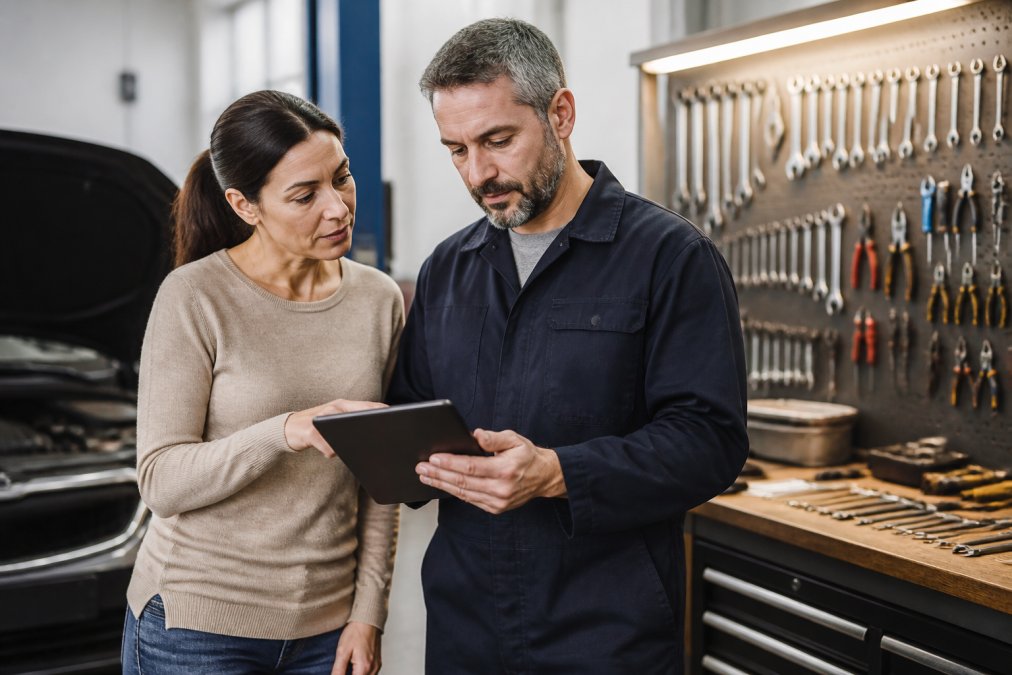
Before committing to any workshop, work through this practical evaluation checklist. Each item takes only a few minutes to verify and collectively they form a reliable picture of a business's competence and integrity.
- Confirm the business has a physical address and an active ABN you can verify.
- Check the relevant state licensing register for the specific repair category.
- Read at least 10 recent reviews across two or more platforms.
- Look for patterns in complaints, such as repeated mentions of delays or cost overruns.
- Request a written, itemised quote with parts and labour listed separately.
- Ask about warranty terms on both parts and labour.
- Confirm they will notify you of any additional work needed before proceeding.
- Verify their insurance coverage for vehicles in their care.
A workshop that passes all eight checks is a reasonable choice. If a business fails on licensing or refuses a written quote, remove them from consideration entirely, regardless of how positive their reviews appear.
Red Flags That Signal an Unreliable Repair Shop
Spotting warning signs early is just as important as knowing what to look for. Several behaviours should immediately raise concerns about a workshop's reliability.
A repairer who pressures you to make a quick decision or insists on starting work before providing a written quote is prioritising their convenience over your protection. Similarly, be wary of shops that quote a price over the phone without inspecting the vehicle. Accurate repair estimates require visual assessment, and a suspiciously low phone quote often balloons once the work begins.
Vague answers about parts sourcing are another concern. If a workshop cannot clearly state whether they use genuine, OEM, or aftermarket parts, you have no way to assess the quality of what will be installed. Likewise, an unwillingness to provide warranty terms in writing suggests they do not stand behind their workmanship.
Review patterns also reveal problems. A cluster of negative reviews mentioning the same issue, such as vehicles returned with new damage or unresolved cost disputes, indicates a systemic problem rather than an isolated bad experience. The ACCC guidance on consumer guarantees for motor vehicle repairs explains your rights when repairs are faulty, which is worth understanding before you need it.
How Accident Assist Line Connects You With Trusted Repairers
If you have just been in an accident and need to arrange repairs quickly, Accident Assist Line removes the burden of researching workshops while you are still dealing with the aftermath. Our service connects drivers across Victoria, New South Wales, Queensland, and the ACT with repairers we have vetted, organising towing, repairs, and even a hire car so you can get back on the road without delay.
The key difference is our independence. We are not associated with any insurance company. When you call, you receive a callback in under 30 seconds, and our team handles the coordination so you avoid lengthy paperwork and wait times.
For drivers in regional areas who wonder whether the service extends beyond the cities, our coverage includes the full geographic scope of the states we operate in, not just metropolitan centres. And because we are available 24/7, you can reach a real person at 2 AM who will arrange immediate assistance rather than leaving you to manage alone.
Conclusion
Finding a repairer you can trust comes down to a simple formula: verify credentials, ask the right questions, and trust documented evidence over promises. Working through the checklist above can help reduce your risk of substandard work, unexpected costs, and safety issues down the track.
When you are coordinating repairs after an accident, the process becomes harder because time and stress work against careful research. That is where Accident Assist Line steps in. Our 24/7 team vets repairers, organises towing and hire cars, and guides your next steps with independent advice, so you avoid the guesswork entirely.
Get started with Accident Assist Line and let us connect you with a repairer you can rely on, no matter when the accident happens.
Frequently Asked Questions
What should I look for when choosing a car repair shop?
Start with licensed, accredited repairers. Check credentials like Motor Vehicle Repairer Licences issued by state bodies such as NSW Fair Trading or Consumer Affairs Victoria. Look for current certifications from groups like the Australian Automotive Aftermarket Association. Read recent reviews on Google Maps and ProductReview.com.au, and confirm the shop provides written quotes before work starts. A shop that answers questions clearly and explains repair options without pressure is a strong sign of reliability.
How do I know if a mechanic is overcharging me?
Compare written quotes from at least two or three shops. Use services like AutoGuru for transparent pricing on standard repairs. Ask for an itemised quote that lists parts, labour, and any fees. Check whether the hourly rate is within typical market range for your area. A reliable mechanic will explain why a repair costs what it does and will flag any additional work before proceeding, not after the job is done.
What questions should I ask a mechanic before agreeing to repairs?
Ask if they provide a written quote before work begins and whether that quote is binding. Request clarity on whether parts are new, used, or aftermarket. Ask about warranty coverage on both parts and labour. Confirm the expected completion date and whether a hire car is available. Finally, ask if they have handled your vehicle's make and model before, and request examples of similar recent repairs.
How can I verify a repair shop's reputation online?
Cross-check reviews across multiple platforms rather than trusting one source. Google Maps provides local ratings and photos, while ProductReview.com.au offers detailed Australian consumer feedback. Look for consistent patterns in reviews, both positive and negative. A shop with dozens of reviews over several years is more reliable than one with a handful of glowing testimonials. Pay attention to how the business responds to criticism, as this reveals their customer service approach.
This guide is published by Accident Assist Line (ABN 88 634 541 638), with a registered office in Berwick, VIC.