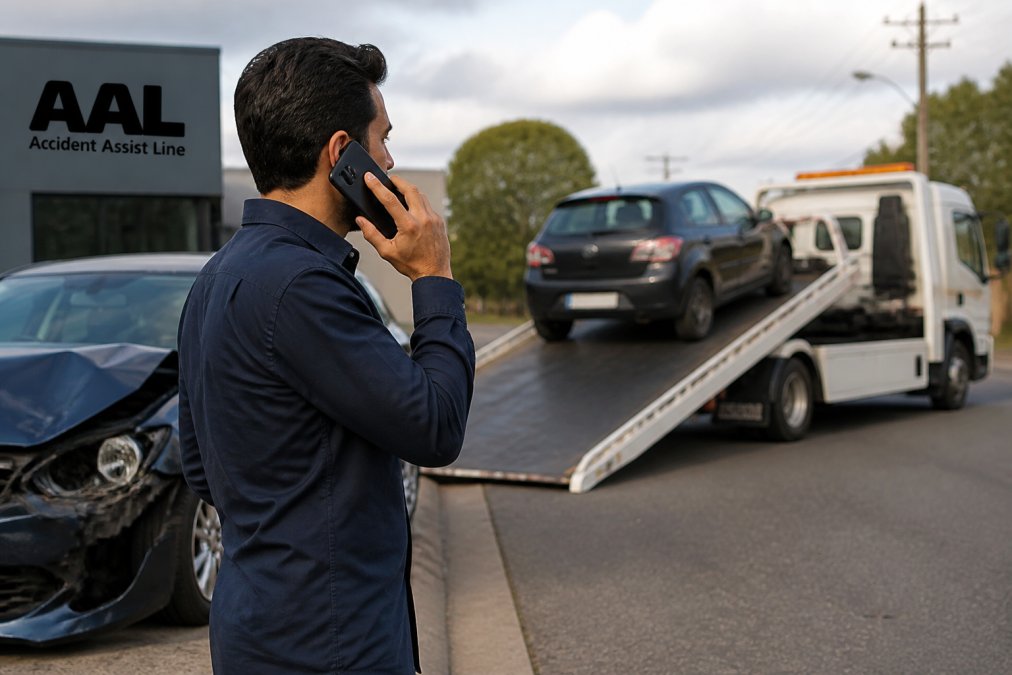
 how-to
24 Hour Accident Support: What to Do After a Crash
Table of Contents
- What to Do After a Car Crash Checklist
- How to Report a Car Accident to Your Insurer
- The Vehicle Accident Recovery Process Explained
- Roadside Assistance vs Accident Recovery: What's the Difference?
- 24 Hour Accident Support for Immediate Help
- Post-Accident Mental Health and Road Trauma Support
- Frequently Asked Questions
Last Updated: September 17, 2026
What to Do After a Car Crash Checklist
The minutes after a crash decide how smoothly everything else goes. This guide from Accident Assist Line covers the full accident support process, from scene safety through to recovery and repair. Work through the checklist below in order, and you will protect yourself, your passengers, and your position with your insurer.
Safety comes before paperwork, every time. Move to a safe spot, check on everyone involved, and call emergency services if anyone is hurt.
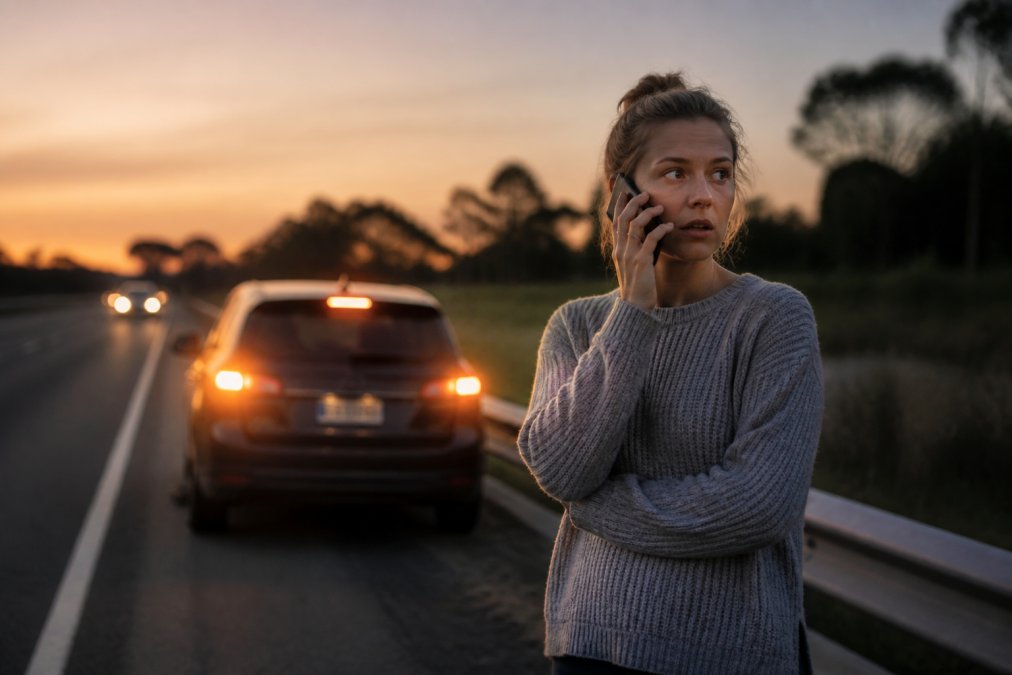
Immediate Steps at the Scene
Stop, switch on your hazard lights, and check for injuries before anything else. In Victoria, you are legally required to stop and exchange details after a crash, and to report the incident to police if anyone is injured or a driver fails to stop. The Victoria Legal Aid guide to driving offences and incidents explains these obligations in plain terms.
What most guides miss is how quickly a crash scene becomes chaotic. A common mistake is standing between vehicles to take photos. Move to the roadside first, then document.
- Stop and secure the scene with hazard lights
- Check all drivers and passengers for injuries
- Call 000 if anyone is hurt
- Move vehicles off the road only if it is safe to do so
- Turn on hazard lights and set up a warning triangle if you have one
Exchanging Details and Witness Statements
Exchange names, addresses, phone numbers, licence details, and registration numbers with the other driver. Keep it factual and brief. Admitting fault at the scene can complicate your insurance position later, so stick to the facts.
Witness statements matter more than most people realise. If a bystander saw what happened, ask for their name and contact number before they leave. A single independent account can resolve a disputed claim faster than any photo.
How to Report a Car Accident to Your Insurer
Contact your insurer as soon as practical, ideally the same day. Most policies require you to notify them within a reasonable timeframe, and delay is one of the most common reasons a claim becomes harder to resolve. If you are unsure of your obligations, check your product disclosure statement (PDS), it sets out the notification window and what you are required to provide.
Before you call or lodge online, have these ready:
- Your policy number and the name on the policy
- The date, time, and location of the crash
- The other driver's name, licence number, registration, and insurer (if known)
- A short factual summary of what happened
- Photos of damage to all vehicles and the scene
- Witness names and contact numbers
- The police report number, if one was filed
Most insurers let you lodge online or by phone. When you speak to them, stick to the facts. Do not speculate about fault, and do not agree to any settlement or repair arrangement on the spot, ask for the next step in writing.
What Happens After You Lodge
Once a claim is lodged, the insurer typically assigns a claim reference number and may arrange an assessment of your vehicle. If your car is at a holding yard, tell the insurer where it is and provide the tow receipt. Storage fees can accrue daily, so confirming the vehicle's location early avoids a nasty surprise.
A common pattern is that the assessment and repair authorisation take longer than people expect.
If a Dispute Arises
The Australian Financial Complaints Authority handles disputes if a claim does not go the way you expect. AFCA is free to consumers and can review decisions made by insurers. Before you escalate, raise the issue with your insurer's internal complaints team first, most disputes resolve at that stage.
Incident Documentation Checklist
Gather everything in one place before you lodge. Missing documents are the single biggest cause of claim delays.
- Photos of all vehicle damage from multiple angles
- Photos of the scene, including road conditions and signage
- Other driver's name, licence, registration, and insurer
- Witness names and contact numbers
- Police report number, if one was filed
- Your own written account of what happened, dated
- Tow truck and repair receipts as they arrive
- Your insurer's claim reference number
- A dated log of every call with your insurer
The Vehicle Accident Recovery Process Explained
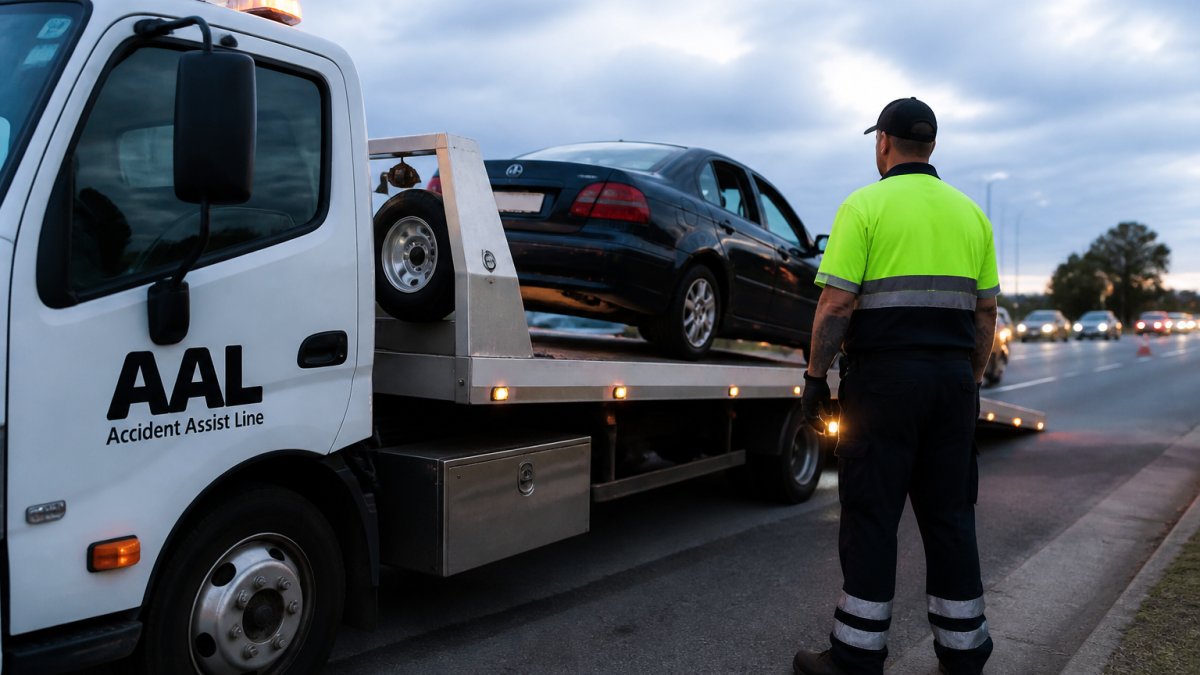
Vehicle accident recovery is the process of removing a damaged vehicle from the scene and getting it to a repairer or holding yard. It starts with a tow, but it does not end there. The full sequence runs from dispatch through to assessment and repair authorisation.
Roadside Assistance vs Accident Recovery: What's the Difference?
Roadside assistance and accident recovery are not the same service, and confusing them costs time. Roadside assistance covers breakdowns: a flat battery, a flat tyre, a locked-out driver, or a car that will not start. Accident recovery covers collision damage, where the vehicle cannot be driven and needs to be towed from a crash scene.
| Situation | Right Service | What Happens |
|---|---|---|
| Flat battery or tyre | Roadside assistance | Technician attends and fixes on the spot |
| Car will not start | Roadside assistance | Jump start or tow to a workshop |
| Collision damage | Accident recovery | Tow from scene to repairer or yard |
| Vehicle undrivable after crash | Accident recovery | Coordinated tow and assessment |
24 Hour Accident Support for Immediate Help
Accident support is the coordinated help that follows a crash: arranging the tow, organising the repair, and liaising with your insurer so you are not managing three separate conversations while shaken. It is available around the clock because crashes do not keep business hours.
Post-Accident Mental Health and Road Trauma Support
Road trauma is a real and under-discussed consequence of even minor crashes. Most guides stop at the vehicle and the paperwork. This section covers what to expect emotionally, how to triage your own response, and where to get help, because the psychological aftermath often outlasts the panel damage.
What Shock Actually Looks Like
Immediately after a crash, the body releases adrenaline and cortisol. That can produce a strange calm, shaky hands, nausea, difficulty concentrating, or a sense that everything is happening in slow motion. These are normal stress responses, not signs of weakness. They typically peak in the first few hours and begin to settle over the following days.
A Simple Triage Framework
Use these three questions to work out what level of support you need:
- Are you safe right now? If you are having thoughts of harming yourself, call 000 or Lifeline on 13 11 14 immediately.
- Are you functioning day to day? If sleep, appetite, work, or driving are significantly affected more than a week after the crash, speak to your GP.
- Is it getting worse rather than better? If symptoms are intensifying rather than easing, that is a signal to seek professional support rather than wait it out.
Where to Get Help
- Your GP. A GP can prepare a mental health care plan, which can open access to Medicare-rebated sessions with a psychologist. This is the most common pathway and does not require a referral from a specialist.
- Lifeline. The Lifeline Australia crisis support service is free, confidential, and available 24 hours on 13 11 14.
- Beyond Blue. Offers free counselling and online resources for anxiety and depression.
- Your insurer. Many policies include some form of counselling benefit after a crash, check your PDS or ask your insurer directly.
Practical Steps That Help
- Write down what happened while it is fresh. This doubles as your insurer record and as a way to process the event.
- Tell someone you trust. Isolation tends to make trauma symptoms worse.
- Limit re-exposure to distressing content, repeatedly watching dashcam footage or reading crash reports can retraumatise.
- Return to driving gradually. Start with short, familiar routes rather than a long highway trip.
- Keep routines: sleep, meals, and movement all support recovery.
If the logistics of the crash, the tow, the repair, the insurer calls, are adding to your stress, a coordination service can take those off your plate so you can focus on recovery.
Frequently Asked Questions
Who should you call for help after an accident?
Call emergency services (000) first if anyone is injured or the scene is unsafe. For towing and recovery, contact a 24 hour accident support service. They can arrange a tow truck through the official allocation network, coordinate repairs, and liaise with your insurer. It's also wise to notify your insurer as soon as possible to begin the claims process.
What is the difference between roadside assistance and accident recovery?
Roadside assistance typically covers breakdowns like flat batteries or flat tyres. Accident recovery is for after a collision, involving towing from the scene, vehicle damage assessment, and coordination with insurers and repairers. Accident recovery services often work with the police and towing allocation networks to clear the scene safely and efficiently.
What information should you exchange with other drivers at the scene?
Exchange full names, addresses, phone numbers, driver's licence numbers, vehicle registration numbers, and insurance details. Note the make, model, and colour of the other vehicle. If there are witnesses, collect their names and contact details. Take photos of the damage, vehicle positions, and the surrounding area. This documentation is vital for your insurer.
How does an independent accident support service differ from roadside assistance?
An independent accident support service specialises in post-accident recovery, not general breakdowns. They arrange towing through official networks, coordinate repairs, and liaise with your insurer. Unlike some roadside providers, they work for you, not an insurance company.