 Comparison
Vehicle Repair Logistics vs DIY Management: Which Wins?
Last Updated: October 24, 2026
Quick Summary
Repair logistics coordinates the tow, assessment, parts, hire car and insurer liaison for you, while DIY management means arranging each of those steps yourself, one phone call at a time. Coordinated logistics costs money and hands some control to a third party, but DIY hours add up fast and a missed call can stall a repair for days.
- The most common mistake is authorising a tow before confirming where the car is going.
- Book a hire car the same week the repair is authorised, not on drop-off day.
- Confirm in writing who pays for the hire car, how long it is approved and what ends it.
- Shop platforms like Tekmetric and Shop-Ware are built for repairers, not drivers.
- Hand over coordination when several decisions, several parties and an undriveable car are involved.
Table of Contents
- Repair Logistics vs DIY Management: The Core Difference
- Side-by-Side Comparison: Logistics Coordination vs DIY
- Your Vehicle Repair Process Checklist: Coordinated vs DIY
- Questions to Ask a Car Repairer Before You Commit
- How to Arrange a Hire Car While Your Car Is Being Repaired
- Car Repair Tracking Tools: What Actually Helps
- Decision Framework: Which Repair Type Suits DIY and Which Needs Coordination
- Request a Tow and Let the Coordination Start
- Frequently Asked Questions
Repair Logistics vs DIY Management: The Core Difference
Repair logistics is the coordination of everything around a repair: the tow, the assessment, the parts, the hire car, the insurer liaison and the handover.

The repair itself is rarely the hard part. The hard part is the sequence.
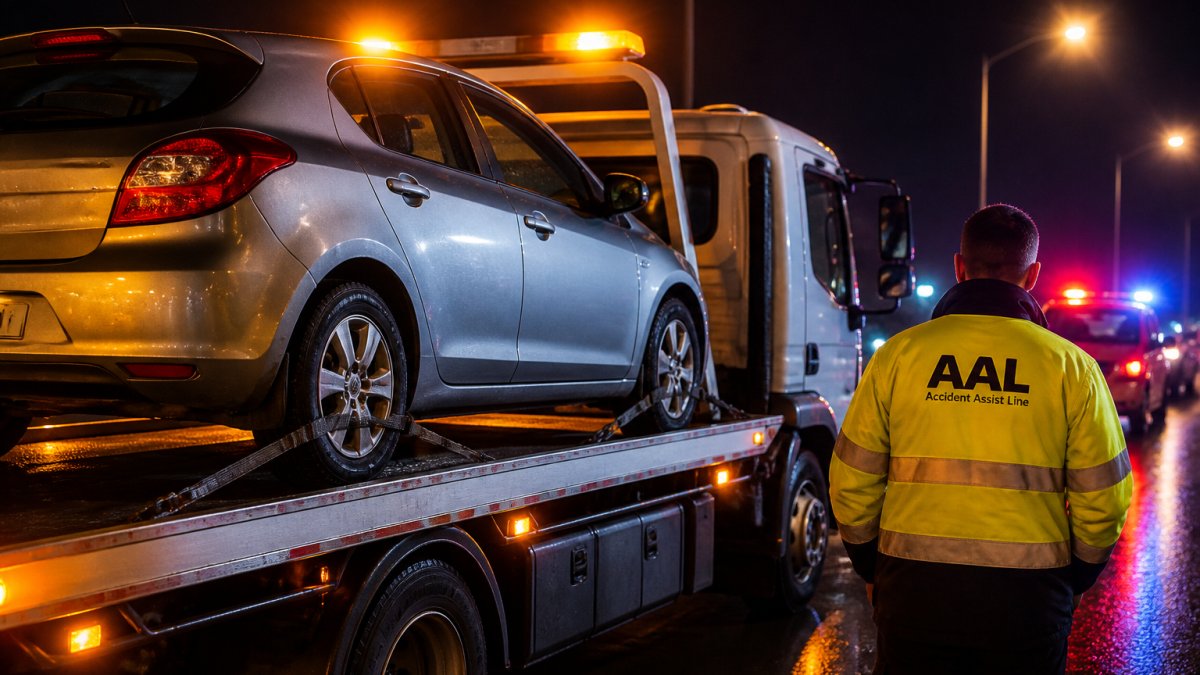
A car that cannot be driven needs to move before anything else can happen. Someone has to authorise the assessment.
Watch out: the most common mistake is authorising a tow before confirming where the car is going.
Side-by-Side Comparison: Logistics Coordination vs DIY
The table below sets out how each path handles the same job.
| Task | Coordinated | DIY management |
|---|---|---|
| Towing | Arranged through the accident-towing allocation network | You call and wait in a queue |
| Repairer selection | Coordinated for you | You research and ring around |
| Insurer liaison | Liaised on your behalf | You take and return every call |
| Hire car | Arranged alongside the repair | You source and extend it yourself |
| Parts and delays | Chased and reported back | You chase the repairer |
| Your time | One point of contact | Multiple calls across days |
Neither column is free of trade-offs. Coordinated logistics costs money and hands some control to a third party. DIY keeps every decision in your hands, but the hours add up fast, and a missed call can stall a repair for days.
Your Vehicle Repair Process Checklist: Coordinated vs DIY
A vehicle repair process checklist keeps the sequence honest. Here is how the two paths compare step by step.
Coordinated path
- Report the incident and confirm the vehicle's location
- Tow arranged through the allocation network
- Repairer assigned and assessment booked
DIY path
- Call a tow operator yourself and wait
- Ring several repairers for quotes and availability
- Book the assessment and attend or authorise remotely
For the full sequence in detail, our guide on steps to coordinate car repairs after an accident walks through each stage from tow to handover. If you are still weighing whether to outsource at all, this breakdown of whether professional repair coordination is worth it compares the costs and time savings directly.
Questions to Ask a Car Repairer Before You Commit
Ask these before you sign anything:
- Are you a licensed repairer, and can you show the licence?
- Will you use new, used or aftermarket parts, and who decides?
- Do you work with my insurer directly, or do I pay and seek reimbursement?
- What is your current wait time for a start date?
- Will you put the quote and any variations in writing before work begins?
- How do you handle delays caused by parts availability?
- What warranty applies to the repair and the paint?
The answers matter because repair quality varies. A repairer who cannot give straight answers on parts and warranty is telling you something. Our guide on how to avoid repair shop kickbacks explains the overcharging signs to watch for.
How to Arrange a Hire Car While Your Car Is Being Repaired
Securing a hire car while your car is being repaired comes down to timing and paperwork, not luck. Book it the same week the repair is authorised, not the day you drop the car off, because approval and vehicle availability both take time.
Confirm the three things that decide everything
Before you accept a booking, get three answers in writing:
- Who is paying, your insurer, the at-fault party's insurer, or you.
- How long the hire is approved for, a fixed number of days, or until repairs finish.
- What ends the hire, the day repairs are completed, the day you are notified, or the day you collect the car.
A hire that ends on the notification day rather than the collection day can leave you without transport for a day or two. Ask which one applies.
Fault and no-fault change the pathway
If you were not at fault, a hire car is often arranged through the at-fault party's insurer or through a not-at-fault hire arrangement, and the cost is typically recovered from the at-fault side rather than paid by you. If you were at fault, the hire depends on whether your policy includes a hire car benefit and what the daily and total limits are.
Match the booking to the repair timeline
Use the repairer's estimated completion date and add a buffer for parts delays. Parts availability is the most common reason a repair runs past its estimate, and an extension is far easier to arrange before a hire period ends than after. If the repairer cannot give a start date, ask for a range rather than a single date, and book to the end of that range.
Extensions and handback
When a repair runs late, contact the hire provider and the insurer on the same day you learn of the delay. Extensions are usually approved faster when the request comes with the repairer's revised completion date. On handback, confirm the return time, fuel level and any excess or bond conditions so you are not caught out at the counter.
When a hire car is not approved
Alternative transport is often the practical answer: a courtesy vehicle from the repairer, a short-term rideshare budget, public transport, or borrowing a vehicle. The right choice depends on how long the repair will take and whether you need the car for work.
Our guide on how to get a hire car after an accident covers how the approval process usually runs.
Car Repair Tracking Tools: What Actually Helps
Car repair tracking tools fall into three groups, and only one is built for you. Most articles stop at naming the software; the useful question is what a driver can actually see and act on.
Workshop platforms (not for you)
Shop management platforms such as Tekmetric, Shop-Ware and Orderry are designed for repairers. They track repair orders, digital inspections and parts ordering internally. Some send photo updates and approval requests to customers, which is genuinely useful, but you cannot buy access to them, and whether you receive updates depends on the workshop's settings.
Technical databases (not for you either)
Technical databases such as ALLDATA Repair give technicians manufacturer-backed procedures and wiring diagrams. Again, a workshop tool. They tell a technician what to do; they tell you nothing about where your car is in the queue.
What a driver can actually use
| Tool or channel | What it shows you | Limitation |
|---|---|---|
| Repairer's customer portal or app | Repair status, photos, approval requests | Only if the workshop offers one |
| SMS or email updates | Milestone notifications | Often generic, no detail on delays |
| Single point of contact | Queue position, hold-ups, ready date | Depends on the contact's responsiveness |
| Your own log | Dates, promises, variations | Only as good as what you record |
The tracking method that works without software
Keep a simple log: the date you authorised the repair, the quoted start date, the estimated completion date, every promise made and by whom, and any variation to the quote. When a repair stalls, the log is what lets you ask a specific question, "you said the parts would arrive on the 12th; what is the new date?", rather than a vague chase.
Why communication gaps cause most delays
Most delays we see are not mechanical. They are communication gaps between repairer, parts supplier and insurer, a part ordered but not confirmed, an approval requested but not chased, a start date moved without anyone telling the driver.
If you are comparing whether to track the process yourself or hand it over, our breakdown of whether professional repair coordination is worth it sets out the time and cost trade-offs.
Decision Framework: Which Repair Type Suits DIY and Which Needs Coordination
Use this framework to sort the job by risk, not by cost.
| Situation | Better path | Why |
|---|---|---|
| Cosmetic panel damage, car driveable | DIY management | Low risk, you can compare quotes calmly |
| Car not driveable after a collision | Coordination | Tow, assessment and storage all need sequencing |
| Repair likely to exceed your excess | Coordination | Insurer liaison and variations need tracking |
| Older vehicle, parts scarce | Coordination | Parts sourcing and delays need chasing |
| Single minor item, one repairer | DIY management | Too small to justify handing over |
| Multiple parties or a disputed fault | Coordination | Correspondence volume gets heavy fast |
The dividing line is complexity. One decision, one repairer, one call: manage it yourself. Several decisions, several parties and a car you cannot drive: hand it over.
Request a Tow and Let the Coordination Start
The gap between a smooth repair and a frustrating one is usually coordination, not workmanship. If your car is undriveable after a collision, the first hour sets the tone for everything that follows.
Accident Assist Line arranges your tow through Victoria's official accident-towing allocation network, coordinates the repair, and liaises with your insurer on your behalf. One call connects you to a real person, 24/7, with no call queues.
Frequently Asked Questions
What is the difference between DIY vehicle repair management and professional coordination?
DIY management means you source quotes, book the repairer, chase parts, arrange the tow and keep your insurer informed yourself. Professional coordination hands those steps to one point of contact who arranges the tow through Victoria's official accident-towing allocation network, books the repair and liaises with your insurer. The repair work itself is identical; the difference is who carries the admin load and the phone calls while you are dealing with the aftermath of a collision.
Which vehicle repairs are suitable to manage yourself?
Routine maintenance such as checking engine oil, topping up fluid levels, setting tyre pressure, testing battery condition and replacing wiper blades is reasonable to do yourself if you have the tools and confidence. Anything involving brake components, structural damage, airbags, advanced driver assistance sensors or post-collision diagnosis belongs with a licensed repairer. If a repair affects roadworthiness or your warranty requirements, get a professional inspection rather than guessing.
What should I do first after a vehicle accident?
Make sure everyone is safe and call emergency services if anyone is injured. Exchange details with the other driver, photograph the scene and damage, then move the vehicle off the road if it is drivable. If it is not, arrange a tow. From there, contact your insurer and, if you want the admin handled, a coordination service that can arrange the tow, the repair booking and the insurer liaison in one call.
How can I coordinate a hire car while my car is being repaired?
Ask your insurer whether your policy includes a hire car and what conditions apply, since this varies by policy. Then confirm with the repairer how long the job is expected to take and whether parts availability could extend it. Booking the hire car around the repairer's confirmed start date avoids paying for a vehicle you cannot use. A coordination service can align the tow, repair booking and hire car timing so you are not chasing three businesses separately.
How can I keep track of a vehicle repair?
Ask the repairer for a written repair order with an itemised scope and expected completion date, and request updates at agreed points rather than calling daily. Many shops use car repair tracking tools such as digital inspection reports with photos, which let you approve work remotely and see progress. Keep your own maintenance records of every quote, approval and invoice. If a coordination service is involved, they become the single point of contact for status updates.
If you are standing beside a damaged car right now, the next step is the tow. Get started with Accident Assist Line and have one person coordinate the tow, the repair and the insurer liaison from first call to handover.