 Comparison
Geelong Accident Repair: Compare Local Options
Table of Contents
- What Geelong Accident Repair Services Actually Offer
- Insurer-Approved Repairer Versus Independent Repairer
- Accident Repair Process and Timeline
- Questions to Ask a Smash Repairer
- Towing, Coordination and Insurer Liaison
- How to Compare Repair Quotes and Timelines
- Frequently Asked Questions
Last Updated: October 14, 2026
What Geelong Accident Repair Services Actually Offer
When your car needs accident repairs, you're choosing between local smash repairers, insurance-approved workshops, and coordination services that arrange everything for you, a difference that matters more than most drivers realise.
Geelong accident repair covers everything from minor dents to major collision damage: panel beating, spray painting, mechanical repairs, and chassis straightening. Some repairers handle all of it in-house; others outsource specialist work like paint matching or advanced diagnostics.
The real choice isn't just who fixes your car, it's who manages the process.
Insurer-Approved Repairer Versus Independent Repairer
An insurer-approved repairer has a formal agreement with your insurance company; an independent repairer doesn't. This distinction shapes your entire repair experience, but it's rarely explained in a way that helps you choose.
First, the key point: in Victoria, you generally have the right to choose your own repairer, even when your insurer has a preferred network. Insurers can ask for a quote from their network and may reserve the right to assess the vehicle, but a blanket refusal to let you use a qualified repairer of your choice is not the default.
Side-by-side comparison
| Factor | Insurer-approved repairer | Independent repairer |
|---|---|---|
| Relationship with insurer | Formal agreement, on the network panel | No agreement, works with any insurer |
| Quote submission | Usually direct to insurer in their format | You or a coordinator forwards the quote |
| Approval speed | Often faster, pre-agreed rates and processes | Can be slower if the quote needs back-and-forth |
| Choice of repairer | Limited to the network | Full choice |
| Parts | Network-agreed parts policy | You can specify genuine, OEM-equivalent, or recycled |
| Warranty | Repairer warranty plus insurer-backed guarantee in many cases | Repairer warranty only, check the terms in writing |
| Cost to you | Usually just your excess | Excess plus any gap between the insurer's approved amount and the repairer's quote |
| Communication | Insurer and repairer often liaise directly | You (or a coordinator) relay information |
What actually drives the decision
- Your policy wording. Some policies include a choice-of-repairer clause; others restrict it. Read the PDS before assuming either way.
- The damage type. Structural or chassis damage often needs specific equipment and manufacturer procedures, network membership is not the same as capability.
- Your excess and any gap. If the insurer approves less than an independent repairer quotes, you may cover the difference. Confirm in writing before work starts.
- Warranty coverage. Get the warranty in writing, including what happens if the repair fails and who honours it if the repairer closes.
- Communication load. With an independent repairer, you're typically the link between workshop and insurer unless you use a coordination service.
Where a coordination service fits
A coordination service sits between you, the repairer, and your insurer. It arranges the tow, books the repair, and liaises with the insurer so quotes are submitted correctly and follow-ups happen on time. It does not handle, manage, negotiate, settle, or pursue a claim on your behalf, that remains between you and your insurer. What it removes is the admin: phone tag, re-sent quotes, and chasing.
Insurance Council of Australia guidance on repairer selection
Accident Repair Process and Timeline
The accident repair timeline depends on damage severity, parts availability, and how smoothly communication flows between you, the repairer, and your insurer.
A typical timeline looks like this:
| Stage | Timeframe | What Happens |
|---|---|---|
| Towing | Immediate | Vehicle collected and transported to repairer |
| Assessment | 1-2 days | Repairer inspects damage, prepares quote |
| Quote approval | 2-5 days | Insurer reviews and approves estimate |
| Repair work | 5-14 days | Depends on damage severity and parts stock |
| Quality check | 1 day | Repairer inspects finished work before handover |
| Handover | Same day | You collect vehicle or arrange transport |
Minor dents and bumper repairs often take 5-7 days total. Major collision damage involving panel replacement, chassis work, or paint matching can stretch to 3-4 weeks, especially if parts are on backorder.
The biggest delays usually come from insurer approval and parts availability, not the repair work itself. A service like Accident Assist Line that liaises with your insurer throughout can speed approvals by ensuring quotes are submitted correctly and following up on hold-ups.
Questions to Ask a Smash Repairer
Before committing to a repairer, ask these questions about their capabilities, timeline, and communication.
On repair quality and guarantees:
- What's your warranty on repair work? (Most reputable shops offer 12 months or longer)
- Do you use genuine parts or aftermarket parts, and what's the difference in your quotes?
- Will you provide a written repair plan detailing what work is included?
On timeline and communication:
- How long will the assessment take, and when will I have a quote?
- What's your typical turnaround for this type of damage?
- How will you keep me updated, phone, email, or a customer portal?
- If parts are delayed, how will you handle that, and will you provide a replacement vehicle?
On insurer liaison:
- Do you work with my insurer, or is this an independent repair?
- Will you submit the quote directly to my insurer, or do I need to?
- Have you dealt with my insurer before, and do you know their approval process?
On your role:
- Will you coordinate the tow, or do I arrange that separately?
- If my insurer disputes the quote, how do you handle that?
These questions reveal whether a repairer is organised, communicative, and experienced with insurer processes. Vague answers or discomfort discussing timelines are red flags.
Motor Trades Association of Victoria standards for smash repair
Towing, Coordination and Insurer Liaison
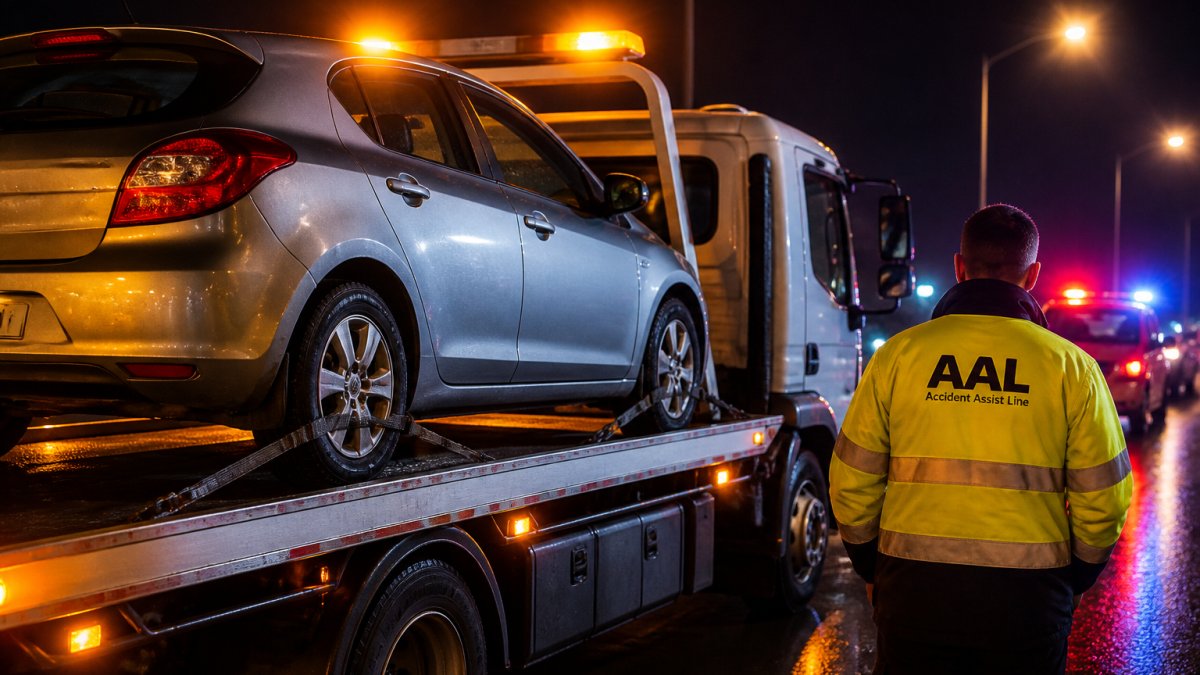
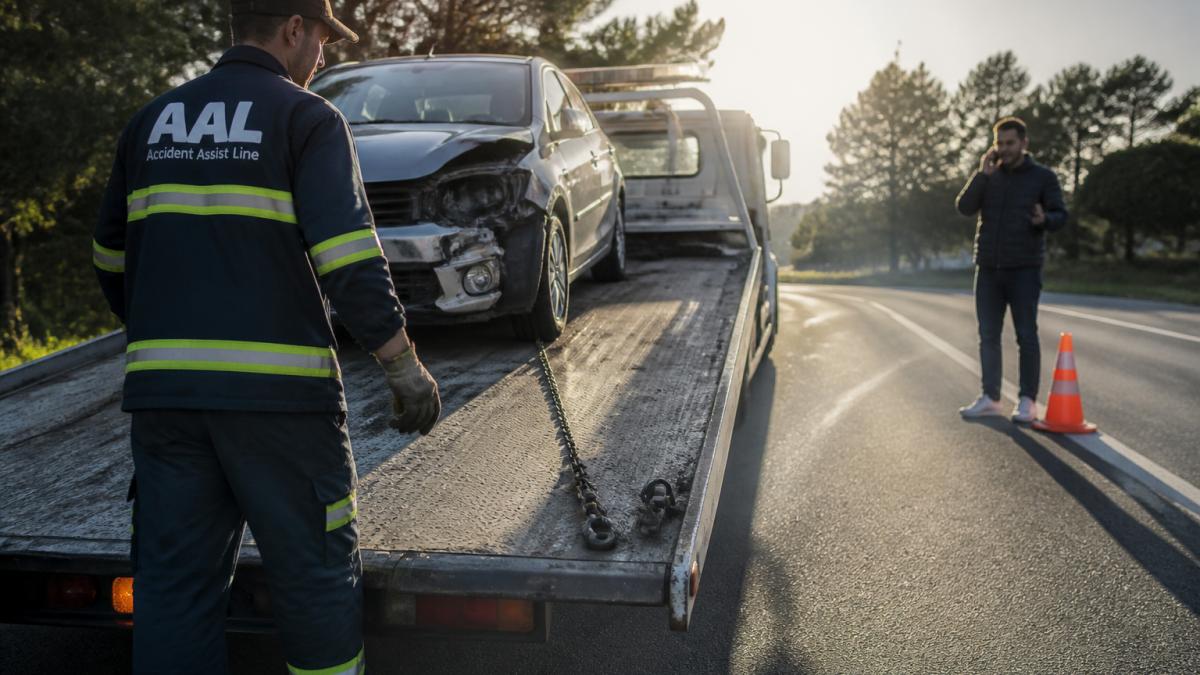
After an accident, your first step is usually arranging a tow.
How towing and repairer selection work together:
Your insurer often has preferred tow operators and repairers. Call them after an accident and they'll typically arrange the tow through their network and direct you to an approved repairer, simpler, but it limits your choice.
Insurer liaison during repair:
Once your car reaches the repairer, communication between repairer and insurer becomes critical.
A coordination service like Accident Assist Line arranges this for you.
How to Compare Repair Quotes and Timelines
Most pages tell you to "get a few quotes" but never show you how to read one. Here's a practical framework for comparing quotes line by line, so you can tell a genuinely cheaper repair from one that simply leaves work out.
The five lines that decide a quote
Every panel repair quote should break down into these categories. If any is missing, ask for it before comparing.
- Parts, genuine (manufacturer-branded), OEM-equivalent (same spec, third party), or recycled. Each has a different cost and warranty position. A quote that says only "parts" isn't comparable to one that specifies.
- Labour, panel, paint, and any mechanical or electrical time, usually quoted in hours at a rate. Two quotes with the same total can hide very different hour counts.
- Paint and materials, paint matching, blending into adjacent panels, clear coat, and consumables. Blending is the line most often omitted from a cheap quote, and it determines whether the repair is visible in certain light.
- Sublet work, wheel alignment, air-conditioning regas, ADAS recalibration, or diagnostic scans sent to a third party. If a quote doesn't mention recalibration on a vehicle with driver-assistance features, ask why.
- Incidentals, tow, storage, replacement vehicle, and any assessment fee, sometimes billed separately by the insurer or tow operator rather than the repairer.
A worked comparison
Imagine two quotes for the same rear-quarter panel damage on a mid-size SUV:
| Line | Repairer A | Repairer B |
|---|---|---|
| Parts | Genuine panel, listed | "Panel, aftermarket" |
| Labour hours | 14 hours, itemised | 9 hours, not itemised |
| Paint | Match + blend to two adjacent panels | "Respray panel" |
| Recalibration | Listed (rear sensors affected) | Not mentioned |
| Warranty | 24 months, written | "Standard warranty" |
| Turnaround | 8 working days from approval | "About a week" |
Repairer B looks cheaper on the headline number, but the missing blend, unlisted recalibration, and vague warranty mean the quotes don't describe the same job. Ask B to quote the same scope as A and the gap often narrows or disappears.
Questions that expose a thin quote
- Which parts are genuine, OEM-equivalent, or recycled, and what warranty applies to each?
- Is paint blending included, and across how many adjacent panels?
- Does the vehicle need ADAS recalibration after this repair, and is it in the quote?
- What is the labour rate, and how many hours are allocated to each stage?
- Is the warranty written, how long does it run, and what does it cover?
- What is the expected handover date measured from insurer approval, not from drop-off?
Comparing timelines fairly
Timelines are only comparable if they start from the same point. Ask each repairer for two numbers: days from drop-off to assessment complete, and days from insurer approval to handover. The second reflects the workshop's actual capacity, a repairer who assesses in 24 hours but takes three weeks to start isn't faster than one who assesses in three days and starts immediately.
Why itemised quotes matter for your insurer
Insurers assess quotes against their own schedule of rates and parts allowances. A quote bundling labour and materials into one figure is harder to assess and more likely to be queried, adding days to approval. An itemised quote, parts, labour hours, paint, sublet, incidentals, moves through faster because each line can be checked against the schedule. This is one practical reason a coordination service that liaises with your insurer can reduce approval delays: the quote arrives in a format the assessor can process.
Motor Trades Association of Victoria standards for smash repair
Frequently Asked Questions
Can I choose my own repairer after an accident in Geelong?
Yes, you can typically choose your own repairer. However, your insurance policy may require approval before work begins. Some policies offer a list of preferred repairers that may offer faster processing or warranty benefits. If you choose an independent repairer not on your insurer's approved list, check with your insurer first to ensure they will cover the repair. Using a coordination service can help manage this approval process on your behalf.
What questions should I ask a smash repairer before booking?
Ask about their insurance approval status, repair warranty, expected turnaround time, and how they communicate updates. Enquire whether they use genuine or aftermarket parts, what inspection process they follow, and whether they offer a replacement vehicle while yours is being repaired. Request a detailed written quote that itemises labour, parts, and paint work. Confirm they have experience with your vehicle's make and model, especially if you drive a luxury or electric vehicle.
What's the difference between using a coordination service and calling a repairer directly?
A coordination service arranges your tow immediately, liaises with your insurer throughout the repair, and manages communication between you and the repairer. Calling a repairer directly means you handle towing arrangements yourself, manage quote approvals with your insurer, and coordinate all communication. A coordination service removes these tasks, which is valuable if you're injured, stressed, or unable to make multiple calls after an accident.
How long does accident repair typically take in Geelong?
Minor damage like dents and scratches may take 3-7 days. Major collision damage can take 2-6 weeks, depending on parts availability and paint work. Mechanical repairs add time if hidden damage is discovered during inspection. Turnaround depends on the repairer's workload and whether parts must be ordered. Always request a timeline estimate in writing and ask about delays if parts are unavailable.
After an accident, you need your car fixed fast and your insurer coordinated with smoothly. Accident Assist Line arranges your tow through Victoria's official network, coordinates the repair with a qualified repairer, and liaises with your insurer throughout, so you're not managing multiple calls and hold-ups. One call connects you to a real person, 24/7, no queues. Request my tow and let us handle the coordination.