 blog
CrashClaim vs CrashSolutions Review: 2026 Comparison
Table of Contents
- CrashClaim vs CrashSolutions: Quick Comparison
- CrashClaim Reviews: What Customers Report
- The Car Accident Repair Process: What to Expect Step by Step
- Questions to Ask an Accident Management Company Before You Agree
- How to Dispute an Insurance Rental Car Denial
- Which Service Fits Your Situation?
- Frequently Asked Questions
Last Updated: October 12, 2026
CrashClaim vs CrashSolutions: Quick Comparison
Comparing CrashClaim vs CrashSolutions is really a question about who answers the phone after a crash and what they do next. Both operate as accident management services, but the practical differences show up in how they are structured, who they answer to, and what they ask you to sign. This guide from Accident Assist Line breaks down what each service does, what customers report, and how to decide.
Accident management is a service that coordinates the tow, repair, and insurer liaison after a car crash, acting as a single point of contact for the driver. It is not the same as your insurer, and it does not replace your policy. Accident management providers typically sit between you and your insurer: they arrange logistics, but the claim itself remains yours.
Why the two names are easy to confuse
CrashClaim and CrashSolutions are both trading names used by accident management and claims-support businesses, and neither is a household brand in the way a major insurer is. That means the useful comparison is not brand versus brand, it is business model versus business model. Two providers with similar names can operate very differently: one may be a tow-and-repair coordinator that bills your insurer, while another may be a claims-administration service that charges you directly. Before you call either, confirm which model you are dealing with.
| Factor | What to check for CrashClaim | What to check for CrashSolutions |
|---|---|---|
| Business model | Whether it is a tow/repair coordinator or a claims administrator | Same question, confirm in writing |
| Who it answers to | Whether it acts for you or is aligned with a repairer or insurer | Same question |
| Service area | Which suburbs and regions it actually covers | Same question |
| Eligibility | At-fault, not-at-fault, uninsured, disputed-fault | Same question |
| Fees and charges | Any upfront fee, admin fee, or fee recovered from the insurer | Same question |
| Repairs | Whether you can choose your own repairer | Same question |
| Replacement vehicle | Whether one is arranged and who pays | Same question |
| Cancellation | Notice period and any penalty | Same question |
| Complaints | Internal process and external escalation pathway | Same question |
Neither service is a substitute for your insurer. Where they add value is in the coordination work most drivers do not want to do themselves, the tow, the repair booking, and the back-and-forth with the insurer.
What each service actually does after a crash
A crash management service typically arranges a tow, books a repairer, and communicates with your insurer so you are not chasing three parties at once. The practical difference between providers usually comes down to response time, repairer network, and whether they charge you directly or bill the insurer.
Ask each provider three questions before agreeing to anything: who pays if the insurer declines, what happens if fault is disputed, and whether you can cancel without penalty.
CrashClaim Reviews: What Customers Report
CrashClaim reviews tend to focus on turnaround time and communication, which is what most drivers care about after a crash. Review platforms show a mix of positive and negative feedback for nearly every provider in this space, so read recent reviews rather than the overall star rating.
A method for reading reviews that actually tells you something
Most review pages for accident management providers are sparse, and a meaningful share of the visible reviews are unrelated to the service you are considering, they may be for a similarly named business, a different state's operation, or a product that no longer exists. Before you trust a review, check three things:
- Date. A review older than about 12 months may describe a process, owner, or phone number that has since changed.
- Specificity. A review that names the suburb, the vehicle, the repairer, or the stage where things went wrong is more useful than a one-line rating.
- Pattern. One bad review is noise. Three reviews mentioning the same issue, a slow tow, a surprise invoice, a repair that had to be redone, is a signal.
A practical approach: read the three-star reviews first. They usually describe both what worked and what did not, which tells you more than five-star or one-star extremes.
What to look for in CrashClaim reviews specifically
When you check CrashClaim reviews, look for patterns across several reviews rather than one-off complaints. Repeated themes around response time, repair quality, or billing are more useful than a single bad experience. In particular, watch for:
- Billing disputes. Reviews that mention an unexpected invoice, a fee taken from the settlement, or a charge the reviewer says was not disclosed.
- Repair quality. Reviews that mention a repair that failed a follow-up inspection, or a repairer that was changed mid-job.
- Communication gaps. Reviews that mention being unable to reach the same person twice, or being passed between call centres.
- Tow delays. Reviews that mention a long wait for a tow, particularly outside business hours.
What the review evidence cannot tell you
No public review set will tell you whether a provider is right for your situation. Reviews describe past experiences, not your policy, your fault position, or your repairer preferences. Treat them as one input among several, alongside the provider's written terms, your insurer's rules, and the questions you ask before signing.
If a provider's reviews are thin, ask them directly for two or three recent customer references in your area. A provider that cannot or will not supply any is telling you something.
The Car Accident Repair Process: What to Expect Step by Step
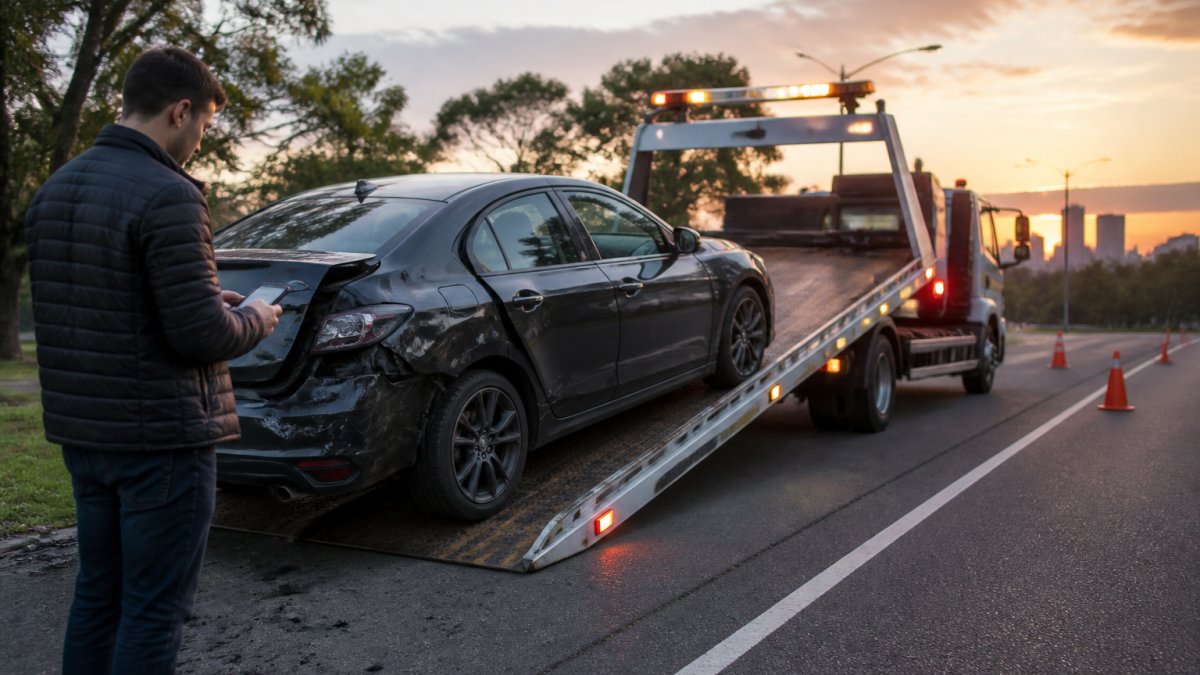
The car accident repair process runs from the tow through assessment, authorisation, repair, and return of your vehicle. Understanding each stage helps you spot delays early.
- Secure the scene and exchange details. Report the incident if required and collect the other driver's information.
- Arrange the tow. In Victoria, towing is allocated through the official accident-towing network. Your provider should arrange this for you.
- Lodge your claim. Notify your insurer and get a claim reference.
- Assessment. The insurer or repairer assesses the damage and authorises work.
- Repairs. The repairer completes the job and updates you on progress.
- Return and review. Collect your vehicle and check the repair before signing off.
How Fault Affects Your Repair and Tow Options
Fault changes who pays and which repairer you can use. If you are not at fault, your insurer may still manage the process, and you may have more say in where repairs happen. If fault is disputed, expect delays while the insurers work it out.
In a disputed-fault situation, keep your own records: photos, witness details, and a written timeline. This is the evidence that resolves most disputes.
Questions to Ask an Accident Management Company Before You Agree
Asking the right questions to ask an accident management company before you sign protects you from surprise costs and slow service. Get answers in writing where you can.
- Who pays if my insurer declines the claim?
- Are there any fees, excesses, or out-of-pocket costs I should expect?
- Can I choose my own repairer, or must I use your network?
- What happens if fault is disputed?
- How quickly can you arrange a tow in my area?
- What are the cancellation terms?
- How do you communicate updates, and how often?
How to Dispute an Insurance Rental Car Denial
To dispute an insurance rental car denial, request the decision in writing, check your policy for the relevant entitlement, and escalate through the insurer's internal complaints process before going further. Many denials come down to policy wording, not the accident itself.
Start by asking the insurer to cite the specific policy clause behind the denial. If the wording supports your position, put your case in writing and keep a copy. If it does not, ask what would change the outcome.
If the internal process does not resolve it, you can escalate to the relevant external dispute resolution scheme. Check the current process and timeframes directly with the scheme, as these can change.
Which Service Fits Your Situation?
The right choice depends on your priorities: speed, cost certainty, or how much coordination you want to do yourself. Neither CrashClaim nor CrashSolutions is automatically better; the fit depends on your circumstances.
- Want one point of contact? An accident management service may suit you.
- Prefer to deal with your insurer directly? You can lodge and coordinate the claim yourself.
- Fault disputed? Prioritise a provider that is clear about how it handles disputes.
- Need a tow now? Response time matters more than brand.
For drivers in Melbourne, Geelong, and the Mornington Peninsula, Accident Assist Line arranges your tow through Victoria's official accident-towing allocation network, coordinates the repair, and liaises with your insurer on your behalf. One call connects you to a real person, 24/7, with no call queues. We coordinate the process so you are not managing three parties alone.
Frequently Asked Questions
What is the difference between CrashClaim and CrashSolutions?
Both are accident management services that coordinate towing, repairs and insurer liaison after a crash. The main differences come down to their business model, which insurers or repairers they work with, and how they communicate throughout the claim process. Some services operate as independent coordinators, while others have preferred repairer networks. Before signing anything, ask each provider directly who they work for and how they are paid, because that shapes whose interests they prioritise.
Can I choose an accident management company if I have car insurance?
Yes. Your car insurance policy covers you for the accident, but it does not stop you from using a separate service to arrange the tow and coordinate repairs. Many drivers use an accident management company because they want a single point of contact instead of chasing the insurer and repairer themselves. Check your policy terms first, and confirm with your insurer that using a coordinator will not affect your claim or premium.
How do I dispute an insurance rental car denial?
Start by asking your insurer in writing why the rental car was denied, and request the specific policy clause they are relying on. If your policy includes a hire car benefit and you believe the denial is wrong, lodge a formal complaint through the insurer's internal dispute resolution process. If that fails, you can escalate to the Australian Financial Complaints Authority (AFCA), which handles disputes between consumers and insurers. Keep copies of every call, email and decision letter.
What should I check before agreeing to use an accident management service?
Ask who owns or operates the repairer network, whether there are any fees or excesses you will pay, what happens if fault is disputed, and how long the repair and replacement vehicle arrangements take. Get the answers in writing before you sign. Also check whether the service coordinates with your insurer or works independently, and confirm what happens if you want to cancel. These questions protect you from unexpected costs or delays.
A crash is stressful enough without chasing tow operators, repairers, and insurers at the same time. Accident Assist Line gives you one point of contact for the tow, the repair, and insurer liaison, available 24/7 with no call queues. We arrange your tow through Victoria's official accident-towing allocation network and keep you updated throughout. Request my tow and get the coordination handled.