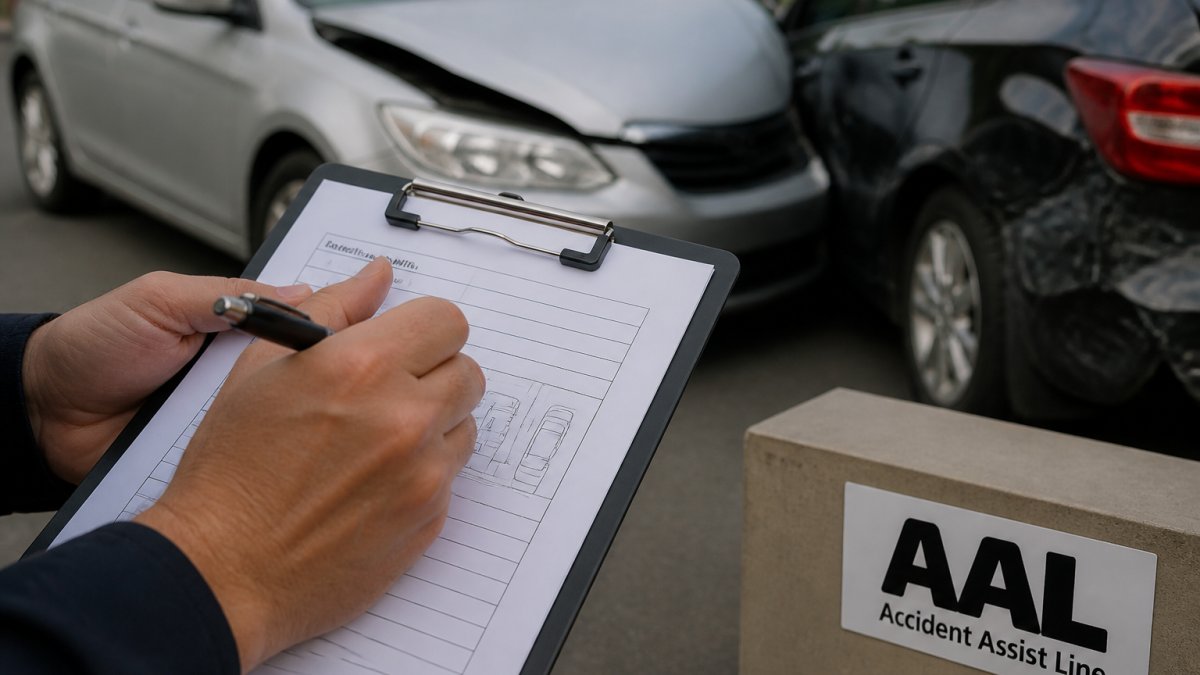
 blog
5 Ways to Report Car Accident Details
Table of Contents
- Why Reporting Car Accident Details Matters
- What Details to Collect After a Car Accident
- Method 1: Direct Police Report
- Method 2: Online Police Reporting Portal
- Method 3: How to Report a Car Accident to Insurance
- Method 4: Car Accident Report Template
- Car Accident Statement Examples
- What to Do When the Other Driver Refuses to Exchange Details
- Frequently Asked Questions
Last Updated: October 10, 2026
Why Reporting Car Accident Details Matters
After a car accident, prioritise safety first. But before anything else, you need to report car accident details accurately. The first hour is when details are freshest, memories fade, witnesses leave, and evidence disappears. Incomplete or inaccurate reports delay repairs, complicate insurance coordination, and undermine your credibility. The good news: reporting car accident details is straightforward once you know what to collect and where to send it.
What Details to Collect After a Car Accident
The information you gather at the scene becomes the foundation for every report that follows. Accuracy and neutrality protect you and strengthen your credibility with police and your insurer.
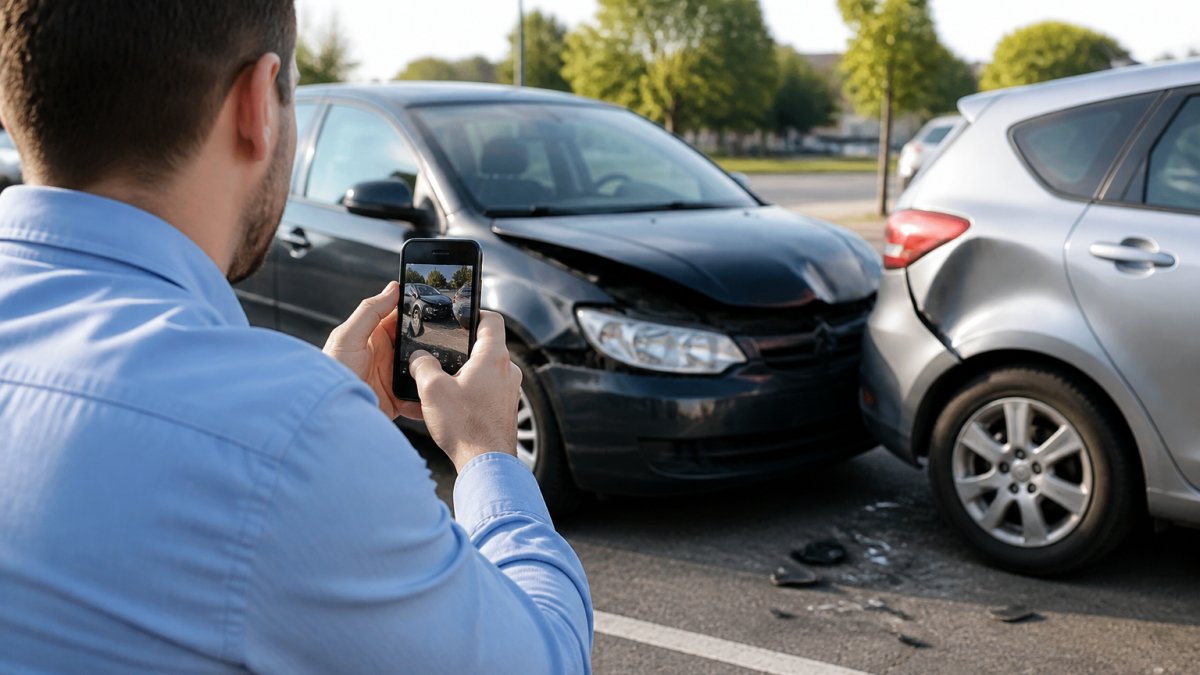
Driver and Vehicle Information
Get the other driver's full name, phone number, email, driver's licence number, and date of birth. For their vehicle, record the make, model, colour, and registration number. Take clear photos of their licence plate. Get their insurance company name and policy number. If they're reluctant to share details, note that in your report.
Scene Documentation
Record the exact date, time, location (street address and suburb), and weather conditions. Take wide photos of both vehicles and their positions, close-ups of damage, and photos of road signs, traffic lights, and debris. These images support your report.
Witness and Insurance Details
If anyone saw the accident, get their name, phone number, email, and a brief account of what they saw. Witnesses strengthen your report. Also record your own insurance details: company name, policy number, and contact number.
How to Report Details Accurately and Neutrally
Separate observed facts from assumptions, inaccurate or speculative accounts can delay your claim or undermine your credibility.
Record observed facts only. Write what you directly saw, heard, or experienced: "The other vehicle was travelling north on Main Road," "I heard impact," "The other driver's vehicle had a dented front bumper."
Avoid interpretation and blame language. Do not write "The other driver was speeding" or "careless", write "The other vehicle approached the intersection quickly" instead. Do not write "I was hit by a negligent driver", write "The other vehicle collided with my vehicle."
Document the sequence of events chronologically: "I was stationary at the red traffic light. The light turned green. I began to move forward. I heard impact from behind.
Evidence Preservation and Documentation
Preserve all evidence systematically: Take photos from multiple angles of both vehicles, damage, scene, road markings, and debris. If you have dashcam footage, transfer it to cloud storage immediately. Get witness names, phone numbers, and email addresses. Keep copies of everything you submit to police and your insurer, including screenshots, emails, and photos stored with date and location in the filename. If you experience any pain or injury after the accident, visit your GP and keep medical records. Obtain written repair quotes and keep all invoices and receipts. Keep copies of all communications with the other driver, their insurer, or police, including emails, texts, and notes of phone calls with dates and times.
Method 1: Direct Police Report
For accidents involving injury, significant damage, or disputed fault, contact Victoria Police on the non-emergency line. The officer will attend the scene, document the accident, and issue an event number, essential for your insurance claim. When you report car accident details to police, be clear and factual without interpretation. Say "I was stopped at the red light when the other vehicle hit my rear bumper" rather than "The other driver wasn't paying attention."
Method 2: Online Police Reporting Portal
Victoria Police operates an online reporting portal for minor accidents where there is no injury and all parties agree on what happened. This method is faster than waiting for an officer to attend and is ideal when the accident is straightforward and both drivers are cooperative.
Eligibility for Online Reporting
You can use the online portal only if all of the following apply:
- No person was injured in the accident
- No vehicle was towed from the scene
- All drivers involved agree on the facts of the accident
- The accident involved only two vehicles
- No third-party property damage occurred (e.g., damage to a fence, street sign, or building)
- The accident did not involve a heavy vehicle or motorcycle
If any of these conditions do not apply, you must lodge a direct police report by calling the non-emergency line or attending a police station in person.
How to Use the Online Portal
Visit the Victoria Police website and navigate to the online reporting section. You will need to create an account or log in if you already have one. The system will guide you through a series of questions about the accident.
You'll enter:
- Date, time, and location of the accident (street address and suburb)
- Your vehicle details (make, model, colour, registration number, and vehicle identification number if available)
- The other driver's full name, date of birth, contact details, driver's licence number, and vehicle details
- Insurance information for both vehicles (company name and policy number)
- A description of how the accident occurred (keep this factual and chronological)
- Witness details if anyone saw the accident
- Photos of vehicle damage, the accident scene, and road conditions
The online system allows you to upload up to five photographs. Ensure images are clear and show the damage and scene from multiple angles.
What Happens After Submission
Once you submit your report, Victoria Police will review it. If the information is complete and all parties' accounts align, the report will be processed and you will receive an event number via email. This typically takes 2-5 business days.
If there are inconsistencies between driver accounts or if the police assessment determines that the accident does not meet the eligibility criteria, you may be contacted to provide additional information or asked to lodge a direct police report instead.
When to Avoid Online Reporting
Do not use the online portal if:
- You are unsure whether the other driver's account matches yours
- The other driver disputes liability or refuses to cooperate
- You suspect the other driver was under the influence of alcohol or drugs
- You believe the other driver was speeding or driving recklessly
- There is any possibility of injury that was not immediately apparent
- The accident occurred in circumstances that warrant investigation (e.g., hit-and-run, vehicle defect, or road hazard)
In these cases, call Victoria Police on the non-emergency line to lodge a direct report. An officer can attend the scene, investigate the circumstances, and issue an event number on the spot.
Method 3: How to Report a Car Accident to Insurance
Contact your insurance company as soon as possible. Most insurers have 24-hour claims lines. Have your policy number ready.
When you report car accident details to your insurer, provide:
- Date, time, and location of the accident
- Other driver's name, contact details, and insurance information
- Police event number (if you have one)
- Photos of damage and the scene
- Witness details and accounts
- Your account of what happened
Your insurer will assign a claims handler. They'll arrange a vehicle inspection, coordinate repairs, and liaise with the other driver's insurer if needed.
Be accurate but brief. Stick to facts. Your insurer doesn't need your interpretation of fault, they'll determine that based on the evidence.
Method 4: Car Accident Report Template
Use this simple template to record car accident details at the scene. You can fill it out on your phone or paper.
Accident Details
- Date: _______________
- Time: _______________
- Location: _______________
- Weather: _______________
- Road conditions: _______________
Other Driver
- Name: _______________
- Phone: _______________
- Email: _______________
- Licence number: _______________
- Date of birth: _______________
Other Vehicle
- Make and model: _______________
- Colour: _______________
- Registration number: _______________
- Insurance company: _______________
- Policy number: _______________
Witnesses
- Name 1: _______________ Phone: _______________
- Name 2: _______________ Phone: _______________
Your Account What happened: _______________
This template ensures you don't miss critical information. Take it with you or screenshot it on your phone.
Car Accident Statement Examples
When you write your account of the accident, clarity matters. Here's how to describe what happened:
Example 1 (rear-end collision): "I was stationary at the red traffic light on Chapel Street. The light turned green. As I began to move forward, a silver sedan struck my rear bumper. The impact pushed my vehicle forward approximately one metre."
Example 2 (intersection accident): "I was travelling north on Main Road and approached the intersection with Side Street. The traffic light was green. A blue sedan travelling east on Side Street entered the intersection and collided with my passenger door."
Example 3 (parked vehicle): "I parked my vehicle on the street at 2:15 pm. At 3:00 pm, I returned to find damage to the driver's side. A note was left by another driver who had struck my vehicle while reversing."
Notice what these examples do: they state the sequence of events without interpretation. They include direction, colour, and position. They avoid blame language like "reckless," "careless," or "at fault."
Write your account this way: neutral, detailed, and chronological.
What to Do When the Other Driver Refuses to Exchange Details
If the other driver won't give you their details or leaves the scene, document everything you can:
- Their vehicle's registration number (the most important piece of information)
- Vehicle make, model, and colour
- Direction they travelled
- Any description of the driver
- Names and contact details of any witnesses
If they leave without providing details, this is a hit-and-run. Report it to Victoria Police immediately. Provide the registration number and description. Police can trace the vehicle owner.
Contact your insurer and explain what happened. Your insurer can work with police to identify the other driver. This is where your photos and witness accounts become critical.
Reporting car accident details accurately protects you and speeds up the repair process. The steps above cover what to collect, where to report it, and how to document your account.
At Accident Assist Line, we coordinate the repair and insurer liaison on your behalf.
Frequently Asked Questions
What details should I collect from the other driver after a car accident?
Collect the other driver's full name, contact number, address, driver licence number, vehicle make and model, registration number, and insurance provider name and policy number. Ask for their date of birth if they're willing to share it. Take photos of their driver licence and vehicle registration plate. If there are witnesses, get their names and contact details too. Write down the date, time, and exact location of the accident, including street names and nearby landmarks.
How do I report a car accident to insurance accurately?
Contact your insurer as soon as possible, many policies require notification within a set timeframe. Provide them with the date, time, and location of the accident, a clear description of what happened, the other driver's details and insurance information, and any police report or event number if one was issued. Stick to the facts: describe the collision neutrally without admitting fault or speculating about causes. Provide photos of the damage, witness contact details, and any medical reports if injuries occurred.
What should I avoid saying when reporting a car accident?
Avoid admitting fault, apologising excessively, or speculating about what caused the accident. Don't discuss your injuries in detail with the other driver, keep that for medical professionals and your insurer. Don't accept cash settlements or sign documents at the scene. Avoid posting details on social media, and don't discuss the accident with anyone except police, your insurer, and medical professionals. Stick to factual, neutral language when describing what happened.
Should I report a car accident to the police?
If there are injuries, significant damage, or the other driver leaves the scene, you should report the accident to police. Even for minor accidents, a police report creates an official record that supports your insurance claim. You can report online through Victoria Police's portal or call their non-emergency number. The police will issue an event number or incident report number, which you'll need for your insurance claim. Check your insurer's policy, some require a police report for claims to be processed.