 blog
Alternatives to Insurer-Recommended Towing Services
Table of Contents
- Why You Can Choose an Alternative to Insurer-Recommended Towing
- Insurer-Arranged, Independent and Roadside Assistance Towing Compared
- How to Choose Your Own Accident Towing Service
- Roadside Assistance Versus Accident Towing: Which Do You Need?
- Questions to Ask an Accident Towing Company Before You Agree
- Policy Terms, Reimbursement and Out-of-Pocket Costs
- What to Do After a Car Accident Tow: Next Steps
- Avoiding Scams, Hidden Fees and Unverified Quotes
- Frequently Asked Questions
Last Updated: October 17, 2026
Why You Can Choose an Alternative to Insurer-Recommended Towing
You can legally choose your own tow after a crash, and doing so often gives you more control over where your vehicle goes and who repairs it. At Accident Assist Line, we hear the same worry every week: "Won't refusing the insurer's tow wreck my claim?" In practice, choosing an alternative to insurer-recommended towing services is a normal decision, not a risky one.
The key distinction is consent. A tow operator needs your clear agreement before hooking up your car. If someone arrives uninvited and starts loading, you can ask them to stop.
Here is what most guides get wrong: they treat the insurer's tow as the default and everything else as a complication. Reverse that.
Below, we break down how the three main options compare, what to ask before you agree, and how to avoid the roadside traps that catch drivers at their most stressed.
Insurer-Arranged, Independent and Roadside Assistance Towing Compared
Three routes exist, and each suits a different situation. Insurer-arranged towing means your insurer or its partner sends a truck to a nominated repairer. Independent towing means you call a local provider directly. Roadside assistance is a membership product that covers breakdowns and minor incidents, and it sometimes extends to towing after a collision.
The trade-offs are real, but they are not abstract. What separates the three options in practice is who authorises the tow, who chooses the destination, how the cost is verified, and how quickly a truck can reach you. Work through those four questions and the right option usually selects itself.
Side-by-Side Comparison Table
| Option | Who Authorises the Tow | Who Chooses the Destination | How Cost Is Verified | Typical Dispatch Speed | Best For | Watch Out For |
|---|---|---|---|---|---|---|
| Insurer-arranged | Insurer or its partner, with your consent | Mostly the insurer | Insurer's arrangement; confirm any excess or gap | Usually fast within the insurer's network | Drivers who want zero admin | Less choice of repair shop; confirm whether a preferred repairer is permitted |
| Independent towing | You | You | Written quote before hook-up | Varies by provider and time of day | Drivers with a preferred repairer | Unverified operators and hidden fees |
| Roadside assistance | You, within the membership terms | You, within network limits | Membership terms; check the towing allowance | Usually fast for breakdowns | Breakdowns and minor incidents | Collision cover varies by tier |
How to Decide at the Roadside
Run this sequence before anyone loads your vehicle:
- Confirm who is authorising the tow. You are the vehicle owner, and a tow operator needs your clear agreement before hooking up. If a truck arrives uninvited, you can ask the operator to stop and wait while you decide.
- Name the destination. If you have a trusted repairer, say so before the hook-up. If you do not, ask the operator where the vehicle will be stored and get the yard address in writing.
- Get the cost in writing. A verified quote separates the call-out fee from the per-kilometre rate and names any after-hours or storage charge. A verbal figure is not a quote.
- Check the response time. Ask how long until arrival and whether that estimate is firm or a window.
That trade is worth it for many drivers, particularly when they already trust a repairer. The reverse is also true: if you have no preferred repairer and want the admin handled, the insurer-arranged route is a reasonable default, just confirm the destination and any gap cost before you agree.
How to Choose Your Own Accident Towing Service
Choosing your own service comes down to four checks: licensing, insurance, a written quote, and a realistic response time. Run them in that order and you filter out most problems before a truck leaves the depot.
- Confirm the operator is licensed and insured. Ask for the business name and check it against the relevant state regulator's public register.
- Request a quote before the hook-up. A verified quote should state the call-out fee and the per-kilometre rate separately.
- Ask where the vehicle is going. Get the storage yard or repairer address in writing.
- Check the service area. Confirm the provider actually covers your location, not just the metro area generally.
A common mistake is agreeing to a tow before asking where the car will be stored. Storage fees can accumulate quickly if the vehicle sits in a yard you did not choose.
Roadside Assistance Versus Accident Towing: Which Do You Need?
Roadside assistance and accident towing solve different problems, and confusing them costs drivers time. Roadside assistance typically covers breakdowns: flat batteries, jump-starts, flat tyres, fuel delivery and lockouts.
If your car simply will not start in a car park, roadside assistance is the right call. If you have been in a collision and panels are crumpled, you need a tow truck equipped for accident recovery, not a battery van.
Many drivers hold roadside assistance and assume it covers everything. Check the terms of your membership before you rely on it after a crash. Some tiers include a towing allowance, others do not.
Questions to Ask an Accident Towing Company Before You Agree
Ask five questions before you let anyone load your vehicle: Are you licensed and insured? What is the total cost, including call-out and per-kilometre fees? Where exactly are you taking the car? How long until you arrive?
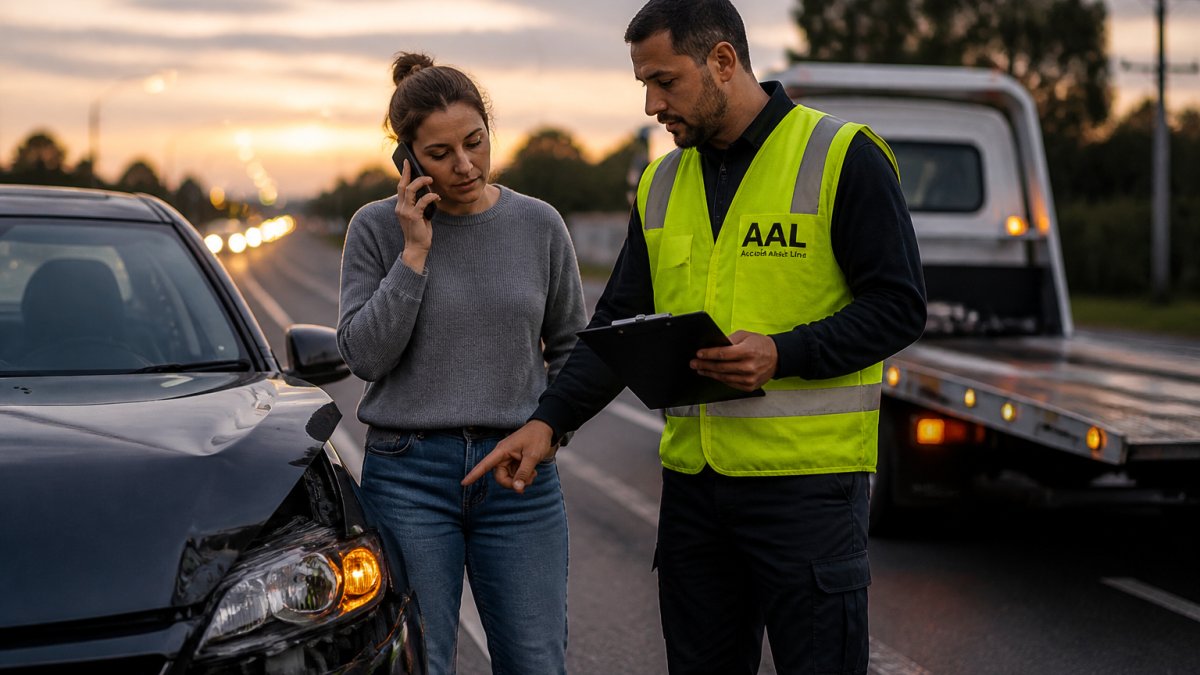
These questions do two things. They give you a verified quote, and they create a record. A reputable operator will answer all five without hesitation. Evasiveness on cost or destination is your signal to call someone else.
Ask for the quote in writing, even by text message. If a dispute arises later, that message is your evidence of what you agreed to.
Policy Terms, Reimbursement and Out-of-Pocket Costs
Your policy wording decides whether you can claim towing costs back, so read it before you assume. Many comprehensive policies include a towing benefit, but the amount and conditions vary. Some reimburse up to a set limit, others require you to use a nominated provider to access the benefit. The only reliable source is your own product disclosure statement and policy schedule, not a forum post or a friend's experience.
The Four Policy Questions to Answer Before You Book
Work through these in order. Each one changes what you should do at the roadside.
- Is there a towing or recovery benefit, and what is the limit? Look for a stated cap and whether it applies per incident or per year. A benefit that covers a short tow may not cover a long-distance recovery.
- Must you use an approved provider? Some policies only reimburse tows arranged through the insurer's network. If yours does, an independent tow may still be allowed but the reimbursement may be reduced or refused, confirm before you book, not after.
- What evidence is required? Most insurers ask for an itemised receipt showing the call-out fee, distance charge and any storage. A handwritten total is usually not enough.
- How and when do you submit? Ask your insurer in writing for the submission channel and any deadline. Keep a copy of everything you send.
Where Out-of-Pocket Costs Come From
Out-of-pocket costs usually come from four places:
- The gap between the tow cost and the policy limit. If the benefit caps at a set amount and the tow exceeds it, you pay the difference.
- Storage fees. Daily storage charges accumulate quickly if the vehicle sits in a yard while paperwork stalls.
- After-hours or weekend surcharges. These are common and should appear in the written quote.
- Admin or assessment charges. Ask whether any fee applies before an assessor inspects the vehicle.
Getting a verified quote upfront is the simplest way to keep those predictable. A quote that separates call-out, distance and storage lets you compare it directly against your policy limit.
What We Do and Do Not Do
We coordinate with insurers on your behalf, but we do not handle, negotiate or settle claims. That distinction matters: your insurer decides the claim, and we make sure the paperwork and repair coordination are ready for them. If you need advice on whether a tow will be reimbursed, ask your insurer directly and get the answer in writing.
What to Do After a Car Accident Tow: Next Steps
After your car is towed, the priority is a clear paper trail. Confirm where the vehicle is stored, get the tow receipt, and notify your insurer that the vehicle has been moved. Then decide on the repair path.
Work through this checklist:
- Save the tow operator's name, licence details and receipt.
- Confirm the storage yard address and any daily storage charge.
- Notify your insurer the vehicle has been towed and where it is.
- Ask whether the insurer needs photos or an assessor's inspection before repairs.
- Choose your repairer and confirm the insurer will work with them.
- Keep a written log of every call, date and reference number.
The thing nobody tells you about the post-tow period is how quickly storage costs can build if communication stalls. Move the vehicle to a repairer promptly once your insurer confirms the next step.
Avoiding Scams, Hidden Fees and Unverified Quotes
Roadside scams thrive on stress.
Red flags to watch for:
- No business name, licence or ABN offered on request.
- A verbal quote with no breakdown of call-out and distance charges.
- Pressure to sign before you have seen the vehicle loaded.
- A destination you cannot confirm.
- Cash-only demands with no receipt.
Consumer Affairs Victoria guidance on your rights when buying services sets out the general protections that apply when you engage a trader, including the right to clear information about cost.
A verified quote names the total, the destination and the operator. If any of those are missing, slow down. You are allowed to call a second provider and compare.
At Accident Assist Line, we arrange towing through Victoria's official accident-towing allocation network and coordinate the repair and insurer liaison, so you have one point of contact.
Frequently Asked Questions
Do I have to use the towing company recommended by my insurer?
In most cases, no. Your insurer may recommend a towing provider, but you generally retain the right to choose your own accident towing service. Check your policy wording for any conditions around approved providers, because choosing an alternative could affect how a reimbursement is assessed. Confirm the terms with your insurer before you book, and keep receipts and a written quote so any out-of-pocket cost is documented.
Can I choose my own tow truck after a car accident?
Yes, you can usually arrange your own tow. When you choose your own accident towing service, confirm the operator is licensed and insured, ask for a verified quote before the truck is loaded, and check the service area covers where you are. If your insurer has a preferred provider, tell them you are arranging an alternative and ask what documentation they need. Keep the quote, invoice and any photos of the vehicle's condition.
What is the difference between roadside assistance and accident towing?
Roadside assistance typically covers breakdowns such as a flat battery, flat tyre or running out of fuel, and often includes a jump-start or battery assistance. Accident towing covers vehicle recovery after a collision, where the car may not be driveable and needs safe loading onto a flatbed. Roadside assistance versus accident towing comes down to the cause: a breakdown call suits a roadside plan, while a collision needs an accident tow and often a repair referral.
What should I do after a car accident tow?
After a car accident tow, note the tow operator's details, the invoice and where the vehicle was taken. Photograph the vehicle before and after loading if you can. Contact your insurer to let them know a tow has been arranged and ask what information they need. Keep all quotes and receipts, and confirm who is coordinating the repair. If you used an independent provider, ask whether they can liaise with your insurer on your behalf.