 how-to
Uninsured Driver Hit You? Here's What to Do
Table of Contents
- Immediate Steps After an Accident with an Uninsured Driver
- Car Accident Evidence Checklist: What to Collect at the Scene
- Reporting Your Car Accident to Police
- Exchanging Details with the Uninsured Driver
- Understanding Your Insurance Options When the Other Driver Is Uninsured
- Recovering Costs from an Uninsured Driver
- Managing Stress and Next Steps
- Conclusion
Last Updated: August 25, 2026
Immediate Steps After an Accident with an Uninsured Driver
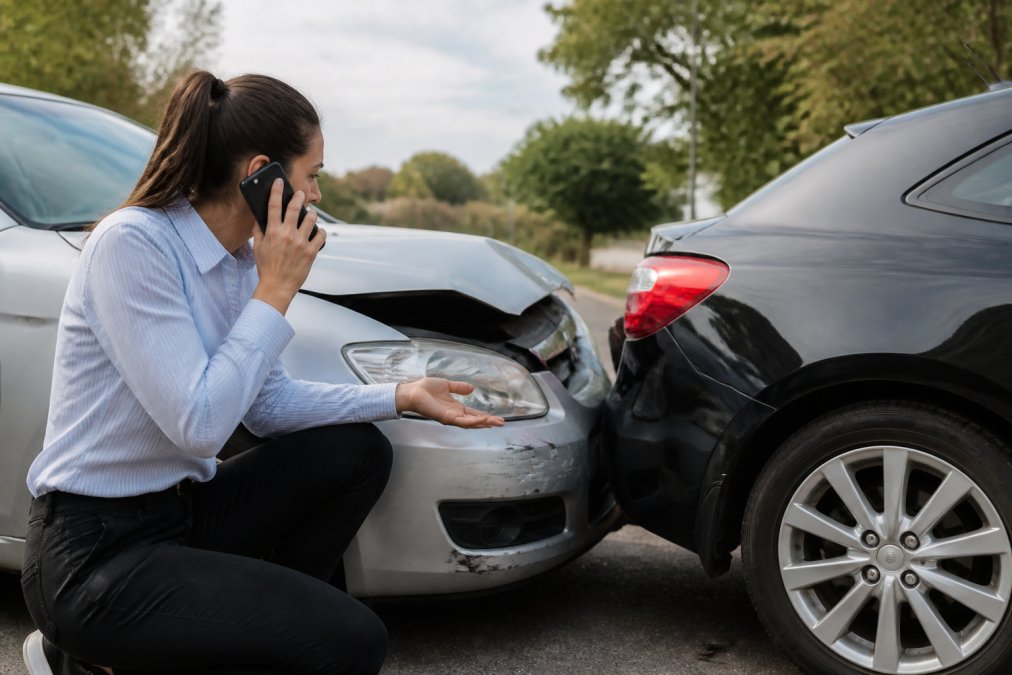
Your first few minutes after a collision determine everything that follows. Prioritise safety: move to a safe location away from traffic, check for injuries, and call emergency services if needed. Then document everything systematically before emotions escalate or the other driver disappears.
An uninsured driver hit you, which means traditional insurance recovery becomes more complex. You'll need to prove the collision happened, establish fault, and demonstrate the other driver's lack of coverage.
Take photos of the accident scene from multiple angles, capturing vehicle damage, road conditions, traffic signs, and the other vehicle's registration number. Get witness contact details before they leave; witness statements often prove decisive when liability is disputed. Call the police and request an incident report; this official documentation carries significant weight in any recovery attempt.
Stay calm during the exchange with the other driver. Avoid admitting fault, even if uncertain. Stick to factual observations: "The light was red when you entered the intersection" rather than "You ran the red light." Keep the conversation brief and professional.
Once you've secured the scene, contact your insurance company and report the accident. Provide the uninsured driver's details and explain that the other party lacks coverage. Your insurer will advise on next steps based on your policy type and whether you have uninsured motorist protection.
Car Accident Evidence Checklist: What to Collect at the Scene
Evidence collected at the accident scene becomes your foundation for recovery. Without it, proving what happened and who was at fault becomes significantly harder.
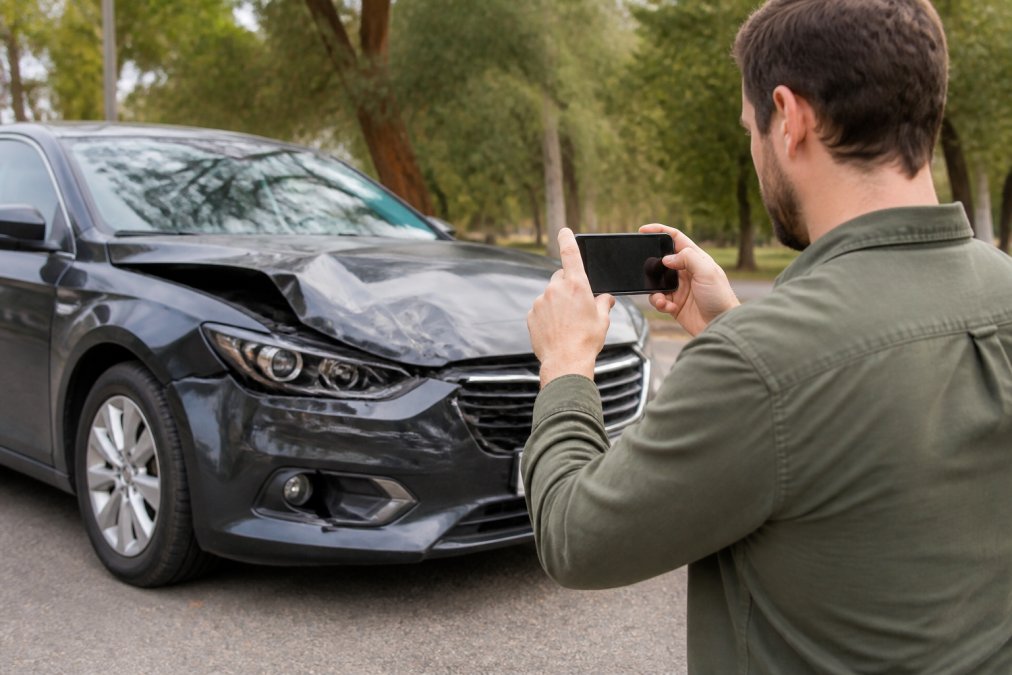
Create a comprehensive record immediately. Photograph the overall scene first with wide shots showing both vehicles' positions relative to road markings, traffic signals, and landmarks. Then zoom in on specific damage to each vehicle, including the registration plate clearly. Document road conditions: wet pavement, debris, potholes, or obstructed sightlines that may have contributed to the collision.
Get the uninsured driver's details in writing. Record their full name, address, date of birth, driver's licence number, and vehicle registration number. Ask for their phone number and email. Request proof of identity and photograph it if they consent. Many uninsured drivers provide false information; verification matters later.
Collect witness contact details before they leave. Ask each witness their name, phone number, and email address. Write down what they saw: which vehicle had the green light, who was speeding, whether either driver was distracted. Don't rely on memory; record these statements on the spot.
Document your own condition and the vehicles' condition. Note any visible injuries, pain, or discomfort you're experiencing. Take photos of your vehicle's interior if you hit your head or sustained any visible injury. These images support personal injury claims later.
Record environmental details: time of day, weather conditions, lighting, traffic volume. Note whether street lights were functioning. Take a photo of the traffic signal showing its current state if relevant to fault determination.
| Evidence Type | What to Collect | Why It Matters |
|---|---|---|
| Vehicle damage | Photos from multiple angles, close-ups of impact points | Establishes collision force and impact location |
| Scene positioning | Wide shots showing vehicle placement relative to road markings | Proves which vehicle was in which lane |
| Registration details | Other driver's licence plate, registration number, driver details | Identifies the uninsured driver and vehicle |
| Witness statements | Names, contact details, what they saw | Third-party confirmation of fault |
| Road conditions | Photos of pavement, weather, visibility, traffic signals | Shows whether conditions contributed to collision |
| Personal injuries | Photos of visible injuries, medical documentation | Supports personal injury claims |
| Police report number | Incident report details and officer name | Official documentation of the accident |
Keep all original photos, videos, and documents in a safe location; cloud storage is ideal. Don't delete anything from your phone. Insurance companies and courts may request these materials, and originals carry more weight than copies.
Reporting Your Car Accident to Police
A police report creates an official record of the collision, which strengthens your position when recovering costs from an uninsured driver.
Call police as soon as it's safe to do so. For serious injuries or significant damage, call triple-zero (000) immediately. For minor collisions without injuries, you can often file a report online within a set timeframe (police.gov.au). Check your local police website for reporting procedures.
When you report the accident, provide accurate details about what happened. Explain that the other driver is uninsured; this fact is significant and should be clearly stated in the report. The police officer will document the collision, take statements, and assign an incident report number. Request a copy of this report; you'll need it for insurance claims and potential legal action.
The police report carries substantial weight because it's created by a neutral third party. Insurance companies and courts treat official police documentation as more credible than your account alone. If the uninsured driver disputes fault, the police report often becomes the deciding factor.
Some uninsured drivers attempt to leave the scene before police arrive. If this happens, note their vehicle details, direction of travel, and any other identifying information. Provide this to police immediately. Leaving the scene of an accident is a serious offence.
Exchanging Details with the Uninsured Driver
The exchange of driver details happens under stress, often with emotions running high. Structured communication protects you and ensures you capture essential information correctly.
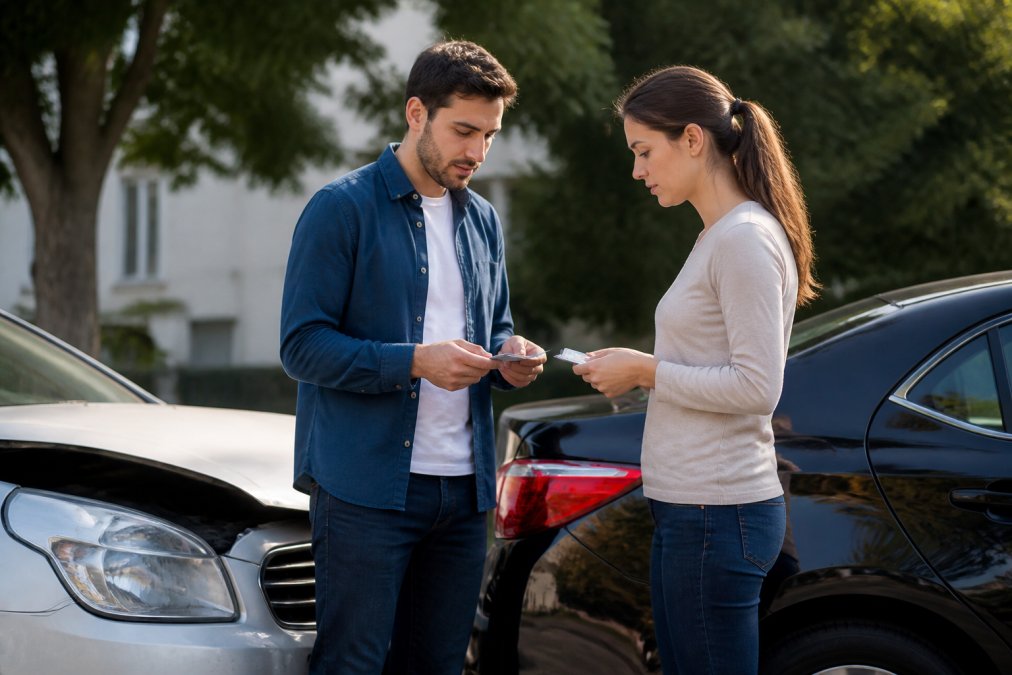
Approach the other driver calmly and professionally. Don't accuse them of being at fault or uninsured; simply request their information. Many uninsured drivers are defensive about their status; an accusatory tone may cause them to become uncooperative or leave the scene.
Request specific information systematically. Ask for their full name, address, phone number, and email. Request their driver's licence number and date of birth. Ask for their vehicle registration number, make, model, and colour. Request their insurance details, policy number and insurer name. Write everything down or photograph their documents directly.
If the other driver claims to have insurance, ask to see their policy documents or insurance card. Request the insurer's name and policy number. Write this down exactly as shown. Later, you'll verify this information with the insurer; if they have no record of coverage, you've documented the uninsured status officially.
Stay factual and avoid admitting fault. Don't say things like "I'm sorry I hit you" or "I wasn't paying attention." Stick to neutral observations: "I was in the intersection when you entered." Keep the conversation brief and professional.
If the other driver refuses to provide information, don't escalate the situation. Note their refusal, document what you can see (registration plate, vehicle description), and call police.
Understanding Your Insurance Options When the Other Driver Is Uninsured
Your own insurance policy determines how you recover costs when the other driver is uninsured. Policy type matters significantly.
If you have comprehensive insurance, you're typically covered for collisions regardless of the other driver's insurance status. Your insurer will cover repairs (minus your excess) and may pursue the uninsured driver separately through subrogation, where your insurer takes over your claim and attempts to recover what they've paid out.
If you have third-party property damage insurance only, coverage is limited. This policy covers damage you cause to other vehicles but doesn't cover damage to your own vehicle. You'll need to pursue the uninsured driver directly for compensation, which is significantly harder without insurance company support.
Some policies include uninsured motorist protection or uninsured driver cover. This optional add-on covers you specifically when the other driver lacks insurance. If you have this coverage, your claim process is simplified. Check your policy documents to confirm whether you have this protection.
When you report the accident to your insurer, clearly state that the other driver is uninsured. Provide the uninsured driver's details and explain what happened. Your insurer will advise on your specific coverage and next steps.
If you don't have insurance at all, your situation is significantly more difficult. You cannot claim through your own policy, and pursuing an uninsured driver directly is expensive and time-consuming. If you're uninsured and hit by another uninsured driver, you have limited options beyond small claims court or civil litigation.
Your insurer's approach to subrogation varies. Ask your insurer explicitly whether they'll pursue the uninsured driver and what percentage recovery they typically achieve.
Recovering Costs from an Uninsured Driver
Recovering money from an uninsured driver requires persistence and often legal intervention. The process is slower and less certain than standard insurance claims, but several pathways exist.
If the uninsured driver admits fault, your first option is direct negotiation. Send a formal letter of demand outlining the damage, repair costs, and your claim for compensation. Include copies of repair quotes, photos of damage, and police report details. State a deadline for payment, typically 14 days. Many uninsured drivers will settle rather than face court proceedings.
If direct negotiation fails, small claims court becomes an option. Small claims courts handle disputes under a certain monetary threshold, typically up to several thousand dollars depending on your jurisdiction (courts.vic.gov.au). The process is less formal than standard court proceedings, costs are lower, and you don't necessarily need a lawyer. File your claim with the court, pay the filing fee, and present your evidence. If you win, the court issues a judgment ordering the uninsured driver to pay.
Winning a judgment doesn't automatically mean receiving payment. You then need to enforce the judgment, which may involve wage garnishment, bank account freezes, or asset seizure. Uninsured drivers often lack the financial means to pay quickly, making enforcement slow and frustrating.
If your insurer has comprehensive coverage, they'll typically handle the pursuit for you through subrogation. Your insurer has more resources and legal standing to pursue the uninsured driver.
Legal representation strengthens your case but adds cost. If your claim is substantial, hiring a lawyer may be worthwhile. Many lawyers work on contingency for motor vehicle claims, taking a percentage of recovered amounts rather than charging upfront fees (lawsociety.com.au).
Document everything throughout the recovery process. Keep copies of all correspondence with the uninsured driver, court documents, and payment records. The timeline for recovery varies widely. Direct negotiation may resolve within weeks. Small claims court typically takes 2-6 months from filing to judgment. Enforcement can take months or years if the uninsured driver resists payment.
Managing Stress and Next Steps
The aftermath of an accident with an uninsured driver extends beyond paperwork and legal processes. The emotional and psychological impact is real and deserves attention.
Many people experience shock, anxiety, or anger after a collision; these reactions are normal. Allow yourself time to process the experience. If you're experiencing persistent anxiety, sleep disruption, or intrusive thoughts about the accident, speak with a healthcare provider.
Physical injuries may appear days after the accident. Whiplash, back pain, and headaches often develop gradually. If you experience any pain or discomfort after the collision, seek medical attention promptly. Document all medical visits and treatments; these records support personal injury claims.
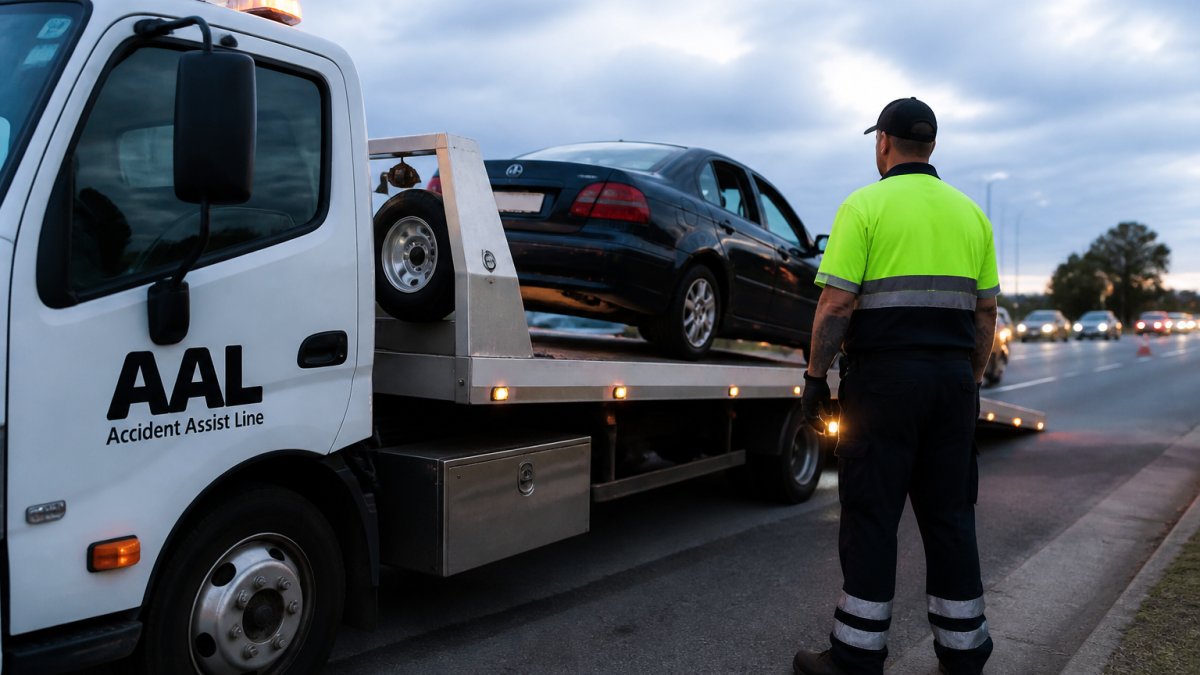
Practical next steps include arranging vehicle repairs, organising hire car arrangements, and managing insurance communications. Accident Assist Line's 24/7 support team handles towing, repair coordination, and hire car arrangements, removing logistical burden so you can focus on recovery.
Contact your employer if the accident affects your work. Review your insurance policy and consider additional coverage for future protection. If this experience revealed gaps in your coverage, now is the time to address them. Uninsured motorist protection, for example, would have simplified your current situation significantly.
Keep all accident-related documents organised in a folder, physical or digital, containing police reports, photos, repair quotes, medical records, and correspondence.
Being hit by an uninsured driver is frustrating and financially stressful, but recovery is achievable. Immediate action, gathering evidence, reporting to police, and documenting everything strengthens your position significantly. Your insurance coverage determines your pathway forward; comprehensive policies provide the most protection. If direct recovery proves difficult, small claims court offers an accessible legal option. Throughout this process, managing stress and seeking support matters as much as the administrative steps. Accident Assist Line provides 24/7 guidance and practical support to coordinate your recovery, from towing and repairs to hire car arrangements, ensuring you're never navigating this alone.
Frequently Asked Questions
What should I do immediately if an uninsured driver hits me?
First, check for injuries and call emergency services if needed. Move vehicles to safety if possible, then call police to report the accident. Exchange contact, registration number, and driver details with the other driver. Photograph the accident scene, vehicle damage, and the other vehicle's registration plate. Contact your insurer as soon as possible, even if the other driver is uninsured. Your comprehensive or third-party property damage cover may still protect you depending on your policy.
Can I claim against an uninsured driver for vehicle repairs?
Yes, but your options depend on your insurance policy. If you have comprehensive insurance, you can claim through your own insurer, though you may pay an excess. If you have third-party property damage cover, it may also apply. You can pursue the uninsured driver directly through small claims court or a letter of demand to recover repair costs and damages. You'll need strong evidence that the other driver was at fault, including police reports, witness statements, and photographic evidence of the accident scene.
Do I need to report an accident with an uninsured driver to police?
Yes, you should report the accident to police, especially if there's significant damage or injury. A police report creates an official incident record and provides documentation for your insurance claim and any legal action. When reporting, provide the other driver's details, registration number, and a description of what happened. Request a copy of the police report for your records. This document strengthens your position if you pursue the uninsured driver for damages through small claims court or legal proceedings.
What information must I collect if the other driver is uninsured?
Collect the other driver's full name, phone number, address, driver's licence number, and vehicle registration number. Get the make, model, and colour of their vehicle. If possible, photograph their driver's licence and registration plate. Record the accident location, date, and time. Take photos of all vehicle damage, the accident scene, and any visible injuries. Collect contact details and statements from any witnesses. Keep receipts for any immediate costs incurred. This evidence is essential for your insurance claim and for recovering costs if you pursue the uninsured driver through small claims or legal action.
This article was written using GrandRanker