 how-to
Is It Worth Filing an Insurance Claim for Minor Damage?
Table of Contents
- When Minor Damage Is Actually Minor
- Car Insurance Excess Explained: Your First Real Number
- Calculating Repair Costs vs Insurance Excess
- The Impact of Insurance Claims on Premiums
- No Claim Bonus Protection: What You Stand to Lose
- What to Document Before You Decide
- Conclusion: Making the Call on Filing an Insurance Claim
- Frequently Asked Questions
Last Updated: September 29, 2026
When Minor Damage Is Actually Minor
A scratched bumper or a cracked tail light rarely justifies the paperwork, the excess, and the premium hit that comes with filing an insurance claim. For most drivers, minor damage means cosmetic or easily repaired harm that costs less to fix privately than the financial knock-on effects of a claim.
That distinction matters more than most people realise. At Accident Assist Line, we see drivers in Melbourne, Geelong and the Mornington Peninsula wrestle with this exact call after a low-speed collision. The emotional pull is to hand it straight to your insurer. The maths often says otherwise.
So what counts as genuinely minor?
- Cosmetic scrapes: paint transfer, light scratches, small dents with no structural impact
- Single-panel damage: one bumper, one door, one guard, no surrounding panels affected
- Working lights and sensors: nothing that affects roadworthiness or safety systems
- No injuries: nobody in either vehicle needed medical attention
If any of those lines blur, the damage is not minor. Structural damage, airbag deployment, or a car that will not drive safely needs professional assessment before you decide anything.
Here is the core tension: your insurer's job is to manage risk across thousands of policies, not to optimise your personal finances. That gap is where good decisions get made or lost.
Car Insurance Excess Explained: Your First Real Number
Your excess is the amount you pay out of your own pocket before your insurer covers the rest of a claim. It is the single most important number in this decision, and it is written into your policy.
If your excess is higher than the repair bill, claiming makes no financial sense. You would pay the full cost anyway, then carry a claim on your record.
How Insurers Set Your Excess
Insurers price excess based on how much risk you carry. Younger drivers, less experienced drivers, and certain vehicle types usually attract a higher excess. You can often lower your premium by choosing a higher excess, but that raises your out-of-pocket cost when you claim.
Two figures to find before you call anyone:
- Your standard excess (the base amount on every claim)
- Any additional excess that applies to you (age, driver history, or vehicle type)
Add them together. That total is your real starting cost.
Calculating Repair Costs vs Insurance Excess
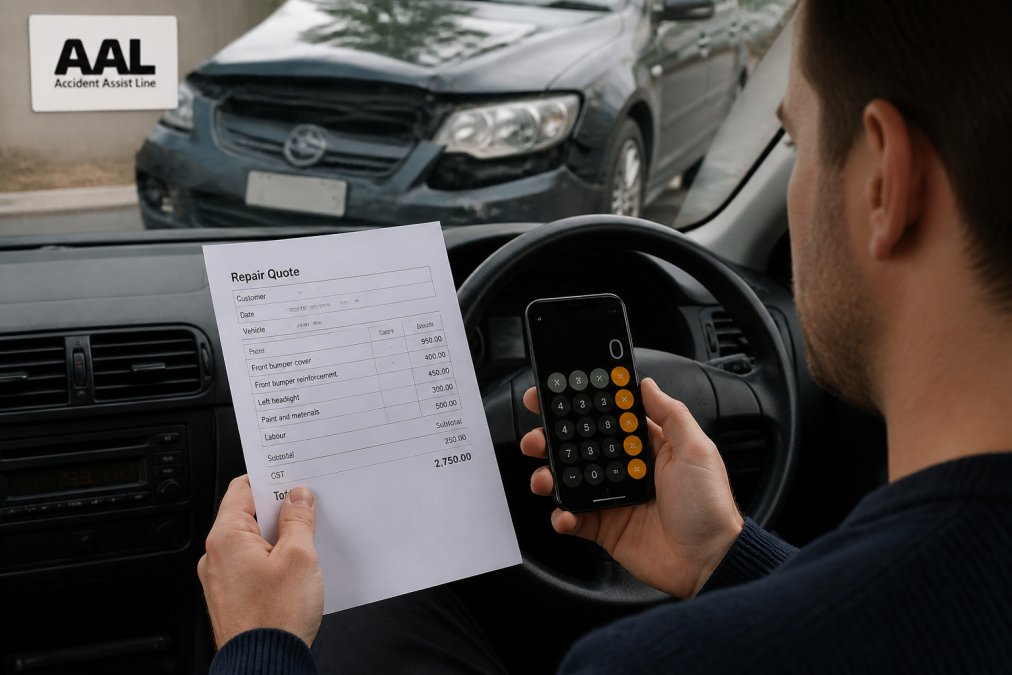
The answer is simple: if the repair quote is close to or below your excess, pay it yourself. If the repair is well above your excess, a claim starts to make sense. The grey zone in between is where you need two numbers, not one.
Get at least two written quotes from repairers. Then compare the lower quote against your total excess.
The Three-Year Cost Formula
Most drivers compare the repair quote to the excess and stop there. That is the wrong comparison. The true cost of claiming is the excess plus every premium increase you will pay before the claim stops affecting your pricing. A simple way to frame it:
Total cost of claiming = excess + (annual premium increase × years the loading applies) + any no claim bonus you lose
Total cost of paying privately = the lower repair quote
If the first figure is larger, pay privately. If the second is larger, claim.
A Worked Example
Suppose your total excess is $800, the lower repair quote is $1,400, and your insurer confirms a claim would add roughly $180 to each of the next three renewals while also dropping one no claim bonus step worth about $120 a year.
- Cost of claiming: $800 excess + ($180 × 3) + ($120 × 3) = $800 + $540 + $360 = $1,700
- Cost of paying privately: $1,400
On those numbers, paying privately is cheaper by about $300, even though the repair bill is well above the excess. This is the scenario the simple 'quote vs excess' rule gets wrong.
Two Quotes, One Decision
| Scenario | Repair Quote vs Excess | What It Usually Means |
|---|---|---|
| Quote below excess | Repair costs less than you'd pay anyway | Pay privately, protect your record |
| Quote near excess | Within a small margin either way | Run the three-year formula before deciding |
| Quote well above excess | Insurer covers the bulk | Claim is likely worth it, but check the loading |
The maths is not just the repair bill. Add the excess, then add the future premium increase over the next few renewals. That combined figure is the true cost of claiming.
The Impact of Insurance Claims on Premiums
A claim on your record usually raises your premium at renewal. Insurers treat you as a higher risk once you have claimed, and that higher risk gets priced in.
The size of the increase depends on your insurer, your claim history, and the type of claim. A single small claim can still push your premium up for several years.
This is the part most drivers underestimate. The repair might cost less than your excess, yet the premium loading can quietly cost more over time than paying for the repair yourself.
A few things soften or worsen the blow:
- Your claims history: a first claim hurts less than a pattern of them
- Fault: at-fault claims typically affect premiums more than not-at-fault claims
- Your insurer's underwriting rules: some load premiums more aggressively than others
Before you claim, ask your insurer directly how a claim would affect your premium.
No Claim Bonus Protection: What You Stand to Lose
Your no claim bonus is a discount earned for each claim-free year. Filing a claim can reset or reduce it, and that loss can outweigh the repair cost entirely.
Then run the numbers:
- What is your no claim bonus worth in dollar terms each year?
- How many years would it take to rebuild it after a claim?
- Does that total exceed the repair quote?
If the answer is yes, paying privately usually wins.
Check Your Policy for Forgiveness Clauses
Before you assume a claim will cost you your bonus, check whether your policy includes an accident forgiveness or minor claim protection feature. These clauses let you lodge a claim without losing your no claim bonus, usually under strict conditions. They are not standard, and the conditions vary widely between insurers.
- "Accident forgiveness" or "claim forgiveness"
- "No claim bonus protection" or "protected no claim bonus"
- "First claim waived" or "one claim forgiven per policy period"
- Conditions limiting forgiveness to a maximum claim value, a minimum claim-free period, or at-fault claims only
How to Confirm It in Writing
Call your insurer and ask three specific questions:
- Does my policy include accident forgiveness or minor claim protection?
- If so, what conditions apply, claim value, claim-free period, fault?
- If I lodge this claim, will my no claim bonus step down, and by how much?
Ask for the answer in writing, by email or through your online account. A written confirmation is the only reliable basis for the three-year cost formula in the previous section. Verbal assurances are not.
What to Document Before You Decide
Document everything, even if you never claim. Good records protect you if the other driver disputes fault, or if damage turns out worse than it first looked.
- Photos of all damage from multiple angles, in good light
- The other driver's name, contact details, licence and registration
- Their insurer's details, if they share them
- Time, date and location of the collision
- A written note of what happened, while it is fresh
- Names and contacts of any witnesses
- Both repair quotes, once you have them
Conclusion: Making the Call on Filing an Insurance Claim
The decision comes down to one comparison: total cost of claiming versus total cost of paying privately. Add your excess, the likely premium rise, and any no claim bonus loss. Then set that against the repair quote.
Frequently Asked Questions
Is it worth claiming for minor damage on a car insurance policy?
It depends on the numbers. Add up your excess and the likely premium increase over the next few years, then compare that total with the repair quotes. If the repair cost sits close to your excess, paying out of pocket usually leaves you better off. If it runs well above, filing an insurance claim starts to make sense.
Does a no-claim bonus discount disappear after a minor accident?
It can. Many policies reduce or remove your no-claim bonus once you make an at-fault claim, even for a small repair. Some insurers offer no claim bonus protection as an add-on, which shields the discount for a set number of claims. Check your product disclosure statement to see whether protection applies to your policy.
What is considered minor damage in a vehicle accident?
Minor damage generally means cosmetic or panel-level harm: scraped bumpers, small dents, cracked lights or scratched paint, with no structural, mechanical or safety impact. Damage near sensors, cameras or the radiator support can look small but cost far more to fix. A repairer's assessment settles the question quickly.
How does the excess compare to the cost of minor vehicle repairs?
Your excess is the fixed amount you pay toward a claim, and it is often higher than a straightforward panel repair. Get two or three written repair estimates, then compare the lowest against your excess. When the gap is small, the premium consequences of claiming usually tip the decision toward paying yourself.