 how-to
Is a Replacement Car Covered by Third Party Insurance?
Table of Contents
- What Third Party Property Damage Insurance Actually Covers
- Is a Replacement Car Covered by Third Party Insurance?
- Non-Fault Accident Replacement Vehicle Rights
- How to Arrange a Rental Car After a Car Accident
- Accident Towing and Repair Coordination in Victoria
- Transferring Cover to Your Replacement Vehicle
- Common Exclusions: What Third Party Insurance Will Not Cover
- Frequently Asked Questions
Last Updated: September 22, 2026
What Third Party Property Damage Insurance Actually Covers
Third party property damage insurance is coverage that pays for damage your vehicle causes to someone else's car, property, or belongings. It does not cover damage to your own vehicle, that's what comprehensive or collision insurance does.
This type of insurance is legally required in most Australian states and protects you financially if you're at fault in an accident, without it, you could be personally liable for repair costs running into thousands of dollars.
Third party property damage covers the other person's losses, not yours. If you hit another car and you're responsible, your insurer pays their repair bill. Your own car requires additional coverage.
Is a Replacement Car Covered by Third Party Insurance?
A replacement car is not covered by third party insurance. Third party insurance pays for damage you cause to someone else's vehicle, not for a rental or replacement car while yours is being repaired. You need rental car coverage as a separate add-on, or you must arrange and pay for a rental yourself.
However, if the accident was not your fault, you may claim the cost of a replacement vehicle from the at-fault driver's insurer. The at-fault party's liability insurance should cover your reasonable rental costs while your car is being repaired.
The key word is "reasonable." Most insurers will cover a similar class of vehicle to the one you normally drive, not a luxury upgrade.
Non-Fault Accident Replacement Vehicle Rights
Your entitlements in a non-fault accident:
- Repair costs for your vehicle
- Reasonable rental car costs during repairs
- Loss of use and diminished value (in some cases)
The at-fault insurer must cover these costs if you can prove the accident wasn't your fault. Documentation matters: photos, police reports, witness statements, and dash cam footage all help establish fault.
How to claim replacement vehicle costs from the at-fault insurer:
Step 1: Report the accident to both insurers immediately Notify your own insurer within 24 hours. Then contact the at-fault driver's insurer directly with your claim reference number, vehicle details, and a brief account of the accident.
Step 2: Establish fault clearly Provide the police report number, photos of the accident scene and damage, witness contact details, and any dash cam footage. The incident report number carries significant weight.
Step 3: Obtain written quotes for repairs and rental costs Get repair and rental quotes in writing. A budget rental matching your vehicle class is reasonable; a premium upgrade is not.
Step 4: Submit your claim for rental reimbursement Email the at-fault insurer with your claim reference, police report number, repair and rental quotes, accident dates, expected repair completion, and supporting documents. Request reimbursement from the accident date until your vehicle is roadworthy.
Step 5: Follow up on timelines The at-fault insurer must acknowledge your claim promptly and investigate within a reasonable period. If they delay without explanation, escalate in writing and request a timeline.
Step 6: Dispute resolution if the claim is rejected If the at-fault insurer denies your rental claim, ask for written reasons. If you disagree, lodge a complaint with the Australian Financial Complaints Authority (AFCA), which handles insurance disputes.
Common disputes over rental costs:
The at-fault insurer may argue your rental was too expensive. If you hired a mid-range sedan matching your normal vehicle, it's reasonable. If you hired a luxury vehicle when you normally drive a budget car, they may refuse the premium. Get a written repair timeline from your repairer upfront and provide it to the at-fault insurer to prevent disputes over repair duration.
In a non-fault situation, the at-fault party's insurer should pay, not yours. The challenge is proving fault and documenting costs clearly. Having someone liaise between you, both insurers, and repair shops keeps things moving and ensures deadlines are met.
How to Arrange a Rental Car After a Car Accident
If your car needs repairs and you need transport, here's how to handle it:
Step 1: Check your insurance policy and notify your insurer Review what your policy covers for rental reimbursement. Call your insurer within 24 hours of the accident, they may arrange a rental directly or approve your choice of rental company.
Step 2: Choose a rental company and keep receipts Select a hire car company matching your normal vehicle class. Keep all receipts and invoices.
Step 3: Claim the cost if you're not at fault If the accident wasn't your fault, submit rental receipts to the at-fault driver's insurer as part of your claim. They should reimburse you for reasonable costs.
Step 4: Return the rental when repairs finish Once your car is ready, return the hire car and keep the final invoice for your records.
Accident Towing and Repair Coordination in Victoria
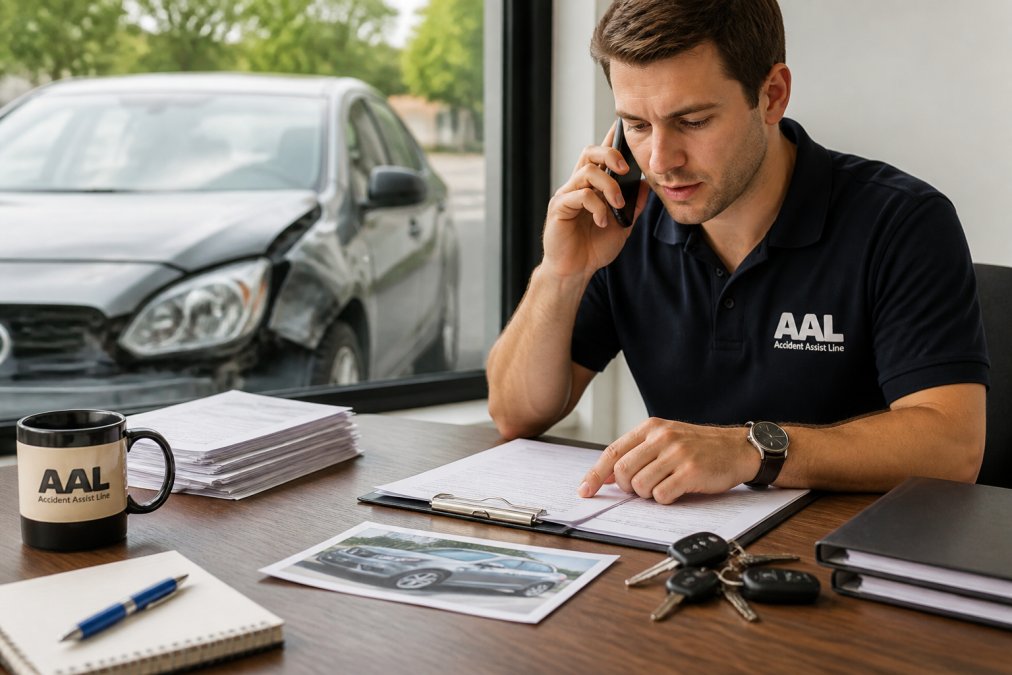
After an accident in Victoria, you need towing and repair coordination fast. Multiple parties, unclear communication, and delays often break down the process.
What needs coordinating:
- Towing the damaged vehicle to a repair facility
- Managing communication between you, your insurer, and the repairer
- Organising a replacement vehicle while repairs happen
In Victoria, towing is allocated through the official accident-towing network based on location and availability. The problem is coordination, you're managing multiple conversations with your insurer, tow operator, repair shop, and hire car company. Messages get missed, timelines slip, and repairs take longer.
At Accident Assist Line, we arrange your tow through Victoria's official network, coordinate repairs, and liaise with your insurer throughout. You get a real person 24/7, no call queues, so you can focus on getting back on the road.
Transferring Cover to Your Replacement Vehicle
Replacement vehicle vs. substitute vehicle: the legal difference
A replacement vehicle is a permanent or semi-permanent substitute you own or have taken possession of with intent to use as your primary transport (e.g., a new car purchased while yours is being repaired). A substitute vehicle is temporary and short-term (e.g., a hire car, borrowed car, or loaner from a dealership).
For a hire car (temporary substitute):
Your hire car agreement includes basic insurance as part of the rental agreement. Your personal car insurance does not automatically transfer to a hired vehicle, the rental company's insurance protects you. However, optional extras on your personal policy (such as breakdown cover or legal expenses) may apply while driving a hire car. Check your policy wording or call your insurer to confirm.
For a borrowed vehicle (temporary substitute):
If you're borrowing someone's car while yours is being repaired, your personal car insurance may not cover you.
For a replacement vehicle you've purchased:
For a courtesy car from a repairer (temporary replacement):
The timing rule: you cannot drive uninsured
Common Exclusions: What Third Party Insurance Will Not Cover
What third party insurance does NOT cover:
- Your own vehicle damage, only the other person's property
- Injuries to you or your passengers, that's motor injury insurance
- Theft or vandalism of your car, that's comprehensive insurance
- Weather damage, hail, flooding, storms
- Mechanical breakdown, wear and tear, engine failure
- Intentional damage, if you deliberately damage someone else's property (not an accident)
- Damage while driving uninsured, if your registration or insurance lapsed
- Damage while driving unlicensed, if you're not a licensed driver
- Damage while driving under the influence, alcohol or drugs
- Damage to rental or hire vehicles, unless you've arranged specific coverage
- Damage to commercial vehicles, if you're using your car for rideshare or delivery without commercial insurance
The biggest exclusion is your own vehicle. Third party insurance is liability coverage. It protects others, not you. If you want protection for your own car, you need comprehensive or collision coverage.
Frequently Asked Questions
Does third party property damage insurance provide a rental car?
Third party property damage insurance does not automatically include a replacement vehicle. It covers damage you cause to another person's vehicle or property, but not your own transport costs. If you're not at fault, your insurer may arrange a temporary substitute vehicle as part of their service. Check your policy or contact your insurer directly to confirm what's available after an accident.
Am I entitled to a replacement vehicle if I am not at fault in an accident?
If you're not at fault, you may be entitled to a temporary substitute vehicle while your car is being repaired. This is not automatic, it depends on your policy terms and your insurer's service offerings. Some insurers include this as standard; others offer it as an optional extra. Your insurer will typically arrange this once liability is established and repairs have begun.
What is the difference between CTP and third party property insurance regarding vehicle replacement?
Compulsory Third Party (CTP) insurance covers bodily injury to other people caused by your vehicle, it does not cover vehicle damage or replacement cars. Third party property damage insurance covers damage to another person's vehicle or property, but not your own transport needs. Neither provides a replacement vehicle as standard. Only comprehensive insurance or your insurer's optional extras may include a temporary substitute vehicle arrangement.
How can I access a replacement vehicle after a non-fault accident?
After a non-fault accident, contact your insurer immediately to report the claim and ask about temporary vehicle arrangements. If your policy includes this service, your insurer will coordinate the rental. Some insurers work with hire companies to arrange a substitute vehicle quickly. You may also contact a tow and repair coordination service to help arrange your tow and liaise with your insurer throughout the repair process.