 how-to
Book Immediate Vehicle Towing and Repairs: A 2026 Guide
Table of Contents
- Why Immediate Vehicle Towing and Repair Booking Matters After an Accident
- Step 1: Call for Emergency Roadside Assistance Right Away
- Step 2: Use a Towing Service Booking Checklist to Organise Your Recovery
- Step 3: Understanding Emergency Roadside Assistance Costs and Coverage
- Step 4: How to Choose a Reliable Mechanic After a Breakdown
- Step 5: Booking a Hire Car and Coordinating Repairs
- Common Mistakes to Avoid When Booking Vehicle Recovery
- Getting Back on the Road: Your Next Steps
Last Updated: August 16, 2026
Why Immediate Vehicle Towing and Repair Booking Matters After an Accident
An accident leaves you shaken, your vehicle damaged, and your schedule in chaos. The immediate vehicle towing and repair booking process determines whether you're back on the road in days or weeks. Most drivers lose control here, waiting on hold with insurers, filling out endless forms, and watching repair shops book up while they hesitate.
Timing matters. Every hour your vehicle sits waiting is an hour without transport. Every day without a hire car disrupts your life. The conventional approach, call your insurance, wait for their approved repairer, coordinate everything yourself, leaves you powerless.
This guide shows you a better way. The five steps below show you exactly how to take control of your immediate vehicle towing and repair booking from the moment an accident happens.
Step 1: Call for Emergency Roadside Assistance Right Away
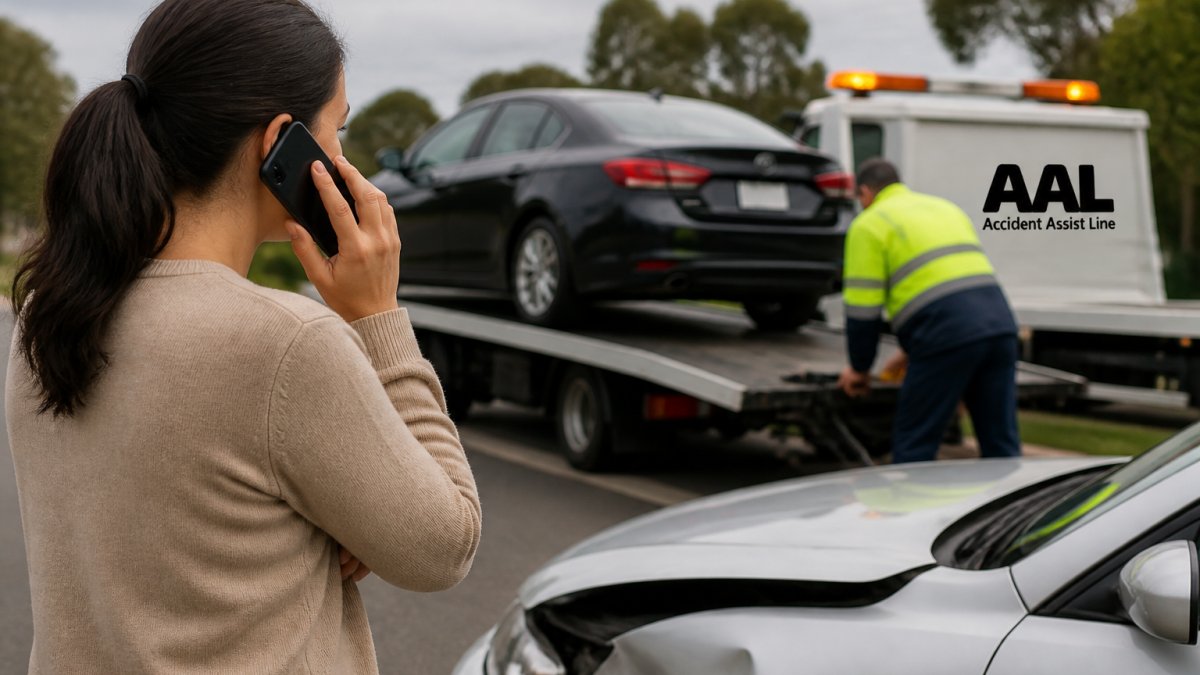
The first 30 minutes after an accident determine your entire recovery pace. Call for emergency roadside assistance immediately, before filling out forms or trying to organise a tow truck yourself.
A 24/7 emergency towing service can dispatch a tow truck while you're still assessing damage. Services offering rapid response, callback in under 30 seconds, dispatch in minutes, mean the difference between being stranded for hours and being in a hire car within a few hours.

What Information to Have Ready
When you call, have these details ready:
- Your current location (address, street name, or landmark)
- Vehicle registration number
- Make, model, and colour of your vehicle
- Description of the damage
- Whether anyone is injured
- Whether the vehicle is safe to remain where it is
- Your mobile number
The operator doesn't need insurance details or a full accident report at this stage, just enough information to locate you and send the right tow truck. Specificity speeds dispatch.
Keep your phone charged and the line open. The driver will call when five minutes away.
Safety While You Wait for the Tow Truck
If your vehicle is on a busy road or motorway, move at least 10 metres away from traffic. Stand on the side away from oncoming vehicles. In darkness, wear something bright or use your phone's torch.
If you're injured, call emergency services (000) immediately. Your health is the priority.
Exchange contact details with other drivers: name, phone number, address, insurance company, and vehicle registration. Take photos of all vehicle damage, the accident scene, and any visible injuries.
Stay calm and patient. Do not attempt to restart your vehicle or drive it. Let professionals assess and transport it safely.
Step 2: Use a Towing Service Booking Checklist to Organise Your Recovery
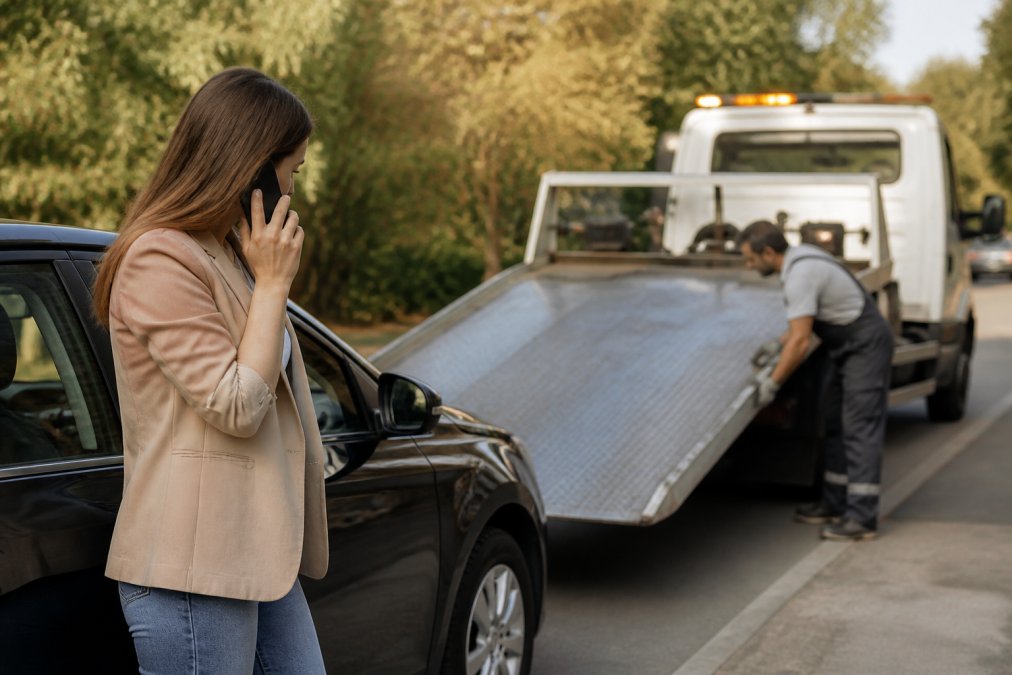
Once the tow truck is en route, organise where your vehicle is going. Your tow truck driver will ask where you want it taken. Decide this before arrival, or you'll waste time on the roadside while they wait for instructions.
A towing service booking checklist ensures all details affecting your recovery speed are confirmed.
Essential Details to Confirm Before Booking
Before the tow truck arrives, confirm:
- Destination: Where is the vehicle being towed? To a specific repair workshop, holding facility, or your home? If you haven't chosen a repairer, ask the towing service to recommend one that can take the vehicle immediately and assess damage the same day.
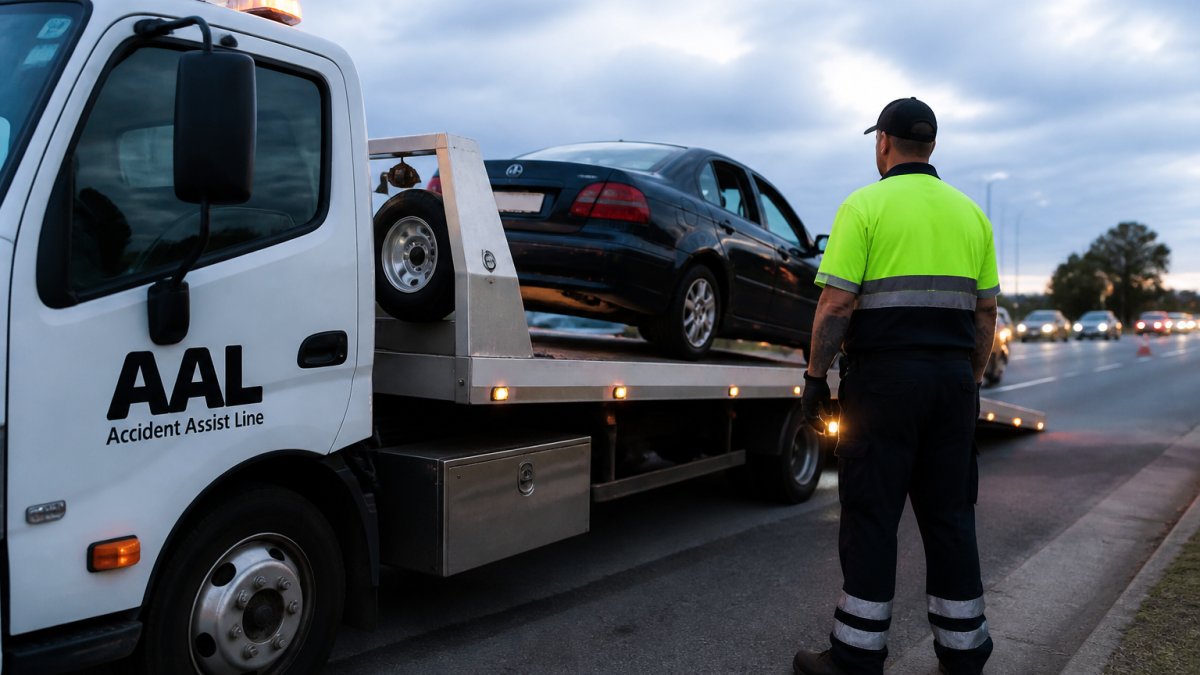
- Vehicle type accommodation: Will the tow truck safely transport your vehicle? Flatbed towing is safer for damaged vehicles than wheel lift towing.
- Immediate repair assessment: Can the destination workshop provide a damage assessment and repair quote within 24 hours?
- Hire car arrangement: Does the towing service coordinate hire cars, or do you arrange separately?
- Insurance notification: Should you notify your insurer now, or will the towing service do this?
- Payment responsibility: Who pays for the tow? Clarify before arrival to avoid surprises.
A quality service handles most confirmations for you. You shouldn't be making decisions on the roadside while stressed.
Verifying Your Tow Truck Arrival Time
The service should give you a specific arrival window, "between 2:15 and 2:45 PM", not a vague timeframe. If they cannot, ask why. Knowing the actual arrival time lets you plan your next move.
Many services now offer real-time tracking. Ask if you can see the tow truck's location on a map. If the arrival time slips beyond the initial window, call back for status.
Step 3: Understanding Emergency Roadside Assistance Costs and Coverage
Emergency roadside assistance costs vary by service, location, and what your insurance covers. Understanding this prevents shock when the bill arrives.
Costs typically include dispatch fees, distance towed, and additional services like jump starts or fuel delivery. Some services charge flat rates; others charge by the kilometre.
What Your Insurance Typically Covers
Most comprehensive car insurance policies in Australia include roadside assistance as standard or optional. This typically covers:
- Towing to the nearest repairer or your home (usually up to 100 kilometres)
- Jump start assistance
- Lockout service
- Fuel delivery
- Tyre change assistance
Coverage limits vary by insurer. Check your policy now, before an accident happens. Know what your roadside assistance covers, the distance limit, and any exclusions. If unsure, call your insurer.
If your insurance doesn't include roadside assistance, consider adding it. The cost is typically modest (often under $100 per year) and can save hundreds if you need emergency towing.
When Additional Costs Apply
You'll pay additional costs when:
- Your vehicle needs towing beyond the insured distance
- You need specialist towing (heavy vehicle, motorcycle, or flatbed)
- You need after-hours assistance
- Your vehicle is in a remote location
- Storage fees apply while repairs are arranged
Ask the towing service upfront what you'll be charged. Do not assume the service is free just because you have insurance. Some insurers require upfront payment with reimbursement later.
Step 4: How to Choose a Reliable Mechanic After a Breakdown
Once your vehicle reaches the workshop, repair quality determines whether you're back on the road in days or weeks. Choose based on credentials, experience with your vehicle type, and ability to provide fast turnaround, not just proximity or your insurer's recommendation.
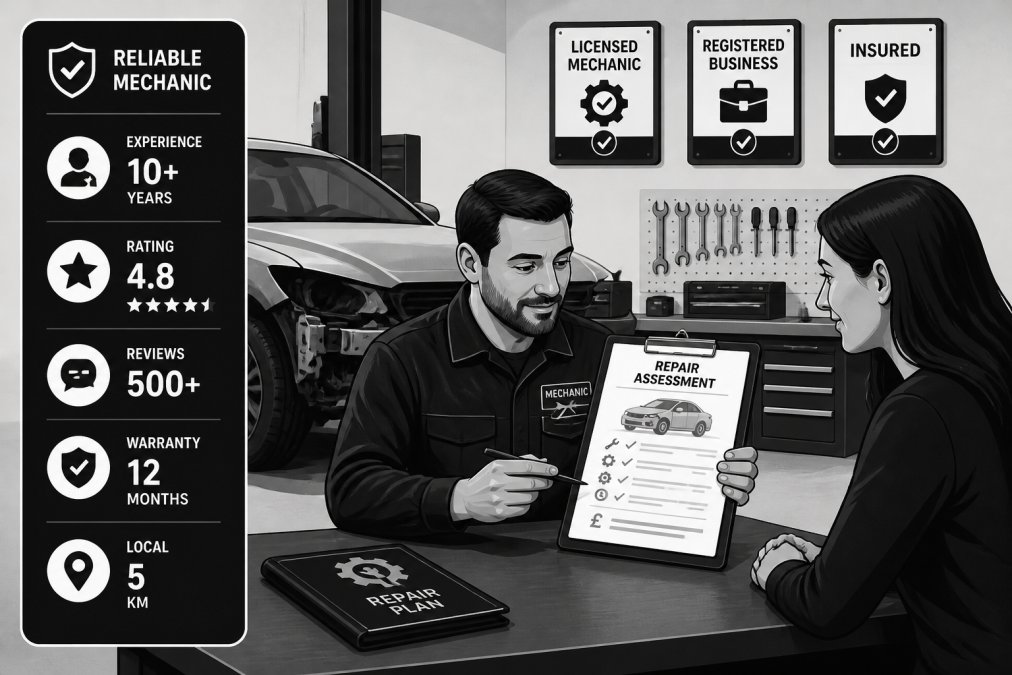
Checking Credentials and Licensing
A reliable mechanic holds current qualifications and licenses:
- Automotive Service Technician Certificate (or equivalent)
- Current registration with your state's automotive body
- Insurance (public liability and professional indemnity)
- Manufacturer accreditation for newer vehicles
Ask directly: "Are you licensed and insured for this type of repair?" A legitimate mechanic will proudly show credentials.
Check online reviews on Google, Facebook, or industry sites. Look for patterns. For accident damage, ask whether the workshop has experience with insurance claims and manages the process directly.
Getting Repair Quotes and Timelines
Before work starts, get a written quote including:
- Itemised list of repairs (specific parts, not vague descriptions)
- Parts and labour costs separately
- Warranty on repairs (usually 12 months)
- Estimated completion date and time
Do not accept vague quotes like "approximately $5,000" or "we'll call you when it's ready."
For accident damage, the insurer will likely send an assessor to verify damage and approve the quote. This adds 1-2 days. Ask whether the workshop can start preliminary work (removing damaged parts, ordering components) while waiting for insurance approval.
Step 5: Booking a Hire Car and Coordinating Repairs
While your vehicle is repaired, you need transport. Book a hire car immediately, ideally while the tow truck is en route, to ensure availability.
Many towing services coordinate hire cars. Confirm:
- Vehicle type: Like-for-like replacement or economy car?
- Daily rate: Is it covered by insurance or out-of-pocket?
- Pickup and drop-off: From the workshop or rental office?
- Fuel policy: Return with full tank or pay for fuel used?
- Duration: Until repair completion or maximum days?
Check your insurance policy before booking to know what you're responsible for. If the workshop doesn't coordinate hire cars, contact Hertz, Avis, or Budget directly.
Coordinate hire car return with repair completion. If your vehicle is ready Friday afternoon, return the hire car Monday morning to check everything works correctly.
Common Mistakes to Avoid When Booking Vehicle Recovery
Waiting too long to call for help. Call immediately after the accident. The tow truck cannot wait.
Not choosing a destination before the tow truck arrives. Decide during the initial call, or ask the service to recommend a workshop that can start work immediately.
Assuming your insurance covers everything. Know your policy limits, exclusions, and requirements before you need help.
Choosing a mechanic based on convenience. A workshop 20 kilometres away that completes repairs in three days beats a convenient workshop needing two weeks.
Not getting a written quote before work starts. Verbal quotes are easy to forget or misunderstand.
Delaying hire car booking. Rental companies book up quickly after accidents. Book within the first hour.
Not asking about insurance claim coordination. Clarify whether the workshop handles claims directly or if you manage it.
Getting Back on the Road: Your Next Steps
Before picking up your vehicle, inspect it thoroughly. Check that repairs are complete, paint matches, and the vehicle starts and drives smoothly. Take a short test drive if permitted. Do not accept the vehicle if unsatisfied.
Ask the workshop for a detailed invoice listing all work, parts used, and labour hours. Keep this for your records.
Return the hire car on schedule and in good condition. Document the odometer reading and fuel level.
Follow up with your insurance claim, providing all invoices, quotes, and documentation. Most claims process within 4-6 weeks if documentation is complete.
If unsatisfied with repair quality or timeline, contact the workshop manager directly. If unresolved, lodge a complaint with your state's consumer protection body.
The stress of an accident fades faster when you take control immediately. Calling for emergency roadside assistance right away, organising your booking checklist, understanding your costs, choosing a qualified mechanic, and coordinating a hire car are the five steps that get you back on the road in days instead of weeks.
Accident Assist Line specialises in this exact process. With 24/7 support, callback in under 30 seconds, and coordination of towing, repairs, and hire cars, they eliminate the delays and paperwork that usually derail recovery. If you're ever in an accident, calling Accident Assist Line means you're never managing recovery alone, you have dedicated support guiding every step until you're back driving safely.
Frequently Asked Questions
What information does a towing service need when I call for immediate vehicle towing and repair booking?
Have ready your vehicle registration number, make and model, current location with street name and suburb, description of the damage, and whether the vehicle is safe to tow or requires special handling. If you're injured or unsafe, mention this first. Most towing services ask if your vehicle has been involved in an accident, whether it's still driveable, and your preferred destination for repairs. Having insurance details available speeds up the process, though many services don't require this before dispatch.
How long does it typically take for a tow truck to arrive after I book immediate vehicle towing?
Response times depend on your location and traffic conditions. In metropolitan areas, most tow trucks arrive within 30 to 60 minutes during business hours. Regional areas may take longer, sometimes 90 minutes to two hours. After-hours and weekend callouts occasionally take longer due to fewer available trucks. When you call, ask for an estimated arrival time and get a callback confirmation. Real-time tracking through your booking app or phone helps you monitor progress. If you're in an unsafe location, prioritise getting to a safe spot whilst you wait.
Should I have my car towed to a dealership or an independent mechanic after an accident?
Dealerships offer manufacturer-specific expertise and genuine parts but typically cost more and may have longer wait times for accident repairs. Independent mechanics often provide faster turnaround and competitive pricing, especially for non-major damage. For accident damage, choose a repairer based on: their experience with accident claims, whether they're licensed and insured, their ability to handle your vehicle type, and their repair timeline. Ask your insurer which repairers are on their approved network, as this can affect your claim. Get written quotes from at least two repairers before deciding, and verify they use quality parts and offer a warranty on repairs.
This article was written using GrandRanker