 how-to
How to Speed Up Car Repairs: 7 Proven Steps
Table of Contents
- What You'll Need Before Your Repair Appointment
- Step 1: Communicate Your Needs Clearly to the Service Advisor
- Step 2: Provide Complete Vehicle and Accident Information Upfront
- Step 3: Approve Repair Estimates and Pre-authorize Work Quickly
- How to Deal with Insurance Repair Delays
- Understanding Average Car Repair Turnaround Time
- How to Avoid Repair Shop Kickbacks and Hidden Costs
- Common Mistakes to Avoid During the Repair Process
Last Updated: August 28, 2026
What You'll Need Before Your Repair Appointment
Getting your car repaired faster starts with complete information. When you call to book an appointment, have your vehicle's registration details, insurance policy number, and a clear description of what happened ready. Bring any existing quotes or damage assessments.
Understand your authorization process upfront. Know whether your insurance company requires pre-approval for repairs above a certain amount and what your excess or deductible is. Ask your insurer in advance whether they have preferred repairers in your area, using one can eliminate approval delays. At Accident Assist Line, we help coordinate this information upfront so there's no confusion when you arrive at the workshop.
Finally, arrange your transport before the repair starts. Confirm whether the workshop offers loaner vehicles or whether you need to arrange one independently.
Step 1: Communicate Your Needs Clearly to the Service Advisor
Be specific about what you've noticed. Explain exactly what happened, when it started, and what symptoms you're experiencing. If it's a post-accident repair, describe the impact direction and which parts were damaged.
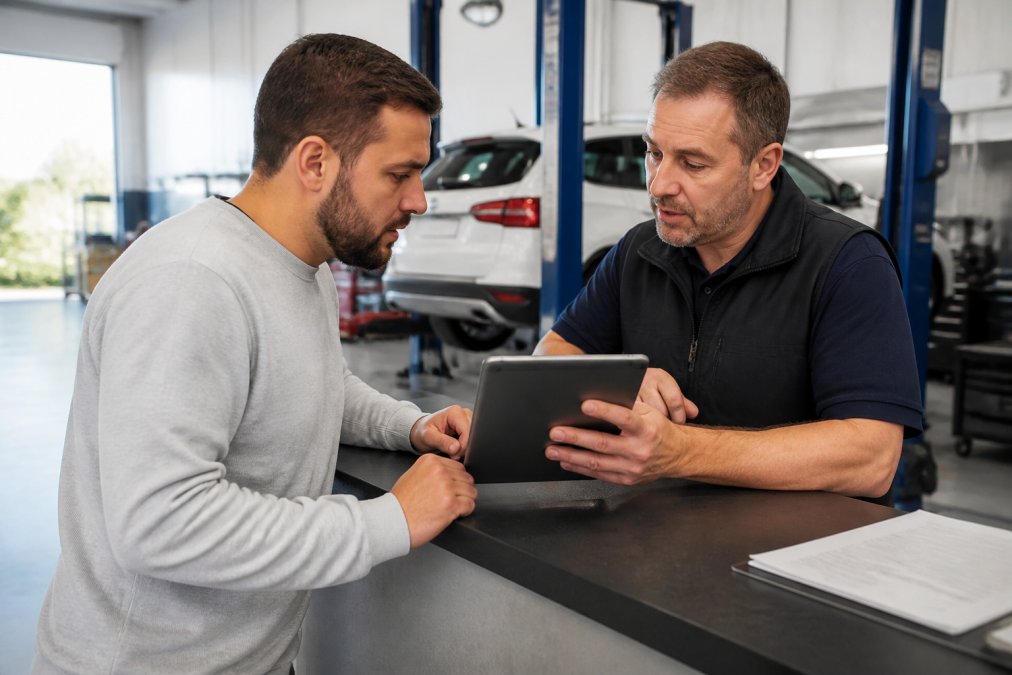
Write down your concerns before you arrive to ensure nothing gets missed. Tell the advisor if you need the vehicle urgently, some repairs can be prioritized or split into essential work now and non-critical work later.
Ask the advisor directly about their current workload. A transparent shop will tell you upfront whether they can turn your vehicle around in days or weeks. Clarify what "done" means: will the repair include a full diagnostic, test-drive, and cleaning?
Step 2: Provide Complete Vehicle and Accident Information Upfront
Before you arrive at the workshop, compile a complete file: your vehicle's make, model, year, engine size, registration number, and VIN. Include photos of the damage from multiple angles in good lighting. Bring original documents, not phone photos.
Document the accident circumstances: date, time, location, weather conditions, and what happened. If there were witnesses, note their details. If police attended, get the incident number. If another vehicle was involved, record their registration, driver details, and insurance information.
Provide your insurance policy details in writing: policy number, insurer's contact details, claim number, and claims officer name. This eliminates hours of back-and-forth requests between the workshop and insurer.
Include any previous repair history for the vehicle. If this component has failed before or there's a known issue with this model, tell the advisor, it can speed up diagnosis.
Step 3: Approve Repair Estimates and Pre-authorize Work Quickly
Ask the workshop to email the estimate directly to your insurer while you're still there. Don't wait for a printed copy to arrive at home.
Review the estimate carefully before it goes to the insurer. Check that all necessary work is listed, labor rates are reasonable, and parts are specified correctly. Any changes after submission require a new estimate, adding delays.
Understand your insurer's pre-authorization limits. Most insurers allow workshops to proceed up to $500-$1,000 without explicit approval. Ask what that threshold is, and ask the workshop to structure the estimate accordingly so essential work can start immediately.
Ask whether your insurer will authorize essential repairs while approval for additional work is pending. If they will, the workshop can start on critical components while awaiting approval for cosmetic or non-essential repairs.
Pre-authorize any additional work in advance. Give the workshop a dollar limit for additional work that can proceed without your approval. This prevents work from stopping halfway through if unexpected damage is discovered.
How to Deal with Insurance Repair Delays
Insurance approval typically takes five to ten days before work begins: claim lodged, assessor arranged, inspection completed, report reviewed, estimate approved. You can compress this timeline by being proactive.
Lodge your claim the same day as the accident. Provide all requested information immediately. If the insurer asks for photos, send them within hours, not days.
Ask your insurer for a direct contact, a specific claims officer rather than a general phone line. This cuts communication time dramatically.
Some insurers allow you to choose your own repairer. If you have a trusted local workshop, ask whether your insurer will work with them. Preferred repairers often move faster because they have established relationships with insurers.
If your insurer is dragging their feet, escalate to the claims manager. Document every conversation and delay. If the insurer isn't meeting their obligations, you have grounds for a complaint to the Australian Financial Complaints Authority (AFCA).
At Accident Assist Line, we help navigate these insurance delays by coordinating directly with insurers and repairers on your behalf.
Understanding Average Car Repair Turnaround Time
Repair turnaround time varies depending on what's being fixed. A simple repair like brake pads or battery replacement might take hours. A major repair like engine work or full structural repair might take weeks.
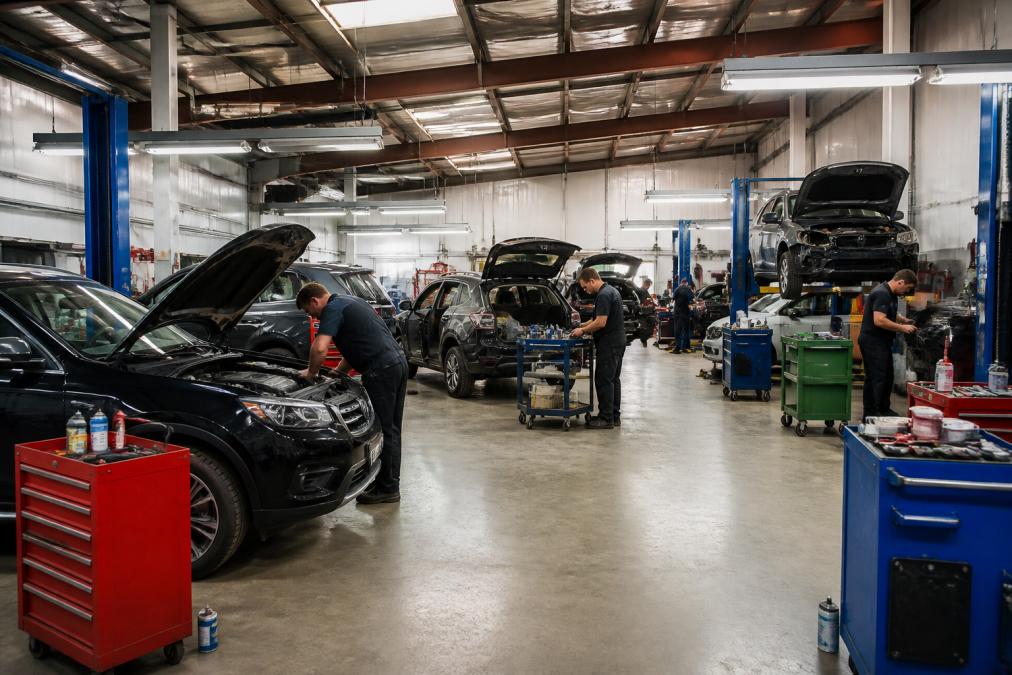
The real issue is how long the vehicle sits waiting for work to begin. A workshop might need only five days of actual labor, but if they're booked out, your vehicle sits in the queue for three weeks before they start.
Diagnostic work takes longer than expected, 4-8 hours or more if the vehicle has multiple issues. Ask the workshop upfront whether they have parts in stock or need to order them. If ordering is necessary, ask them to place the order immediately.
Specialized work like paint matching or electrical diagnostics takes longer and might require transfer to a specialist. Insurance repairs take longer than private repairs because the insurer's approval process adds 5-10 days minimum, and the workshop must follow the insurer's specifications exactly.
How to Avoid Repair Shop Kickbacks and Hidden Costs
Some workshops have preferred-repairer agreements with insurers, which means discounted rates in exchange for regular volume. This isn't inherently bad, but understand the relationship.
To protect yourself, get a second opinion on major repairs over $2,000-$3,000. Compare estimates. If one is significantly higher, ask why.
Ask the workshop to show you the damaged components. Don't just take their word that something needs replacing. A reputable workshop will be happy to show you what they've found.
Request itemized invoices that break down labor and parts separately. You should see exactly what work was done, how many hours of labor it took, and what parts were used.
Ask about warranty on repairs. A good workshop stands behind their work and offers a warranty, typically 12 months or 20,000 kilometres (accc.gov.au). If a workshop won't warranty their work, that's a red flag.
Be wary of shops that push expensive repairs when cheaper alternatives exist. A workshop that respects your budget will explore options like repair versus replacement or used parts.
Common Mistakes to Avoid During the Repair Process
Stay engaged throughout the repair process. Call the workshop every two or three days to check progress and alert yourself immediately if something's gone wrong.
Don't automatically approve additional work discovered during repairs. Ask the workshop to explain exactly what they found, why it needs fixing, and what happens if you don't fix it.
Avoid making changes mid-repair. Think carefully about what you need before you approve the initial estimate. Once you've signed off, let them proceed.
Respond within hours when asked to approve additional work or pre-authorization. Every day you delay is a day the technician sits idle.
Don't assume the cheapest quote is the best. Compare what's actually included in each quote, not just the bottom line.
Before you drive away, walk around the vehicle with workshop staff. Check that repair work looks professional, panels are aligned, paint matches, and everything functions as expected. Ask the workshop to test-drive the vehicle before handing it over.
Getting your vehicle back on the road quickly after an accident depends on clear communication, advance planning, and staying engaged throughout the repair process. When you're coordinating with an insurer, a repair shop, and managing your own transport, the complexity multiplies. At Accident Assist Line, we handle the coordination for you, ensuring your insurer approves work quickly, your chosen repairer has all the information they need, and you have a hire car arranged. Call us for immediate support after an accident, and we'll guide your next steps with dedicated, unbiased help.
Frequently Asked Questions
What are my rights if a car repair takes too long?
Under Australian Consumer Law, you have the right to have repairs completed within a reasonable timeframe. If a repair shop fails to deliver within an agreed timeframe without valid reason, you can lodge a complaint with your state's consumer protection authority or seek compensation through the Australian Competition and Consumer Commission (ACCC). Always confirm expected turnaround times in writing before authorizing work, and request updates if delays occur.
How can I ensure my insurance claim doesn't delay my car repairs?
Notify your insurer immediately after an accident and provide all required documentation promptly. Pre-authorize repairs in writing before work begins. Use digital communication tools to track claim status. If your insurer uses a preferred repair network, using those workshops typically speeds approval. For significant delays beyond reasonable timeframes, contact your insurer's complaints department or the Australian Financial Complaints Authority (AFCA) if you believe the delay is unreasonable.
Should I provide my own parts to speed up the repair process?
Sourcing your own parts can sometimes speed repairs if the workshop agrees and the parts are approved. However, this may void warranties or create liability issues if the parts are faulty. Discuss this option with your service advisor first. Most workshops prefer controlling the supply chain to guarantee quality and maintain accountability. If you do source parts, ensure they meet manufacturer specifications and get written confirmation from the shop that they'll accept them.
What is the average turnaround time for major vehicle body repairs?
Major body repairs typically take 5-15 business days depending on damage severity, parts availability, and workshop capacity. Simple dents may take 2-3 days, while structural damage or custom paint work can extend to 3-4 weeks. Turnaround times vary by workshop efficiency, diagnostic equipment availability, and parts procurement. Request a specific estimate from your repair shop and ask about priority scheduling if you need faster completion. Hire car arrangements can minimize the impact of longer repair times.
This article was written using GrandRanker