 how-to
How to Prove You're Not at Fault for a Car Accident
Table of Contents
- What to Do After a Car Accident in Victoria: The First 60 Minutes
- Collecting Evidence After a Car Crash: What Actually Counts
- How to Prove You Are Not at Fault for a Car Accident: Building Your Case
- Disputed Fault Car Accident Insurance: How to Handle Pushback
- Common Mistakes That Weaken Your Not at Fault Position
- How an Accident Coordination Service Can Help After a Crash
- Frequently Asked Questions
Last Updated: September 30, 2026
What to Do After a Car Accident in Victoria: The First 60 Minutes
Knowing how to prove you are not at fault for a car accident starts in the first hour, not in the weeks that follow. What you do at the scene shapes everything an insurer will later believe about your version of events. This guide from Accident Assist Line breaks down the practical steps, the evidence that carries weight, and the mistakes that quietly sink otherwise solid claims. (Source: Victorian road rules)
The first 60 minutes matter because memory fades and evidence disappears. Cars get moved. Skid marks wash away in the rain. Witnesses drive off. Capture what you can while it is still there.
Secure the scene and check for injuries
Stop, switch on your hazard lights, and check whether anyone is hurt. Call emergency services if someone is injured or the road is unsafe. Under Victorian road rules, you must stop and exchange details after a crash, and report a crash to police when someone is injured or property is damaged beyond a minor level. If in doubt, call Triple Zero (000).
Move your car only if it is safe and legal to do so. If you cannot move it, stay clear of traffic and wait for help.
Exchange driver details without discussing fault
Swap names, addresses, phone numbers, licence numbers, and registration details with the other driver. Note their insurer if they offer it.
Here is the part most people get wrong: do not discuss who caused the crash. Even a casual "sorry, I didn't see you" can be treated as an admission. Be polite, be brief, and stick to the facts.
Collecting Evidence After a Car Crash: What Actually Counts
Evidence is what turns your account into a provable one. Collecting evidence after a car crash is less about volume and more about relevance: what shows position, timing, and fault.
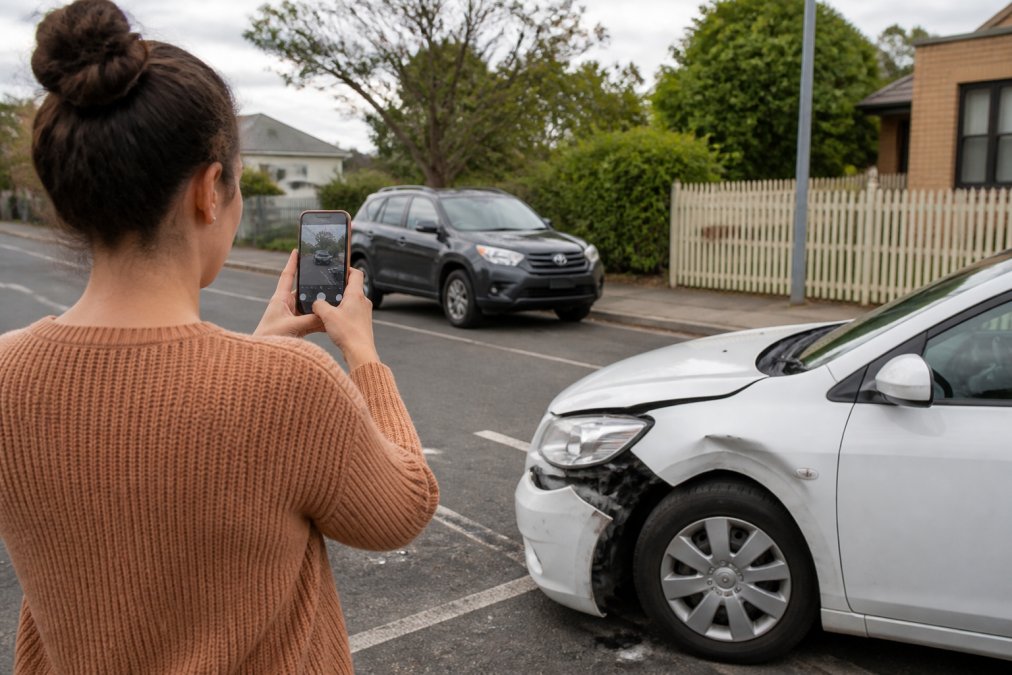
Photographic evidence: angles, timestamps and metadata
Take more photos than feels necessary. Photographic evidence works best when it shows the whole scene, not just the dent.
- Wide shots of both cars in the lane and position they ended in
- Close-ups of damage on every vehicle
- The road surface, including skid marks, debris, and traffic signs
- Number plates and the other driver's licence
- Weather and lighting conditions
Your phone records timestamps and location data automatically. Do not edit, crop, or delete anything. Original files carry more weight.
Digital evidence beyond photos: dashcam footage, GPS data and messages
Dashcam footage is one of the strongest pieces of evidence you can hold. Download it the same day and back it up, because many cameras overwrite old clips.
Other digital evidence worth keeping:
- GPS or navigation history showing your route and speed
- Phone records that place you at the scene
- Any messages with the other driver
- CCTV requests from nearby businesses, made early
How to Prove You Are Not at Fault for a Car Accident: Building Your Case
Proving fault comes down to evidence that shows the other driver breached their duty of care. In Victoria, fault is usually decided on negligence: who owed a duty, who breached it, and who caused the damage.
Witness statements and why timing matters
A witness statement is a written account from someone who saw the crash. Timing matters because memories blur fast.
- Get names and contact numbers at the scene
- Ask witnesses to write what they saw in their own words
- Note where each witness was standing
- Follow up within a day or two while details are fresh
Independent witnesses carry more weight than passengers in your own car.
Police reports: what they do and do not determine
A police report records the crash, not the fault. Officers document what happened, but they do not decide liability for insurers. Do not assume a report settles the question. It supports your account; it does not replace your evidence.
Disputed Fault Car Accident Insurance: How to Handle Pushback
Disputed fault car accident insurance matters when the other insurer blames you. Expect pushback. Insurers protect their own side first, and a disputed liability claim often comes down to whose evidence is stronger.
Keep every message calm and factual. Never admit fault in writing, and never argue over the phone. Put your account in writing and attach your evidence.
Communication templates for insurers and third parties
Use short, factual messages. Here is a template you can adapt:
Hi [name], I am writing about the collision on [date] at [location]. My account is as follows: [one or two factual sentences]. I have attached photographs, dashcam footage, and witness details. I am not admitting fault. Please direct all further correspondence to me in writing.
Common Mistakes That Weaken Your Not at Fault Position
Most weakened claims fail for the same few reasons. Avoid these:
- Apologising or admitting fault at the scene
- Leaving before details are exchanged
- Failing to photograph the scene
- Letting dashcam footage overwrite
- Posting about the crash online
- Giving a recorded statement before seeking advice
One careless comment can undo strong evidence.
How an Accident Coordination Service Can Help After a Crash
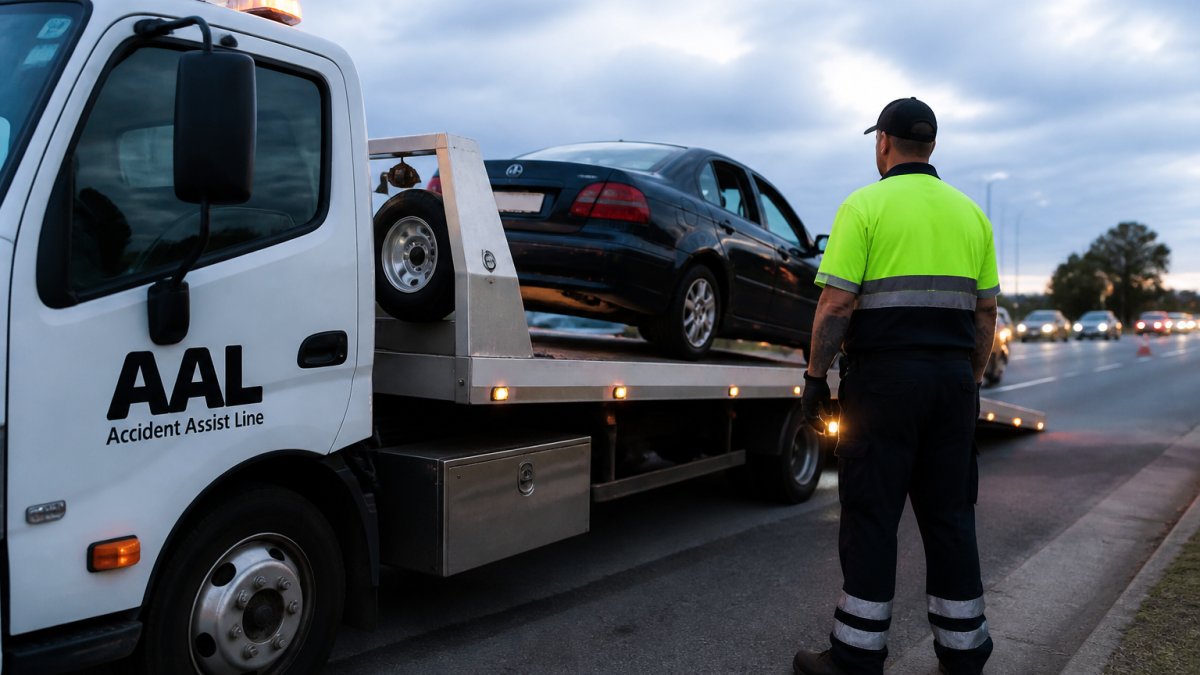
Coordinating the aftermath is exhausting when you are shaken and stranded. Accident Assist Line is an independent accident tow, repair and insurer-coordination service covering Melbourne, Geelong and the Mornington Peninsula. One call connects you to a real person, 24/7, with no call queues.
We arrange your tow through Victoria's official accident-towing allocation network, coordinate the repair, and liaise with your insurer on your behalf. We do not handle, manage, negotiate, settle, or pursue insurance claims, and we are not a claims advocate. What we do is take the logistics off your plate so you can focus on your evidence and your recovery.
Frequently Asked Questions
How do I prove I'm not at fault in a car accident?
Gather evidence at the scene: photograph all vehicle damage from multiple angles, note road conditions and traffic signals, collect witness names and contact details, and preserve any dashcam footage immediately. Report the incident to police if required and notify your insurer promptly. In Victoria, fault is determined by assessing whether a driver breached their duty of care. Strong photographic evidence, independent witness statements and dashcam recordings give the clearest picture of what happened.
What evidence is required to prove I am not at fault for a car accident?
The most useful evidence includes dashcam footage, photographs of vehicle positions and damage, witness statements, a police incident report (where applicable), and any GPS or telematics data. Medical records may support injury claims but do not establish fault. Keep everything in its original format, including timestamps and metadata, because insurers and investigators may need to verify authenticity when reviewing collecting evidence after a car crash.
What should I do if the other driver denies fault to their insurer?
Stay factual and avoid direct arguments with the other driver. Provide your insurer with all evidence you gathered, including photos, dashcam footage and witness details. If liability remains disputed, your insurer may request an independent assessment or accident reconstruction. In disputed fault car accident insurance matters, having timestamped digital evidence and consistent written statements significantly strengthens your position. Do not post about the accident on social media while the dispute is active.
Does a police report automatically determine fault in a car accident?
No. A police report records the incident, statements and any charges laid, but it does not assign civil liability for insurance purposes. Insurers make their own fault determinations based on the evidence and the relevant traffic laws. A police report can support your version of events, particularly if the other driver was charged, but it is one piece of evidence among several. Always notify your insurer separately and provide the report reference number.
A crash is stressful enough without juggling tow trucks, repairers, and insurer calls while trying to protect your position. Accident Assist Line arranges your tow through Victoria's official allocation network, coordinates your repair, and liaises with your insurer, all through one 24/7 contact with no call queues. Get started with Accident Assist Line and keep your focus on the evidence that proves your side of the story.