 how-to
Get Help After 2am Accident: Your 24/7 Guide
Table of Contents
- Immediate Actions at the Scene After a 2am Accident
- When to Call Emergency Services (000) After a Late-Night Collision
- What to Do After a Car Accident Checklist
- Reporting a Car Accident to Police: Your Legal Obligations
- Safety in Low-Light Conditions: Managing Shock and Medical Needs
- Why an Independent Accident Support Service Matters at 2am
- Towing and Roadside Assistance Available After Hours
- Conclusion
Last Updated: August 19, 2026
Immediate Actions at the Scene After a 2am Accident
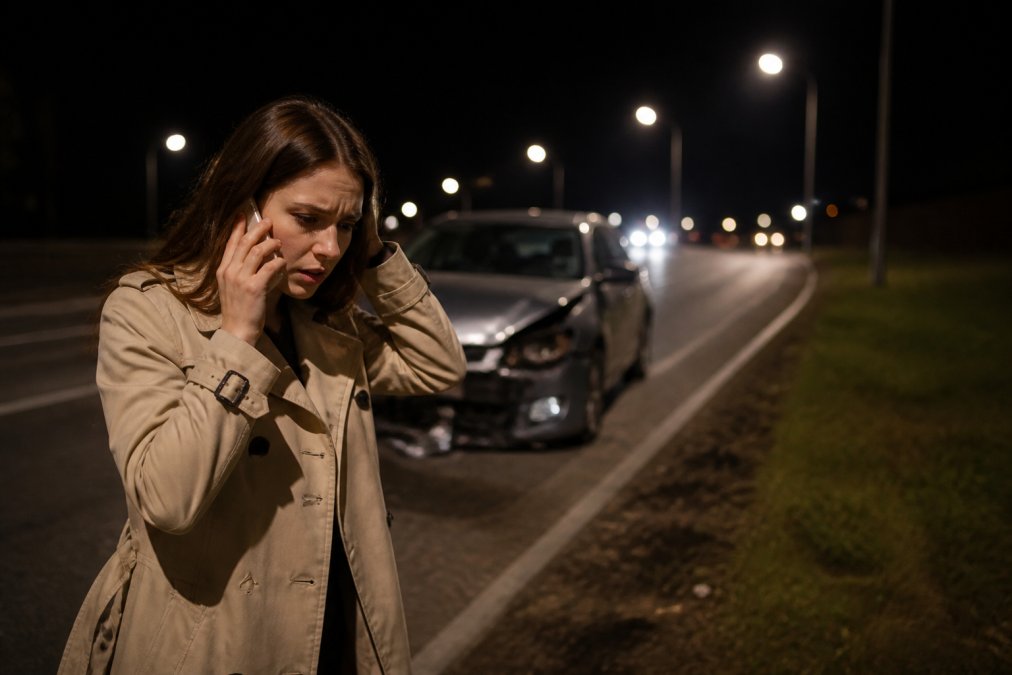
The first minutes after a late-night collision determine your safety and claim clarity. Your immediate priority is stopping safely, assessing injuries, and moving to a secure location if possible.
Turn on hazard lights immediately to alert other drivers and help emergency responders locate you. If you're on a busy road or highway and the vehicle is drivable, move to the shoulder. If the collision was severe or your car won't move, stay inside with seatbelts fastened and doors locked until emergency services arrive.
Check yourself and any passengers for injuries. Shock can mask pain, and even minor impacts can cause whiplash or internal injuries not immediately apparent. If anyone is injured or complains of pain, call 000 right away. Do not move an injured person unless they're in immediate danger from fire or oncoming traffic.
Turn off the engine and, if safe, turn on interior lights for visibility. If you're alone and feel unsafe, lock your doors and stay in the vehicle with hazard lights flashing. At 2am, visibility is low and your safety comes before gathering information.
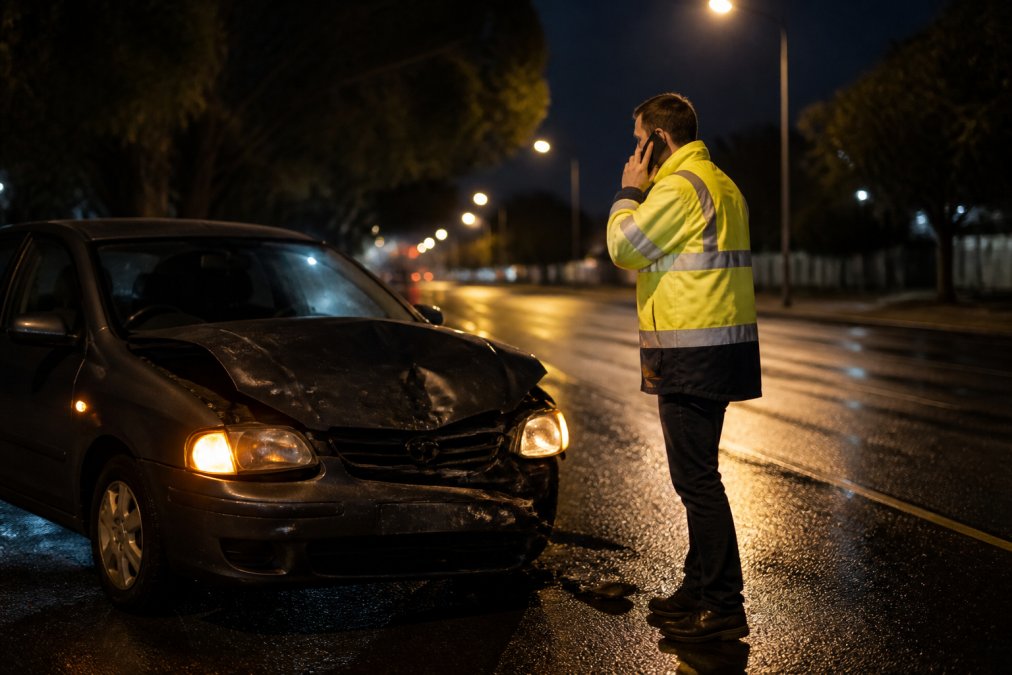
Document what you can see without putting yourself at risk. Take photos of vehicle damage, the accident scene, road conditions, and traffic signals if visible. These are essential for your insurance claim and legal proceedings. However, do not leave your vehicle unattended or stand in traffic. Your personal safety is the priority.
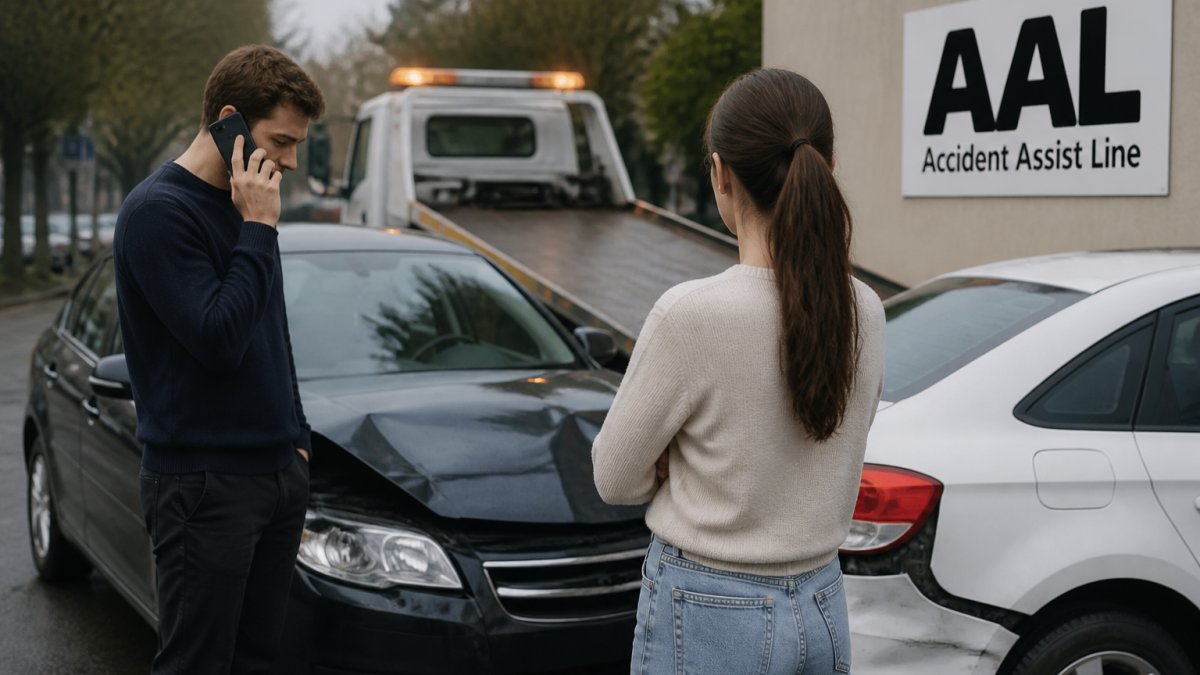
If other vehicles are involved, stay calm and avoid confrontation. Exchange basic information if it's safe, but do not admit fault or discuss the accident in detail. Conversations in the immediate aftermath often become problematic later.
When to Call Emergency Services (000) After a Late-Night Collision
Call 000 immediately if anyone is injured, if there's a risk of fire, if a vehicle is blocking traffic, or if you feel unsafe. Emergency services in Australia operate 24/7, and response times at 2am are often faster than during peak hours.
When you call, provide your location first using landmarks, street names, or GPS coordinates. Describe the type of collision and the number of people affected. If injuries are present, describe them clearly: "One person with chest pain" or "Two passengers with head injuries."
Stay on the line with the 000 operator until emergency services arrive. They may provide first aid instructions or guidance on managing the scene. Do not hang up early.
After calling 000, you're legally required to remain at the scene unless emergency services direct you to move. Leaving without providing your details is a serious traffic offence.
If you're injured or in shock, tell the 000 operator. Shock is a normal response to trauma and the operator will ensure paramedics are dispatched accordingly.
What to Do After a Car Accident Checklist
Following a structured approach reduces stress and ensures you don't miss critical steps.
| Action | Timing | Priority |
|---|---|---|
| Check for injuries and call 000 if needed | Immediately | Critical |
| Turn on hazard lights and move to safety | Immediately | Critical |
| Call police to report the accident | Within 24 hours | High |
| Exchange details with other drivers | At scene (if safe) | High |
| Take photos of damage and scene | At scene or shortly after | High |
| Collect witness contact information | At scene | High |
| Report to your insurance company | Within 24 hours | High |
| Seek medical assessment | Within 24 hours | Medium |
| Document your account of events | Within 24 hours | Medium |
| Keep receipts for expenses | Ongoing | Medium |
Report the accident to police within 24 hours, though immediately is preferable. Police will assign an event number, which you'll need for your insurance claim. At 2am, you can file a report online or by phone through your local police service.
Collect names, contact details, registration numbers, and insurance information from other drivers involved. Get witness contact details if available, witnesses are crucial if the accident is disputed later.
Take detailed photos of all vehicle damage, the accident scene, road conditions, weather, lighting, and relevant traffic signs or signals. Photos taken at the scene are far more credible than those taken later.
Contact your insurance company within 24 hours. Most insurers have 24/7 claims lines. Provide a clear account of what happened, but avoid speculating about fault. Stick to facts: time, location, weather, vehicle positions, and what you observed.
Seek medical assessment within 24 hours, even if you feel fine. Injuries like whiplash, concussion, and internal injuries can develop over hours or days. A medical report creates a record of your condition at the time of the accident, which is important if you later claim compensation for personal injury.
Reporting a Car Accident to Police: Your Legal Obligations
In Australia, you're legally required to report a car accident to police if there's injury, significant property damage, or if you've hit an unattended vehicle or property. You have up to 24 hours to report, though reporting immediately is strongly recommended.
When you report, you'll receive a police event number. This is essential for your insurance claim and any legal proceedings. Keep this number safe.
At 2am, many police stations have limited staffing. You can report online through your state's police service website, by phone through the non-emergency line, or in person when the station reopens. Online and phone reporting are often faster at night.
Be honest and factual in your report. Do not speculate about fault or blame other drivers. Stick to what you observed: "The other vehicle entered from the left side," not "The other driver was reckless." Police and insurance investigators will determine fault based on evidence.
If you're unsure whether the accident is serious enough to report, report it anyway. It's better to file a report that turns out to be unnecessary than to skip reporting and later discover you were required to.
Safety in Low-Light Conditions: Managing Shock and Medical Needs
Late-night accidents present unique safety challenges. Darkness reduces visibility, making it harder for other drivers to see your vehicle. Your personal safety is paramount, never prioritise evidence gathering over staying out of harm's way.
Wear high-visibility clothing if you have it in your vehicle. A high-visibility vest or jacket makes you visible from much greater distances. If you don't have one, stay inside your vehicle with hazard lights flashing. Do not stand on the roadside at night unless absolutely necessary.
Shock is a serious concern after accidents. Your body releases stress hormones that can mask pain and impair judgment. Symptoms include trembling, rapid heartbeat, nausea, dizziness, and difficulty concentrating. If you experience any of these, sit down, stay warm, and avoid making major decisions. Do not drive if you're in shock.
Seek medical assessment within 24 hours, even if you feel fine. Many injuries don't cause immediate pain. A GP or urgent care clinic can assess you for concussion, whiplash, and internal injuries. Medical documentation at the time of the accident is crucial if you later need to claim compensation.
If you're alone at the scene and feel unsafe, stay in your vehicle with doors locked and hazard lights on. Call 000 if you feel threatened or if traffic is dangerously close. Do not attempt to direct traffic or stand outside your vehicle in unsafe conditions.
At 2am, fatigue is a factor for both you and other drivers. If you're feeling drowsy or confused, this is a sign of shock or exhaustion. Do not drive yourself away from the scene. Wait for emergency services or ask a friend to collect you.
Why an Independent Accident Support Service Matters at 2am
When you're injured, shocked, and dealing with a damaged vehicle at 2am, navigating insurance paperwork and coordinating repairs alone is overwhelming. An independent accident support service like Accident Assist Line provides immediate, unbiased guidance without the delays typical of traditional insurance claims.
Insurance companies are motivated to minimise payouts and process claims efficiently, not necessarily to get you back on the road as fast as possible. An independent service has no financial stake in the outcome, their only goal is to help you recover quickly.
Accident Assist Line offers 24/7 support across Victoria, New South Wales, Queensland, and the ACT. When you call at 2am, you reach real people who can immediately organise towing, arrange repairs, and sort out a hire car. The callback comes in under 30 seconds, which matters when you're stressed, injured, and unsure what to do next.
An independent service provides unbiased advice about your next steps. They're not steering you toward particular repair shops for commission or trying to minimise your claim. They're focused on getting your vehicle repaired safely and getting you back on the road quickly.
Towing and Roadside Assistance Available After Hours
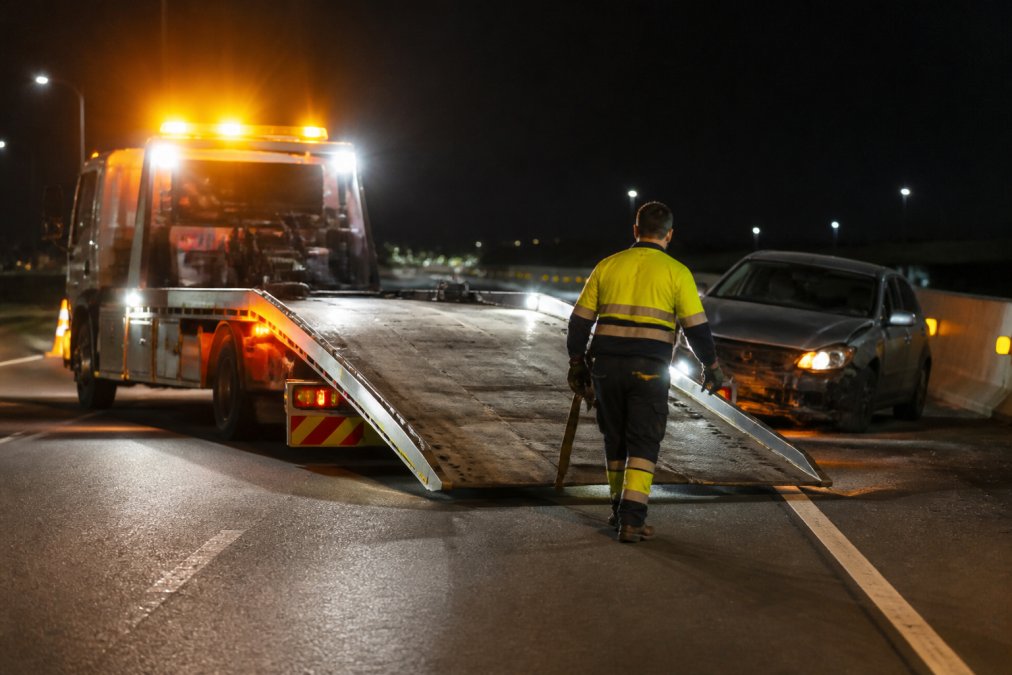
Roadside assistance at 2am is challenging. Many tow truck operators have limited night-time availability, and wait times can stretch to hours. Standard roadside assistance often means a long wait and minimal support beyond towing to a repair shop of their choosing.
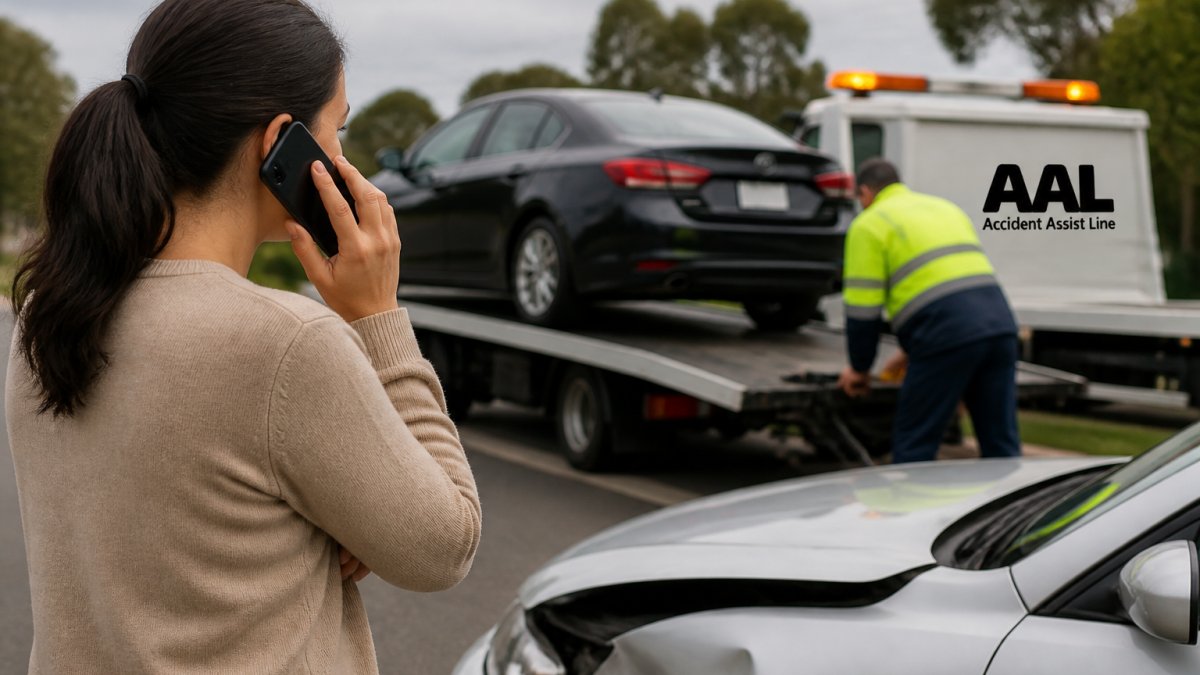
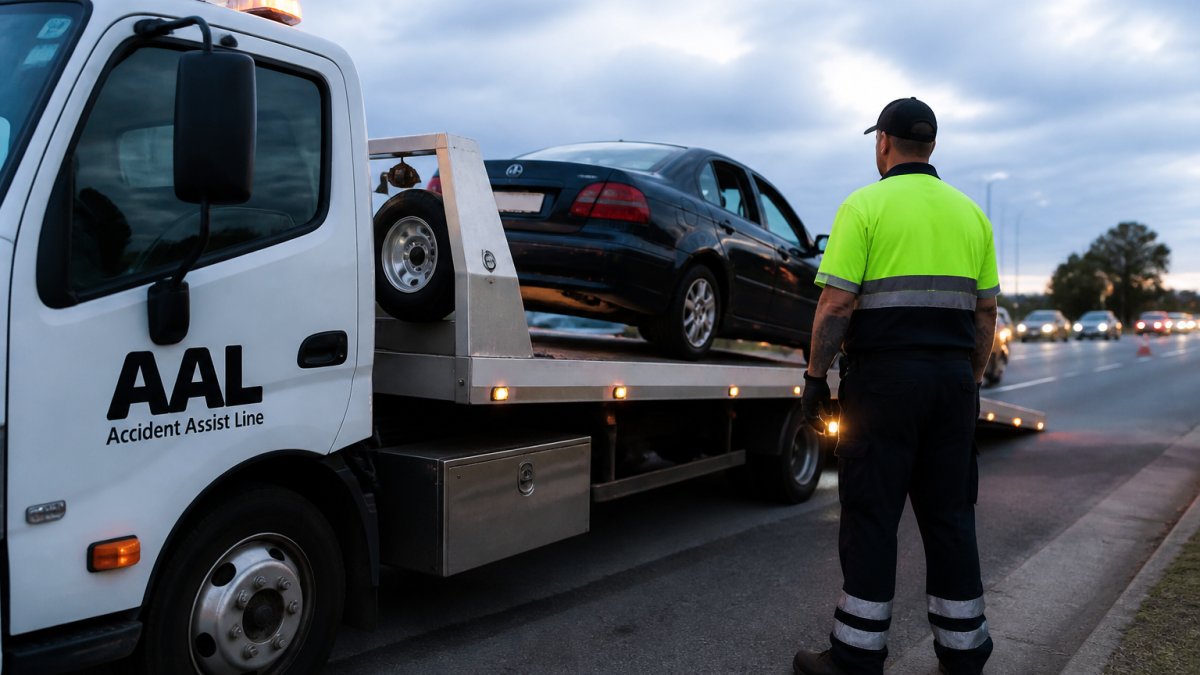
Dedicated accident support services operate differently. They maintain relationships with tow operators and repair facilities across their service areas, ensuring faster response times and better coordination. When you call Accident Assist Line, they immediately dispatch a tow truck and begin organising repairs.
Hire car arrangements are critical after a collision. You need transport while your vehicle is being repaired. An independent service can arrange a hire car immediately, without waiting for insurance approval or dealing with complex agreements.
An independent accident support service negotiates towing and repair costs on your behalf, ensuring you're not overcharged. They also handle the paperwork and coordination, so you're not spending hours on the phone dealing with multiple service providers.
At 2am, speed matters. The sooner your vehicle is towed to a repair facility, the sooner repairs can begin. Accident Assist Line's focus on rapid coordination means you're not sitting in a damaged vehicle waiting for someone to answer the phone during business hours.
Getting help after a 2am accident doesn't have to mean navigating insurance bureaucracy alone. The immediate steps, calling 000, moving to safety, and documenting the scene, are your responsibility. But coordinating towing, repairs, and recovery doesn't have to be. Accident Assist Line provides the 24/7 support you need, with a callback in under 30 seconds, to organise towing and repairs without the delays and forms that come with traditional insurance claims. When you're injured, shocked, and stranded at 2am, that immediate, unbiased guidance makes all the difference. Call Accident Assist Line and let us handle the recovery while you focus on getting better.
Frequently Asked Questions
Who should you call for help after a 2am accident?
Call 000 immediately if there are injuries, hazards, or significant damage. For immediate towing and accident coordination, an independent accident support service can provide a callback in under 30 seconds, 24/7. They'll organise towing, repairs, and hire cars without the delays of traditional insurance processes. Exchange details with the other driver if safe to do so, and contact police for an incident report if required by law.
How long do you have to report a car accident in Australia?
You must report an accident to police as soon as possible if there are injuries or significant property damage. Most states require reporting within 24 hours. Notify your insurer promptly as well, delays can affect your claim. An independent accident support service can guide you through reporting requirements and timeframes specific to your state, ensuring you meet all legal obligations without confusion.
Is it safe to stay with your vehicle after a late-night collision?
Safety depends on traffic conditions and your location. If you're on a busy road or in a low-light area, exit the vehicle only if safe, activate hazard lights, and move to a secure location away from traffic. Stay inside with doors locked if you're in an unsafe area. Contact emergency services (000) if you feel threatened. An independent accident support service available at 2am can advise on next steps while you wait for help.
What information must you exchange if the other driver is present at 2am?
Exchange driver's name, phone number, address, driver licence number, vehicle registration number, insurance company details, and policy number. Take photos of both vehicles' damage, number plates, and the scene if safe. Get witness contact details if anyone saw the accident. Write down the other driver's vehicle make, model, and colour. If you're distressed or it's unsafe, an independent accident support service can help coordinate this information gathering and guide you through the exchange process.
This article was written using GrandRanker