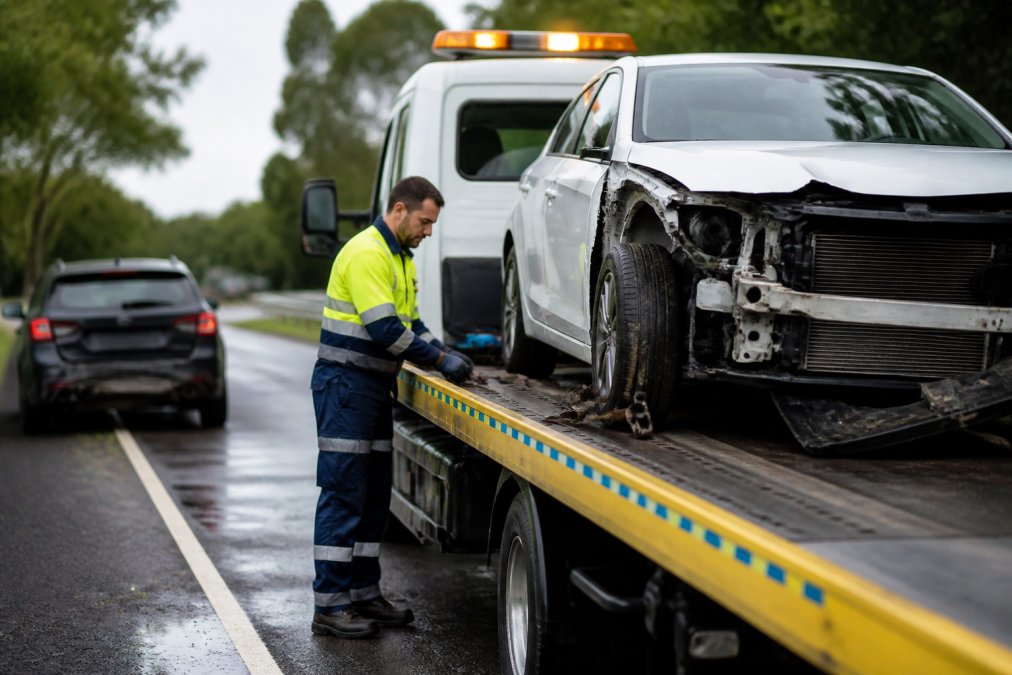
 how-to
Fast Accident Recovery Service Victoria: 2026 How-To Guide
Table of Contents
- What to Do After a Car Crash: A Step-by-Step Checklist
- How a Fast Accident Recovery Service Victoria Works
- Accident Towing Requirements Victoria: What the Law Says
- Hire Car Entitlement After an Accident
- Cost Transparency and Insurance Claims
- Vehicle-Specific Recovery Requirements
- Why Choose an Independent Accident Recovery Service
- Frequently Asked Questions
Last Updated: September 14, 2026
What to Do After a Car Crash: A Step-by-Step Checklist
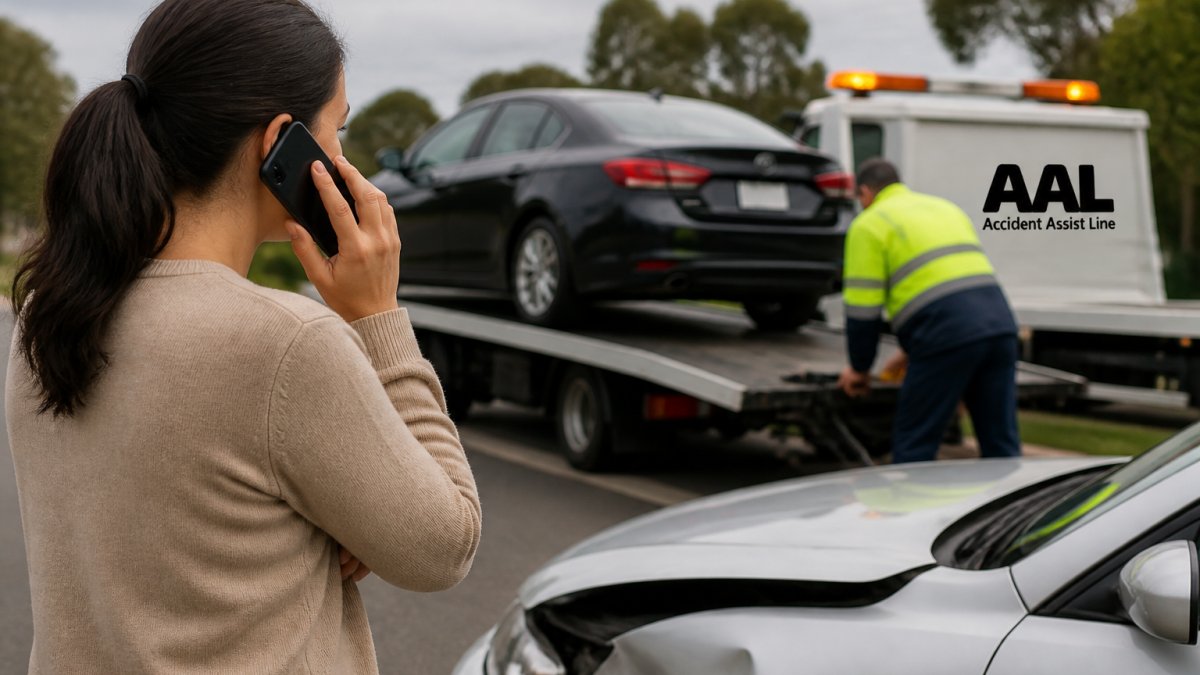
A fast accident recovery service victoria exists because the first ten minutes after a crash decide how the next ten days unfold. This guide from Accident Assist Line walks through the exact steps to take, what the law requires, and how to get your car towed, repaired and replaced with a hire car without drowning in paperwork. If you are reading this while parked on a nature strip with your hazard lights flashing, skip to the checklist below.
The single most common mistake drivers make is waiting. Waiting for the insurer's hotline to answer. Waiting for a tow truck the police did not call. Waiting to find out whether they are covered for a replacement vehicle. Every hour of indecision adds a day to your recovery.
At the Scene: Your First 10 Minutes
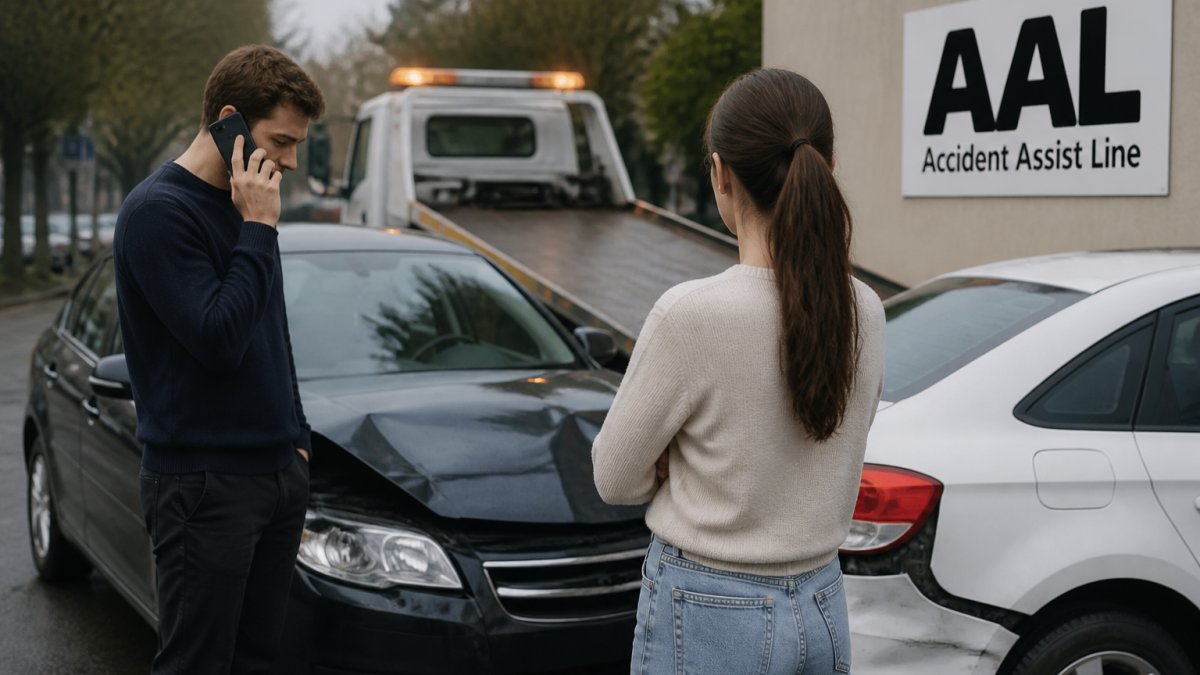
Safety comes before documentation. Pull as far off the road as the vehicle allows, switch on hazard lights, and set up warning triangles if you carry them. Check for injuries and call Triple Zero (000) if anyone is hurt. Exchange names, licence numbers, registration details and insurer names with the other driver. Do not admit fault, and do not negotiate a cash settlement at the roadside.
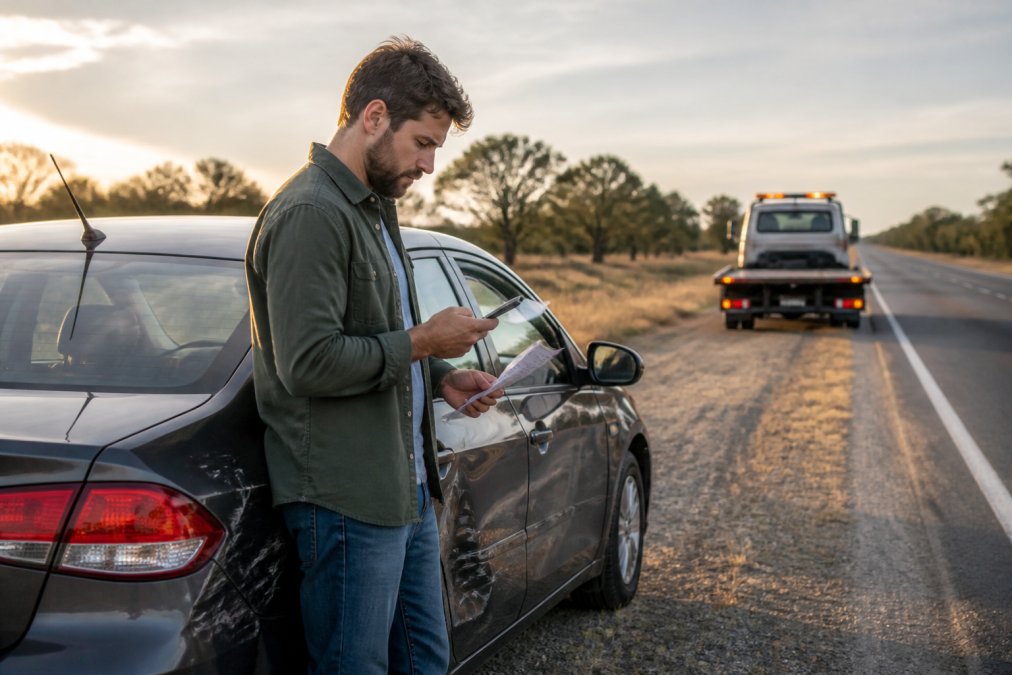
Once everyone is safe, the practical sequence looks like this:
- Confirm injuries and call emergency services if needed
- Move to a safe position off the traffic lane
- Exchange details with the other driver
- Photograph the scene, damage and road conditions
- Report the crash to police if required
- Arrange recovery and towing
- Notify your insurer and lodge your claim
Documenting the Crash for Your Claim
Photographs taken in the first ten minutes are worth more than any written statement you produce a week later. Capture wide shots of the scene, close-ups of every damaged panel, the position of the vehicles, road markings, traffic signals and weather conditions. Photograph the other driver's licence and registration.
Keep a running note of names, contact numbers, witness details and the time of the crash. If police attend, record the incident number. Insurers and towing operators both rely on this evidence, and a fast accident recovery service in Victoria will ask for it when coordinating your claim.
How a Fast Accident Recovery Service Victoria Works
A fast accident recovery service in Victoria is an independent coordinator that handles towing, repairs, hire cars and insurer liaison on your behalf, typically within minutes of your call. Instead of ringing three separate numbers, you make one call and the service dispatches a tow truck, books a repairer and arranges a replacement vehicle.
The process is deliberately short:
- You call and describe the crash, your location and your vehicle
- The operator confirms your insurer and policy details
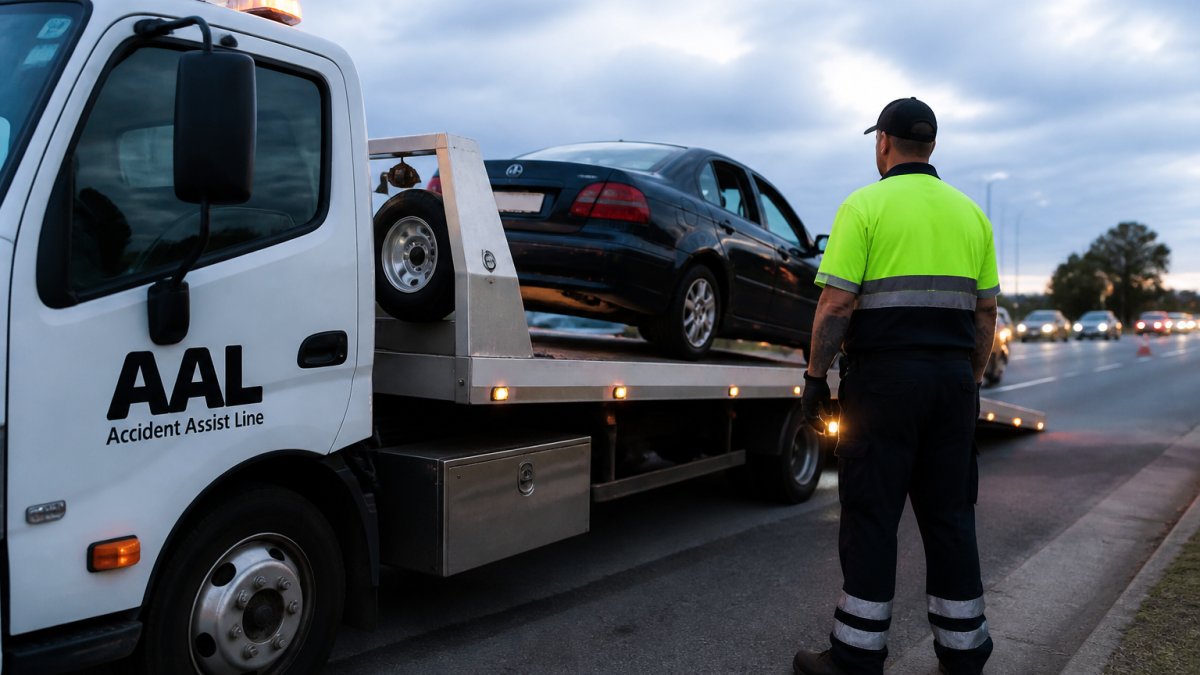
- A tow truck is dispatched from the nearest available fleet
- Your vehicle is assessed on-site and transported to a repairer
- A hire car is arranged if your policy includes one
Accident Assist Line runs this model across Victoria, New South Wales, Queensland and the ACT, with a callback target of under 30 seconds and no forms to fill in before help is dispatched. The service is not tied to any insurer, which matters more than most drivers realise: an independent operator has no incentive to steer you toward a repairer that pays it a referral fee.
Accident Towing Requirements Victoria: What the Law Says
Towing in Victoria is regulated, and the rules exist to stop unlicensed operators from holding your car hostage at the roadside. The framework is administered by the state's transport department under the tow truck accreditation and accident allocation scheme, and it applies the moment a crash is reported on a public road.
The core mechanism is the accident allocation system. When a crash is reported, the dispatch system allocates the job to the next accredited tow truck in the rotation for that zone, rather than to whichever truck arrives first. That means the tow truck that turns up unrequested at your crash scene is not necessarily the one allocated to you, and you are under no obligation to hand over your keys.
What Accreditation Actually Means
An accredited tow truck operator in Victoria must hold a current accreditation issued under the state's tow truck legislation, carry the required signage and identification, and operate under the allocation scheme when attending accident scenes. Accreditation is not the same as a general business licence, and it is not transferable between operators.
If a driver cannot produce accreditation on request, or the vehicle lacks the required signage, you can decline the tow. This is not a technicality. Unaccredited operators have historically created problems around inflated storage fees and vehicles being moved to repairers the owner never agreed to.
Towing Permits and Safe Vehicle Removal
A towing permit governs where and how a vehicle can be towed, particularly for unregistered or unroadworthy vehicles. Safe vehicle removal also covers the practical side: securing loose panels, disconnecting batteries where necessary, and using the correct lifting equipment for the vehicle's weight and drivetrain.
For the current accreditation and permit requirements, check the Victorian towing and accident allocation guidance published by the state government, and the National Road Safety Action Plan for broader road safety standards.
| Situation | Who Attends | Your Obligation |
|---|---|---|
| Crash on a public road | Accredited tow under the allocation scheme | You may decline an unaccredited truck |
| Breakdown, no crash | Any licensed towing operator you choose | Confirm accreditation before loading |
| Unregistered or unroadworthy vehicle | Operator with the relevant towing permit | Permit must be produced on request |
| Vehicle on private property | Operator arranged by you or the property owner | Access and consent required |
Your Rights at the Roadside
Three practical rights matter most. First, you can ask to see the driver's accreditation before the vehicle is loaded. Second, you can nominate the repairer your vehicle is taken to, subject to your insurer's network rules. Third, you are entitled to an itemised price before authorising the tow, not after.
If an operator refuses any of these, that is a signal to call your insurer or the recovery service you originally contacted rather than proceed. A fast accident recovery service in Victoria will confirm the allocated operator's details with you before dispatch, which removes the guesswork at the scene.
Hire Car Entitlement After an Accident
Hire car entitlement after an accident depends entirely on your policy, not on the crash itself. Many comprehensive policies include a replacement vehicle benefit, but the limits vary: some cover a set number of days, some cap the daily rate, and some only apply if you are not at fault.
Read the product disclosure statement before you assume you are covered. If you are not at fault, the at-fault driver's insurer may cover a hire car independently of your own policy. If you are at fault and your policy lacks the benefit, an independent recovery service can still arrange a vehicle, though you may carry the cost.
The practical test is simple: ask your insurer two questions. Does my policy include a hire car benefit, and what is the daily and total limit? Get the answer in writing before you book anything.
Cost Transparency and Insurance Claims
Most drivers only discover what recovery actually costs after the tow truck has left. This section is written to prevent that. The aim is to give you a decision framework you can apply at the roadside, before you authorise anything.
Who Pays, and When
The answer turns on two variables: fault, and your policy type.
- Not at fault, comprehensive policy: the at-fault driver's insurer typically covers reasonable towing, storage and a replacement vehicle. Your own insurer may also handle it and recover the cost later.
- At fault, comprehensive policy: your insurer covers recovery subject to your excess and any policy limits on towing and hire car benefits.
- At fault, third party property only: towing and recovery of your own vehicle are generally not covered. You carry the cost.
- Third party fire and theft: similar to third party property for accident recovery, with cover limited to the specified events.
A common pattern is that drivers assume 'comprehensive' means 'everything is covered'. It does not. Towing and hire car benefits are separate line items with their own caps.
The Questions to Ask Before You Authorise Anything
Ask the operator and your insurer these five questions, in this order:
- What is the call-out fee, and is it fixed or distance-based?
- Is there an after-hours or public holiday surcharge, and how much?
- What is the daily storage rate, and when does it start accruing?
- Is the tow covered under my policy, and is there a cap?
- Does my policy include a hire car, and what are the daily and total limits?
Get the answers in writing, even if it is a text message or email confirmation. Verbal quotes are difficult to enforce later.
Storage Is Where Costs Accumulate
Storage is the single most common source of disputed recovery charges. A vehicle can sit for days while an insurer assesses it, and daily storage rates vary widely between operators. Two safeguards help. First, confirm the daily rate and the point at which it begins. Second, ask your insurer to authorise storage in writing as soon as the vehicle is moved, so the clock is tied to an approved claim rather than to your personal liability.
Lodging the Claim Without Losing Days
Lodging your claim is straightforward once you have the documentation from the scene. Provide the incident number, photographs, the other driver's details and the tow docket. Keep every receipt, including the tow invoice and any storage invoice.
If your claim is delayed or denied and you believe the decision is unreasonable, the Australian Financial Complaints Authority handles disputes about insurance claims. AFCA is free to consumers and its decisions are binding on the insurer once accepted.
Vehicle-Specific Recovery Requirements
Not every vehicle can be lifted the same way. Electric vehicles, all-wheel-drive models and low-clearance sports cars each need different equipment, and getting it wrong causes damage that insurers may refuse to cover.
- Electric and hybrid vehicles: high-voltage systems require isolation before towing, and some models must be transported on a flatbed rather than towed on two wheels
- All-wheel drive: towing with two wheels on the ground can destroy the drivetrain; a flatbed or full lift is the safe option
- Low-clearance vehicles: ramps and tilt trays prevent front and rear bumper damage during loading
- Modified or heavy vehicles: weight and dimensions determine which truck class can legally recover them
Tell the operator the make, model and drivetrain when you call. A fast accident recovery service in Victoria that asks these questions before dispatching is one that knows what it is doing.
Why Choose an Independent Accident Recovery Service
An independent recovery service works for you, not for an insurer or a repair network. That distinction shows up in three places: which repairer your car goes to, how quickly a hire car arrives, and whether anyone pushes you toward a decision that suits them rather than you.
Accident Assist Line is not associated with any insurance company, so there is no referral arrangement shaping where your vehicle ends up. The service operates 24/7, arranges towing and repairs, provides hire cars, and guides your next steps after an accident. For drivers who want the recovery handled without forms, hold music or a week of waiting, that independence is the whole point.
Frequently Asked Questions
How long after a car accident can you claim in Victoria?
In Victoria, you generally have 12 months from the date of the accident to lodge a claim with the Transport Accident Commission (TAC) for injuries. For property damage claims through your insurer, most policies require you to notify them as soon as possible, often within 7 days. Waiting too long can complicate your claim, so contact your insurer and a recovery service promptly.
What is the difference between roadside assistance and accident recovery?
Roadside assistance covers minor issues like flat batteries, flat tyres, or running out of fuel. Accident recovery is for when your vehicle is undriveable after a crash. It involves safe vehicle removal, towing to a repairer or storage facility, and often coordination with your insurer. If your car cannot be driven, you need accident recovery, not standard roadside assistance.
How do I arrange a hire car after an accident?
If you have hire car cover in your insurance policy, contact your insurer first to confirm your entitlement. If you were not at fault, you may be able to claim a hire car from the at-fault driver's insurer. An independent accident recovery service can arrange a hire car immediately, often within hours, so you can get back on the road without waiting for paperwork.
What happens if my car is undriveable after a crash?
If your car is undriveable, do not attempt to drive it. Turn on hazard lights, move to a safe location if possible, and call a 24/7 accident recovery service. They will dispatch a tow truck, assess the vehicle on-site, and transport it to a repairer or storage facility. They can also help arrange a hire car and guide you through insurance claims.
A crash is stressful enough without spending the next week chasing tow trucks, repairers and insurers. Accident Assist Line handles the coordination for you with 24/7 availability, a callback in under 30 seconds, no forms or delays, and an independent service that is not tied to any insurance company. Get started with Accident Assist Line and get back on the road faster.