 how-to
Emergency Accident Support for Regional QLD: A Step-by-Step Guide
Table of Contents
- What to Do After a Car Accident Checklist for Regional Drivers
- Emergency Contact Numbers and Life-Threatening Procedures
- Roadside Assistance and Towing in Remote Areas
- How to Lodge a CTP Claim in Queensland
- Why Choose an Independent Accident Support Service Australia
- Post-Accident Trauma Care and Mental Health Support
- Recovery Services and Getting Back on the Road
Last Updated: August 30, 2026
What to Do After a Car Accident Checklist for Regional Drivers
The moments immediately after a car accident are critical. For regional drivers, emergency services may take longer to arrive, mobile coverage can be unreliable, and roadside assistance isn't always nearby. This guide from Accident Assist Line covers the essential checklist every regional driver should follow after a collision.
If anyone is injured or in immediate danger, call triple zero (000) immediately. Move to safety if you can do so without further risk. Turn on your hazard lights, set up warning triangles if you have them, and stay visible to oncoming traffic.
Once immediate safety is secured, document everything. Take photographs of vehicle damage from multiple angles, the accident scene, road conditions, and any other vehicles involved. Get the names, phone numbers, addresses, and insurance details of all other drivers. Collect witness contact information, these details become invaluable when lodging your claim.
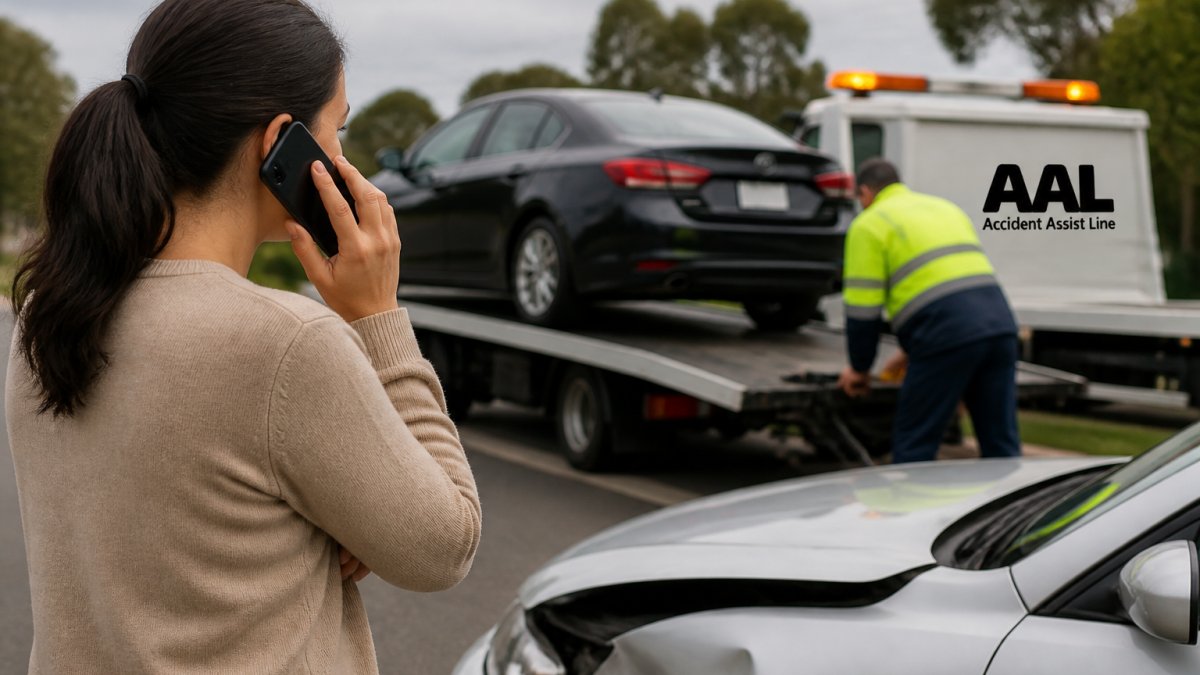
Check yourself and passengers for injuries. Some injuries appear hours or even days after an accident. Note any pain, discomfort, or unusual symptoms. Contact your insurance company or an independent accident support service like Accident Assist Line. An independent service cuts through delays and paperwork, getting you a real person on the phone within seconds to coordinate your towing, repairs, and hire car arrangements immediately.
Write down everything you remember about the accident while it's fresh: the time, weather, other drivers' behaviour, your speed, and anything else relevant. This account, combined with your photographs, creates a solid foundation for your claim.
Emergency Contact Numbers and Life-Threatening Procedures
If anyone is seriously injured or the accident poses an immediate threat to life, call triple zero (000) without delay. When you call, state your location first, including the nearest town or landmark if you're in a remote area. Describe the nature of the emergency: "Motor vehicle accident with serious injuries" or "Vehicle on fire." Tell the operator how many people are injured and whether anyone is trapped.
If someone is unconscious or unresponsive, check their breathing. If they're not breathing, begin CPR if you're trained to do so. Position them on their side if they're breathing but unconscious to keep their airway open. Don't move someone with a suspected spinal injury unless the vehicle is on fire or there's immediate danger.
For severe bleeding, apply direct pressure with a clean cloth or bandage. Elevate the injured area if possible. If an object is embedded in a wound, don't remove it, leave it in place and apply pressure around it. Keep the person warm and calm while you wait for emergency services.
For shock, keep the person lying down with their legs elevated slightly. Cover them with a blanket or jacket and talk to them calmly.
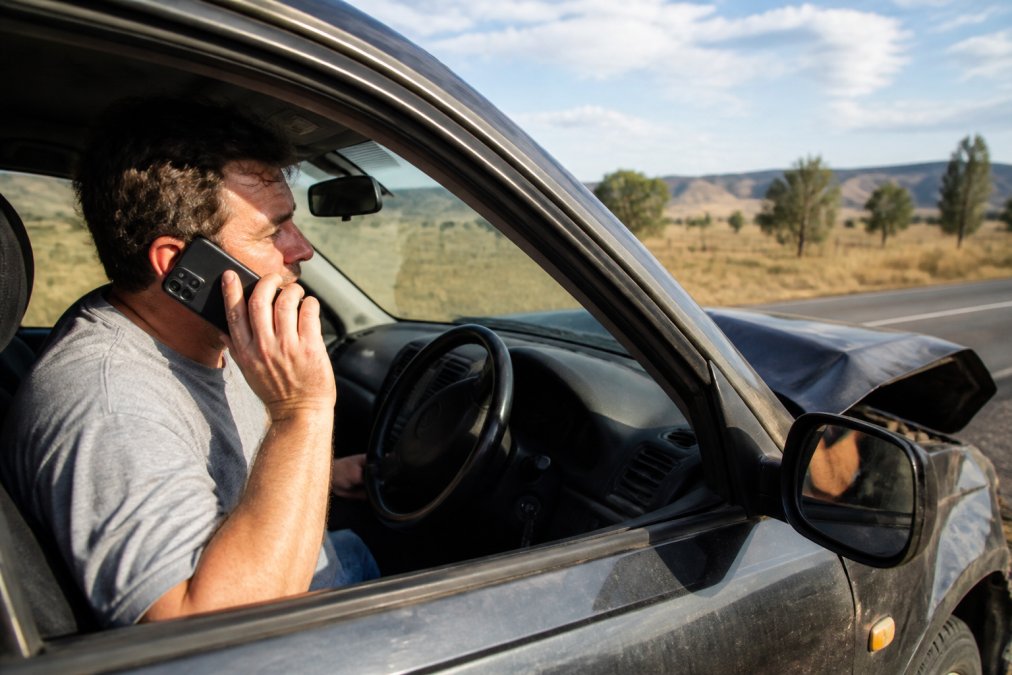
In regional Queensland, emergency response times can be 30 minutes or longer depending on your location (qld.gov.au). Knowing basic first aid makes a real difference. If you're alone and injured, stay with your vehicle, it's easier for emergency services to locate you there.
Once emergency services arrive, cooperate fully. Give them your account of what happened, but stick to facts you witnessed directly. Don't speculate about fault. Police will document the scene and create an accident report, which you'll need for your insurance claim.
Roadside Assistance and Towing in Remote Areas
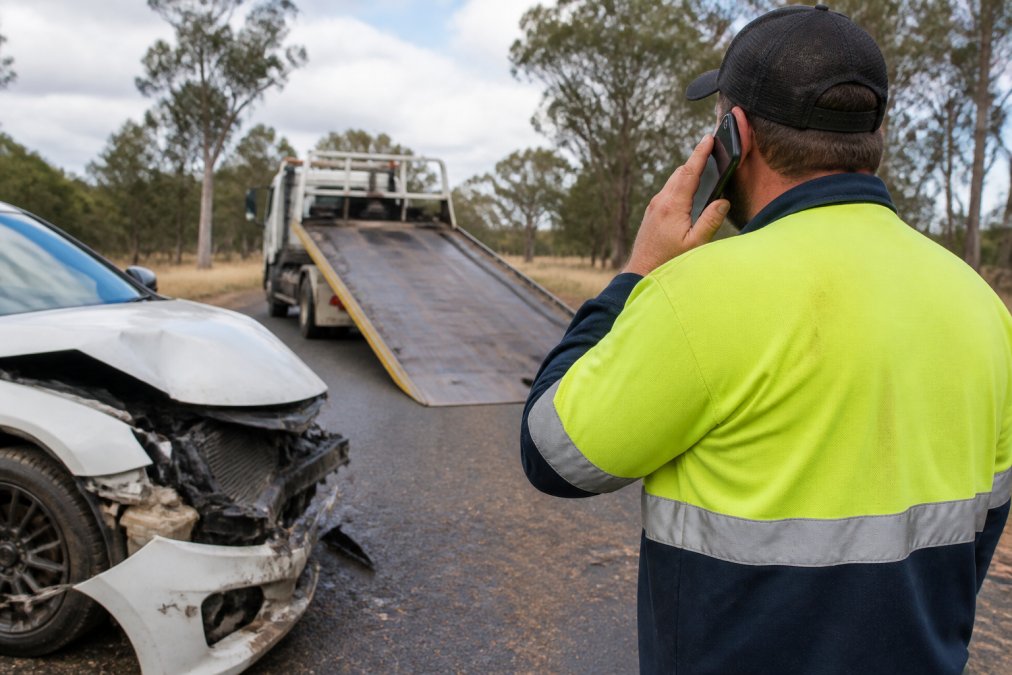
After emergency services have assessed the situation, your vehicle needs to be recovered. In regional areas, waiting for a tow truck to arrive from a distant town and negotiating with your insurer can take days if you go through traditional insurance channels.
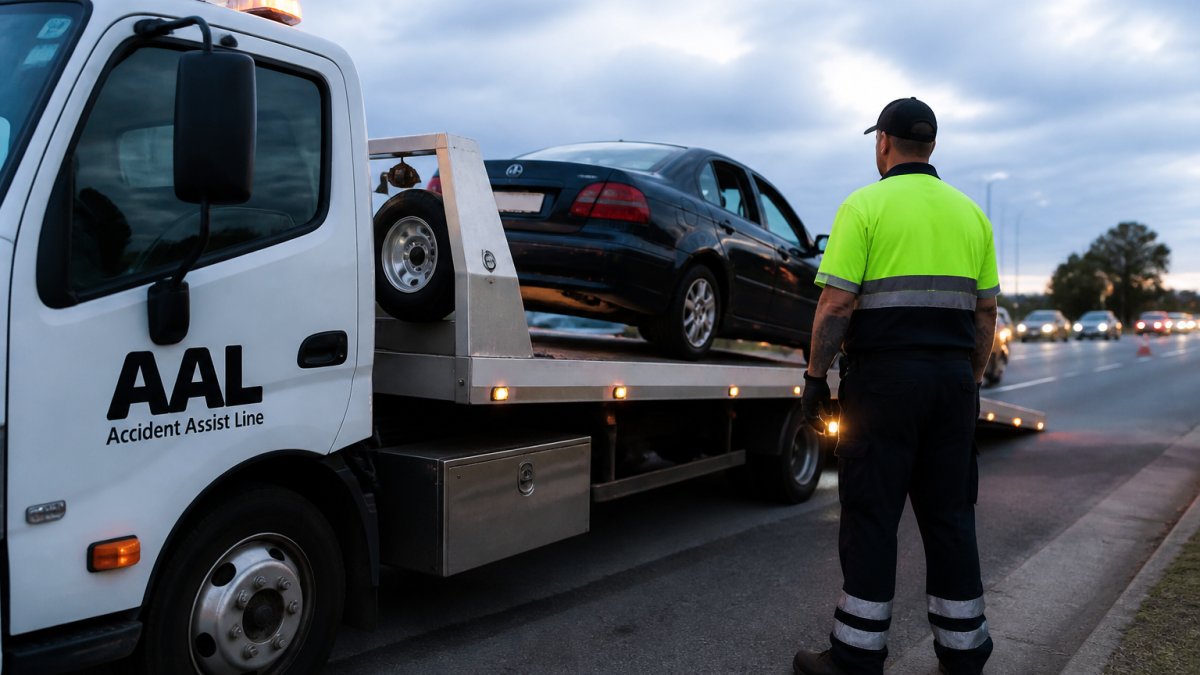
An independent accident support service like Accident Assist Line changes this timeline. They immediately coordinate with local towing operators and repairers who understand regional logistics. You're not waiting for an insurance assessor to approve a tow, the service arranges it while you're still at the accident scene.
When the tow truck arrives, check that the driver has insurance and is using proper recovery techniques. Your vehicle should be secured with straps or chains, not just dragged. If your vehicle has all-wheel drive, ensure the driver knows the correct towing method, improper towing can cause thousands of dollars in additional damage.
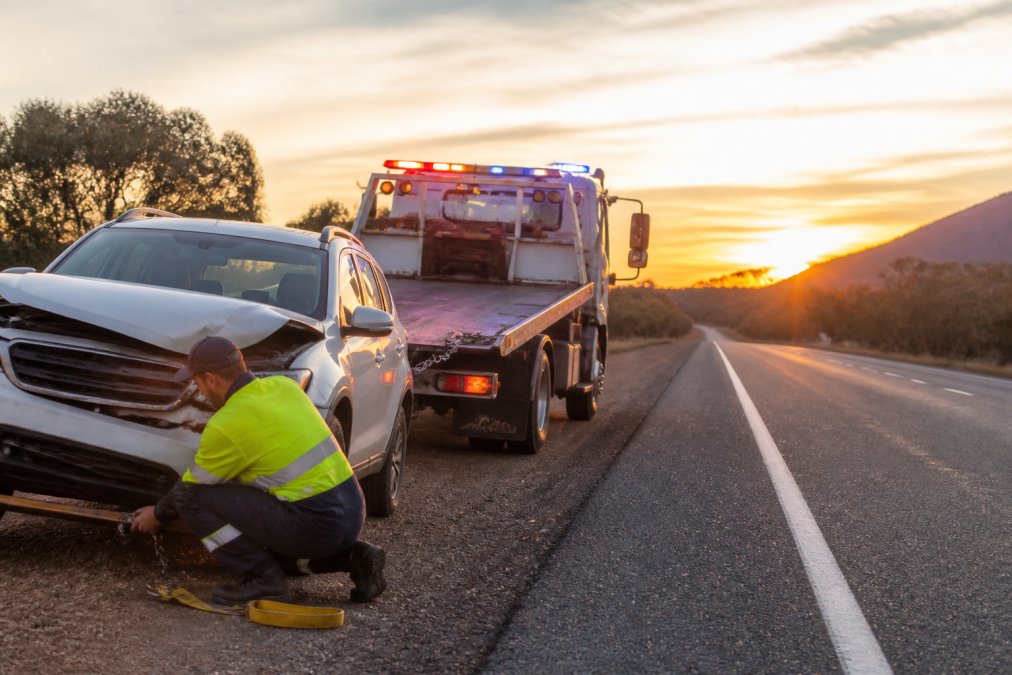
Ask the tow operator where they're taking your vehicle and get the address and phone number. Get a receipt with the tow truck's details, date, time, and operator's name. This documentation protects you if there are disputes later about damage or charges.
Regional repairers often have longer wait times for parts and can be booked weeks in advance. An independent service can arrange a hire car so you're not stranded while your vehicle is being fixed.
How to Lodge a CTP Claim in Queensland
A Compulsory Third Party (CTP) claim covers injuries and medical expenses resulting from a motor vehicle accident. In Queensland, every vehicle owner must have CTP insurance (qld.gov.au). If you're injured in an accident, you can claim against the at-fault driver's CTP policy to cover medical treatment, rehabilitation, and lost wages.
To lodge a CTP claim in Queensland, you'll need your vehicle registration details, the other driver's name, address, and vehicle registration, the police report number, medical reports documenting your injuries, receipts for medical treatment and rehabilitation, and evidence of lost income if applicable.
You can lodge a claim directly with the at-fault driver's CTP insurer, or use a claims management service. An independent accident support service like Accident Assist Line can guide you through this process, explaining what evidence you need and helping you avoid common mistakes that delay claims.
CTP claims have strict timeframes. You generally have three years from the date of the accident to lodge a claim, but gathering evidence and medical reports takes time (qld.gov.au). Starting the process early, ideally within weeks of the accident, gives you the best chance of a smooth claim.
If the at-fault driver is uninsured or unidentified, you can claim against the Queensland CTP Insurer's Nominal Defendant scheme. This covers injuries caused by uninsured or unidentified vehicles.
Medical evidence is the foundation of a CTP claim. Get assessed by a doctor as soon as possible after the accident, even if you feel fine. Document all medical treatment, physiotherapy, counselling, or rehabilitation. Keep receipts and appointment letters. The more detailed your medical records, the stronger your claim.
Why Choose an Independent Accident Support Service Australia
When you're injured or shaken after an accident, navigating insurance bureaucracy alone is overwhelming. Traditional insurance claims require you to gather evidence, contact repairers, negotiate with assessors, and chase approvals. An independent accident support service cuts through all of this.
Accident Assist Line operates 24/7 across regional Queensland, New South Wales, Victoria, and the ACT. When you call, a real person answers within seconds. They immediately coordinate towing, repairs, and hire car arrangements while you focus on recovery. No forms. No delays. No waiting for approvals.
The independence matters. Insurance companies are incentivised to minimise payouts. An independent service has no conflict of interest. Their only goal is to get you back on the road as quickly and fairly as possible.
Regional drivers face unique challenges that city-based insurance call centres don't understand. Mobile coverage drops out. Tow trucks take hours to arrive. Repairers are booked weeks in advance. An independent service specialising in regional support knows these challenges and has built relationships with local operators to overcome them.
Accident Assist Line also provides unbiased guidance about your next steps. Should you claim through CTP or your own insurance? Do you need legal advice? What medical specialists should you see? These questions are answered by someone with no financial incentive to steer you in any particular direction.
Post-Accident Trauma Care and Mental Health Support
A car accident is a traumatic event. Even if you're not seriously injured physically, the psychological impact can be significant. Anxiety, nightmares, difficulty concentrating, and avoidance of driving are common after a serious accident. These symptoms are normal, trauma is your nervous system's response to danger.
In the days immediately after an accident, prioritise rest and recovery. Avoid making major decisions while you're in shock. Stay connected to people you trust and talk about what happened.
Many people benefit from counselling after a serious accident. Trauma-informed therapists can help you process the event and develop strategies to manage anxiety. In Queensland, you can access counselling through your GP, Employee Assistance Programs, community mental health services, or private psychologists specialising in trauma. Some services are bulk-billed through Medicare, meaning you pay nothing out of pocket.
If you're struggling to return to driving, gradual exposure helps. Start with short trips on quiet roads during daylight hours with a trusted person. Over time, your confidence will rebuild. If anxiety persists, a trauma therapist can provide specific techniques like cognitive behavioural therapy (CBT) or eye movement desensitisation and reprocessing (EMDR).
For regional drivers, telehealth options mean you can speak with a therapist via video call, even if there's no counsellor in your town. Your GP can arrange this, or you can contact Lifeline (13 11 14) or Beyond Blue (1300 224 636) for guidance.
Recovery Services and Getting Back on the Road
Recovery after an accident involves more than fixing your vehicle. It's about getting your life back to normal, returning to work, managing medical treatment, and rebuilding your confidence as a driver.
A hire car is essential during recovery. An independent accident support service arranges a hire car immediately, so you're mobile while repairs happen. For regional drivers, this is crucial for getting to medical appointments, work, and daily commitments.
Medical recovery takes time. Follow your doctor's advice about rest, physiotherapy, and rehabilitation. Attend all appointments and keep records of your treatment. This documentation is essential for your CTP claim and ensures you're healing properly.
Work recovery depends on your injury. If you're unable to work, your CTP claim can cover lost wages. If you can return to work with restrictions, discuss this with your employer.
Returning to driving can be psychologically challenging. Start with short trips on familiar routes and gradually increase your confidence. If anxiety persists, speak with a trauma counsellor.
Once your vehicle is repaired, have a mechanic inspect it thoroughly. Check that all repairs were completed properly and test the brakes, steering, and safety systems.
Throughout recovery, stay in contact with Accident Assist Line or your chosen support service. They can answer questions about your claim, coordinate additional services, and ensure nothing falls through the cracks.
| Recovery Phase | Timeline | Key Actions |
|---|---|---|
| Immediate (0-7 days) | First week | Emergency care, towing, hire car, claim notification |
| Short-term (1-4 weeks) | Medical assessment, repairs begin, mental health support | |
| Medium-term (1-3 months) | Ongoing medical treatment, repairs complete, return to work | |
| Long-term (3+ months) | Rehabilitation, claim resolution, confidence rebuilding |
Frequently Asked Questions
What should I do immediately after a car accident in a regional area with poor mobile signal?
If you're in a mobile black spot, move to higher ground or a nearby building to find signal. Call triple zero (000) first if anyone is injured or in immediate danger. Once you have signal, contact roadside assistance and your insurer. If you cannot get signal, stay with your vehicle with hazard lights on and wait for another vehicle to pass. Keep your vehicle doors locked and windows up for safety. Have a charged power bank or spare battery if possible for future trips.
How does using an independent accident support service affect my insurance claim or premium?
An independent accident support service works alongside your insurance claim, not against it. They help coordinate towing, repairs, and hire car arrangements while you handle your claim directly with your insurer. Using this service does not affect your claim eligibility or future premiums. In fact, having professional coordination can speed up your claim process and reduce stress. Your insurer still processes the claim and determines payouts based on your policy and the accident circumstances, not on who organises your recovery.
What is the difference between CTP insurance and comprehensive insurance after an accident?
CTP (Compulsory Third Party) insurance covers injury to other people if you're at fault in an accident. Comprehensive insurance covers damage to your own vehicle, theft, and weather damage. After an accident, CTP applies if you've injured someone else; comprehensive covers your vehicle repairs. In Queensland, you must lodge a CTP claim within 12 months if you've been injured. Both claims can run in parallel. An independent support service can help you navigate both processes without confusion or delays.
Can an independent accident support service really get help to me in under 30 minutes in remote Queensland?
Response times depend on your location and the nearest available tow truck. In major centres, 30 minutes is realistic. In remote areas, response times may be longer due to distance. However, an independent service coordinates immediately upon your call, dispatching the nearest available assistance and keeping you informed of arrival time. They also arrange hire cars and repairs in parallel, so even if towing takes longer, your recovery process starts right away. The key advantage is that you're not waiting on hold with your insurer, a real person is working on your case from the first call.
After a car accident, you need support you can trust. Accident Assist Line provides 24/7 emergency accident support for regional Queensland drivers, with callback in under 30 seconds. We coordinate towing, repairs, and hire cars immediately, no forms, no delays, no insurance bureaucracy. Our independent service guides your next steps with unbiased help, ensuring your recovery is as fast and stress-free as possible. Call for help and get back on the road with confidence.
This article was written using GrandRanker