 how-to
Does Insurance Cover a Hire Car After a Crash? 2026 Guide
Table of Contents
- What Happens If You're At Fault in a Crash
- Not At Fault Accident Hire Car Rights Explained
- How Long Can I Keep a Rental Car After an Accident?
- How to Claim a Hire Car After a Crash: Step-by-Step
- The Credit Hire Trap and How to Avoid It
- mymotorclaim vs imintheright Comparison 2026
- International vs Domestic Rental Coverage
- Frequently Asked Questions
Last Updated: September 12, 2026
What Happens If You're At Fault in a Crash
If you're at fault, your compulsory third party (CTP) insurance covers injuries to others but not damage to your own vehicle, so knowing whether you can hire car after crash matters. Whether you get a hire car after crash depends on whether your comprehensive policy includes a hire car benefit, usually an optional extra rather than standard.
Many drivers pay premiums for years, assume they're covered, then discover the hire car was never part of the deal.
Here's what actually happens at fault:
- Your insurer repairs your car if you hold comprehensive cover, and you pay your policy excess.
- A hire car is only provided if you bought the optional hire car benefit, or if the policy includes one as standard.
- Without that benefit, you're paying for a rental out of your own pocket while your car sits in the workshop.
- Your premium may rise at renewal, and your no-claim bonus can be affected.
The practical consequence: at-fault drivers often face the longest gap between crash and getting back on the road, since repairs take time and there's no hire car entitlement.
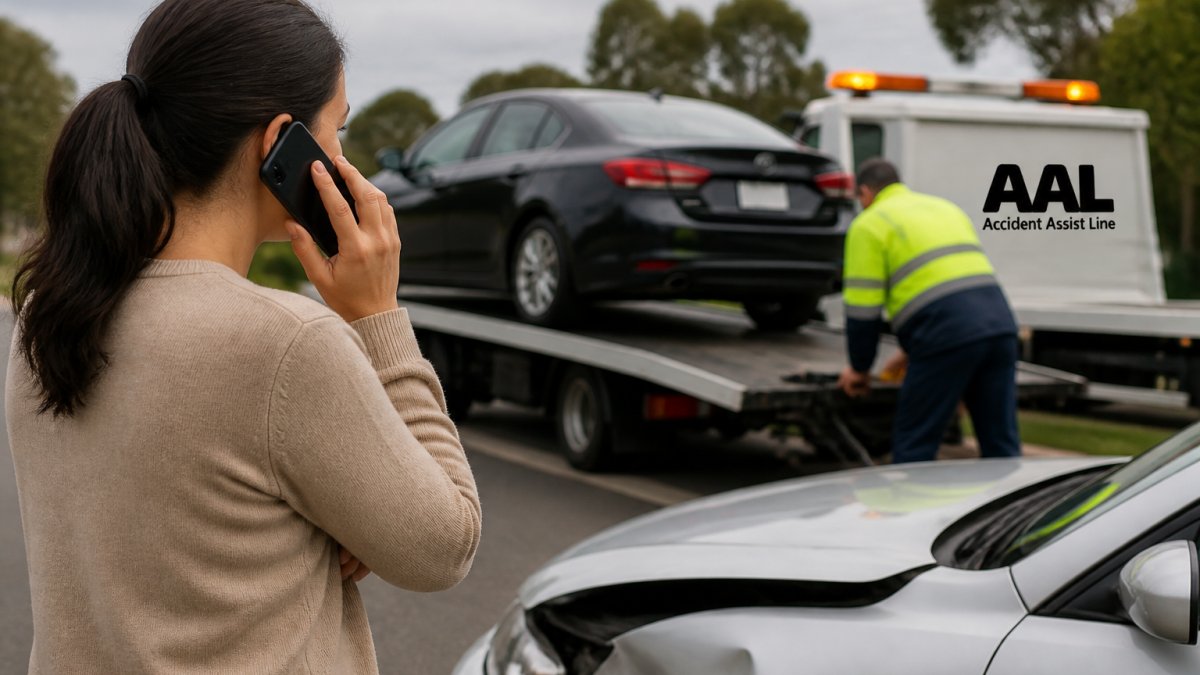
Accident Assist Line exists for exactly this gap, arranging towing, repairs and hire cars, independent of any insurer.
Not At Fault Accident Hire Car Rights Explained
In a not at fault accident, hire car rights are stronger. If another driver caused the crash, you generally have a legal entitlement to be put back in your pre-crash position, including having a vehicle to drive.
The catch: this entitlement usually runs against the at-fault driver, not your own insurer. Your insurer may offer a hire car under your policy, but the at-fault party's insurer carries the liability.
What that means in practice:
- You can claim loss of use, meaning the value of having a car available while yours is off the road.
- You can claim hire car costs from the at-fault driver's insurer, provided the rate is reasonable.
- Your own insurer may still help if your policy includes a hire car benefit, and can then recover the cost through subrogation.
- Documentation matters enormously. An incident report, photos, and the other driver's details all strengthen your position.
"Reasonable period" is deliberately vague. It generally means the time your vehicle is genuinely off the road for assessment and repair, not however long you'd like the rental.
How Long Can I Keep a Rental Car After an Accident?
Most policies cap hire car entitlement at a set number of days, commonly 10 to 21, though the exact figure sits in your policy wording. If you're not at fault, the clock is generally tied to how long your vehicle is genuinely off the road.
Two different clocks are running here, and confusing them is the most common mistake:
| Situation | Who Sets the Limit | What It's Based On |
|---|---|---|
| At fault, with hire car benefit | Your own policy | Fixed daily limit and maximum days |
| Not at fault | At-fault driver's liability | Reasonable repair period |
| Total loss | Your policy or the at-fault party | Time to settle and replace the vehicle |
| Repairs delayed by parts | Negotiable | Documented parts delays |
If a backordered part delays your repair, that delay is generally not your responsibility and a reasonable period should extend to cover it. Keep every email and text from the repairer confirming the delay.
The Australian Securities and Investments Commission's guidance on general insurance is worth reading if you want to understand how policy terms and disclosure obligations work. Insurers must set out limits clearly, so if a cap feels hidden, that's a signal to read the product disclosure statement closely.
The like-for-like vehicle debate
A point almost no policy spells out: are you entitled to the same class of vehicle you were driving, or just "a car"? It depends on who is paying.
- At fault, under your own benefit: the policy wording usually specifies a vehicle class, and many cap it at a small or medium car regardless of what you drive. A tradesperson with a ute may be handed a hatchback.
- Not at fault, claiming against the at-fault driver: the legal principle is that you should be put back in the position you were in before the crash. That supports a like-for-like argument, but it is a negotiation, not an automatic right.
- Total loss: once your vehicle is written off, the hire car entitlement typically ends when the claim is settled, not when you buy a replacement. That gap between settlement and a new car is often unfunded.
If you drive a commercial vehicle, large SUV or modified car, check the benefit schedule before you need it, a cap at "small car" means you're given something to drive, not made whole.
How to challenge a cap that feels too short
If the insurer or at-fault party wants to cut the hire short, respond with documented evidence, not argument:
- Get a written repair timeline from the repairer, including the parts order date and expected arrival.
- Ask the assessor to confirm in writing that the delay is outside your control.
- Request the specific policy clause or liability basis for the cut-off date.
- If the vehicle is a total loss, ask for the settlement date in writing and note the gap to replacement.
How to Claim a Hire Car After a Crash: Step-by-Step
Claiming a hire car after a crash comes down to sequence. Get the documentation right in the first 48 hours and the rest becomes easier.

Step 1: Secure the scene and exchange details. Get the other driver's name, licence, registration, insurer and contact number. Photograph both vehicles and the road layout.
Step 2: Report the incident. Notify police if anyone was injured or if the damage is significant. Lodge the incident report number somewhere you won't lose it.
Step 3: Call your insurer and ask one specific question. Not "am I covered?" but "does my policy include a hire car benefit, and what is the daily limit and maximum duration?" That phrasing gets a precise answer.
Step 4: Confirm who is at fault. If the other driver is clearly at fault, say so plainly and ask what the at-fault insurer will cover.
Step 5: Arrange the rental. If you're covered, your insurer or their preferred supplier arranges it. If you're not at fault and uninsured for hire cars, you may need to claim directly against the at-fault party.
Step 6: Keep the vehicle appropriate. A like-for-like replacement is the goal, but a smaller or cheaper vehicle is usually accepted if the original was large.
Step 7: Track the repair timeline. Ask the repairer for written updates. Every delay noted in writing supports your entitlement.
Step 8: Return the car on time. Overstaying the agreed period can leave you personally liable for the extra days.
The negotiation script most guides leave out
When you call the at-fault driver's insurer, the person on the line is trained to minimise cost. A short, structured script keeps the conversation on your entitlement:
"I was not at fault in an accident on [date]. My vehicle is off the road for repairs. I am claiming loss of use and hire car costs from your insured. Can you confirm in writing: (1) whether you accept liability, (2) the daily rate you will approve, and (3) the period you will cover?"
Three things make that script work:
- It names the legal basis, loss of use, rather than asking for a favour.
- It asks for written confirmation, creating a record if the position changes later.
- It separates liability, rate and duration, so a refusal on one point doesn't derail the others.
Common refusal scenarios and how to respond
| What they say | What it usually means | Your response |
|---|---|---|
| "We don't provide hire cars." | They are declining loss of use, not denying liability. | Ask them to confirm liability in writing and state you are claiming hire costs separately. |
| "We'll only approve a small car." | They are capping the class, not the entitlement. | Provide your vehicle's class and ask for the clause they rely on to downgrade it. |
| "We'll cover 7 days." | An opening position, not a final one. | Provide the repairer's written timeline and ask for the period to match it. |
| "Claim it on your own policy." | They want your insurer to carry the cost. | Confirm your insurer can recover it through subrogation, or proceed directly against them. |
Put every request in writing, even after a phone call. A short email summarising what was agreed, "As discussed, you will approve $X per day for Y days", is far harder to walk back than a verbal promise.
If the at-fault insurer stalls, your own insurer may step in under your hire car benefit and recover the cost later, faster, but only if you bought the benefit.
The Credit Hire Trap and How to Avoid It
A credit hire company provides a rental on credit, then pursues the at-fault driver's insurer to recover the cost. It sounds generous; the trap is in the rate.
Credit hire companies typically charge daily rates well above market, and if the at-fault insurer disputes the rate as unreasonable, recovery can fail, and the liability can land back on you.
How to avoid it:
- Ask who ultimately pays if the claim is disputed, and get the answer in writing.
- Compare the daily rate against a standard rental quote for the same vehicle class.
- Read the credit agreement before signing, particularly the clause about who bears the cost if recovery fails.
- Check whether your own policy already covers you, which removes the need for credit hire entirely.
- Be cautious with unsolicited calls from companies offering a free hire car after an accident.
The National Debt Helpline's information on credit and debt agreements is a useful starting point if you're unsure what you're signing, since credit hire agreements are credit arrangements with real obligations attached.
mymotorclaim vs imintheright Comparison 2026
Comparing mymotorclaim vs imintheright in 2026, both are accident management services coordinating towing, repairs and hire cars. The meaningful differences sit in how they handle credit hire and who carries the risk if recovery fails.
| Feature | mymotorclaim | imintheright |
|---|---|---|
| Core service | Accident management and claims coordination | Accident management and claims coordination |
| Hire car model | Credit hire arrangement | Credit hire arrangement |
| Who pays if recovery fails | Varies by agreement | Varies by agreement |
| Independence from insurers | Not independent | Not independent |
| Risk to you | Possible liability if rate disputed | Possible liability if rate disputed |
Neither is a bad actor, but both use a model where the hire car is funded on credit and recovered later. That structure is what to interrogate, not the brand name.
This is where Accident Assist Line differs. It's an independent service, not tied to any insurer, arranging towing, repairs and hire cars with a callback in under 30 seconds and no forms or delays. The independence matters: no incentive to push you toward a particular repairer.
If you're weighing up a credit hire provider against a service that simply gets you moving, the second option carries less financial risk.
International vs Domestic Rental Coverage
Domestic rental coverage applies to hire cars arranged within the country, the scenario most policies are written around. International rental coverage is different, and most comprehensive policies don't extend to it.
If you crash a rental overseas, travel insurance may cover the excess but typically won't cover the rental cost itself for an extended period. Your comprehensive policy generally stops at the border.
The practical differences:
- Domestic: hire car benefit, credit hire, or a claim against the at-fault party, all governed by local policy terms and liability rules.
- International: travel insurance excess cover, rental company damage waivers, and whatever the rental agreement itself specifies.
- Vehicle type matters too. A ute, a large SUV or a commercial vehicle usually costs more to replace on a like-for-like basis, and some policies cap the benefit at a small car regardless of what you were driving.
The Australian Government's Smartraveller travel insurance guidance sets out clearly why rental excess cover overseas needs to be arranged before you leave, not after something goes wrong.
That vehicle-type point deserves emphasis: if you drive a trades vehicle and your policy caps hire car cover at a compact car, you're not being made whole, just given something to drive. Read the benefit schedule and check what class it covers.
Frequently Asked Questions
How long do you get a hire car for after an accident?
The duration depends on your policy and fault. If you're not at fault, insurers typically cover a reasonable period, often until your car is repaired or a settlement is reached. If you're at fault and have optional hire car cover, there's usually a daily limit and a maximum number of days, such as 14 to 21 days. Check your policy wording or call your insurer to confirm your specific entitlement.
Will my insurance cover me for a hire car if I'm not at fault?
In most cases, yes. If another driver is at fault, their insurer is liable for your loss of use, which includes a hire car. You can claim directly through their insurer or use a credit hire company that recovers costs from the at-fault party. Your own insurer may also offer a hire car as an optional benefit, but you may need to pay upfront and claim back. Always confirm liability first.
What is the difference between at-fault and not-at-fault hire car entitlements?
At-fault means you caused the crash, so your own policy applies. A hire car is only covered if you bought the optional benefit, and limits apply. Not-at-fault means another driver caused it, so their insurer is responsible for your reasonable hire car costs. You're not limited by your own policy's daily cap in that case, but you must prove the other driver's liability. Fault determines who pays and how much you get.
Can I hire a car if I've had an accident and my car is written off?
Yes, but the process differs. If you're not at fault, the at-fault insurer should provide a hire car until they settle your claim, which may take weeks. If you're at fault and have hire car cover, you'll get a car for a set period after the write-off is confirmed. Without optional cover, you'll pay out of pocket. Keep all receipts and document the total loss date carefully.
A crash already costs you time, money and momentum. Discovering your policy never covered a hire car adds a fourth cost you didn't plan for. Accident Assist Line arranges towing, repairs and hire cars around the clock, with a callback in under 30 seconds, no forms and no insurer affiliation slowing things down. The service is independent, so the guidance you get isn't shaped by a repairer or a credit arrangement. Call for help and get back on the road.