 how-to
Does Independent Accident Support Affect Premiums?
Table of Contents
- How Car Insurance Premiums Are Actually Calculated
- Does Independent Accident Support Affect Premiums?
- Not at Fault Accident Insurance Claim: What You Need to Know
- Does a Not at Fault Claim Affect No Claim Bonus?
- Claiming vs. Paying Out-of-Pocket: A Cost-Benefit Analysis
- CTP vs. Comprehensive Insurance: Which Covers What After an Accident
- How Independent Accident Support Actually Works After a Crash
- Conclusion
Last Updated: August 10, 2026
How Car Insurance Premiums Are Actually Calculated
Most drivers assume their premium is simply a reflection of their driving record. The reality is considerably more layered than that, and understanding it is the first step to making smart decisions after an accident.
Car insurance premiums are calculated through a process called underwriting, where an insurer assesses the likelihood that you will make a claim and what that claim might cost. Every policy you hold is the product of a risk assessment that weighs dozens of variables simultaneously.
The factors that typically influence your premium include:
- Vehicle type and age: High-performance or newer vehicles cost more to repair or replace, which increases the insurer's exposure.
- Driver history: Past claims, traffic infringements, and licence age all feed into your risk profile.
- Location: Urban postcodes with higher accident rates or vehicle theft statistics attract higher premiums.
- Annual kilometres driven: More time on the road generally means more exposure to incidents.
- Coverage limits and excess: The level of cover you choose and the excess you agree to pay directly affect your premium.
Insurers use this data to assign you a risk rating, a numerical score that determines where your premium sits within their pricing model. The higher your perceived risk, the higher your premium loading.
At-Fault vs. Not-at-Fault: Why the Distinction Matters
The single most consequential factor after an accident is whether you are deemed the at-fault driver or not. This distinction shapes almost everything that follows: who pays for repairs, how your no-claim bonus is treated, and whether your risk rating changes at renewal.
An at-fault accident is one where your insurer determines that your actions caused or contributed to the collision. A not-at-fault accident is one where another driver's negligence caused the damage to your vehicle. The financial and administrative consequences of these two scenarios are significantly different, and conflating them is one of the most common mistakes drivers make when deciding whether to claim.
Risk Rating, Underwriting, and Premium Loading
Risk rating is not a one-time assessment. It is recalculated at every policy renewal based on your updated claims history, any changes in your circumstances, and broader actuarial data about your risk category. Premium loading is the additional cost applied when your risk profile deteriorates, and it can persist for several years after a single at-fault claim.
According to the Insurance Council of Australia's guidance on motor insurance, insurers are required to be transparent about how claims affect premiums, but the specific calculation methods remain proprietary to each provider.
Does Independent Accident Support Affect Premiums?
Does independent accident support affect premiums? The short answer is no, not directly. Using an independent accident support service does not constitute lodging an insurance claim, and it is not recorded on your insurance policy. This distinction matters enormously.

At Accident Assist Line, we operate entirely outside the insurance system. When you call us after an accident, we coordinate towing, repairs, and hire car arrangements on your behalf. None of that activity touches your insurance policy unless you subsequently choose to lodge a formal claim. Your no-claim bonus remains intact. Your risk rating is not updated. Your insurer does not receive notification that an incident occurred simply because you used our service.
This is the part most guides get wrong. They treat any post-accident assistance as synonymous with "making a claim." The two are entirely separate actions with entirely separate consequences.
What Counts as an Insurance Claim vs. an Independent Service
An insurance claim is a formal request submitted to your insurer asking them to provide the financial coverage your policy promises. Once lodged, it enters your claims history, triggers an assessment of fault, and may affect your premium at renewal.
An independent accident support service is a coordination and logistics service. It helps you manage the immediate aftermath of an accident: towing, vehicle assessment, repair booking, and hire car access. No claim is lodged with your insurer unless you direct one to be. The service operates on your behalf, not on behalf of your insurance provider.
The practical implication: you can use independent accident support to manage your recovery and still decide later, with full information, whether lodging a claim is the right financial move.
Not at Fault Accident Insurance Claim: What You Need to Know
A not at fault accident insurance claim is a claim lodged when another driver caused the damage to your vehicle. Many drivers assume that because they were not responsible, the claim carries no consequences for them. This is partially true, but the picture is more nuanced.
Most insurers will not reduce your no-claim bonus for a not-at-fault claim, provided you can supply the at-fault driver's details. However, some insurers do record the incident on your policy regardless, and a pattern of not-at-fault claims can still influence how an underwriter views your risk profile at renewal. The logic, however unfair it may feel, is that frequent involvement in accidents, even as the innocent party, can statistically correlate with higher future claim probability.
As outlined by ASIC's MoneySmart guide to car insurance, drivers should always read their Product Disclosure Statement carefully to understand exactly how their insurer treats not-at-fault incidents.
The Claims History Database and Your Insurance Record
Your insurance record extends beyond your current policy. The Insurance Reference Services database, maintained by the industry, allows insurers to access your claims history across providers. This means a claim lodged with one insurer follows you when you switch. It is one of the less-publicised aspects of motor insurance, and it has real consequences for drivers who change providers hoping for a clean slate.
What this means in practice: every formal claim you lodge, whether at-fault or not, becomes part of a permanent record that future insurers can access during underwriting. This is precisely why the decision to claim should never be made automatically.
Does a Not at Fault Claim Affect No Claim Bonus?
Whether a not at fault claim affects your no-claim bonus depends on your specific insurer and policy terms. Many comprehensive insurance policies protect your no-claim bonus for not-at-fault incidents where the other driver's details are provided. Some policies include explicit "no-claim bonus protection" as an optional add-on.
The critical variable is whether you can identify the at-fault driver. If the other driver flees the scene or is uninsured, your insurer may treat the claim differently, and your no-claim bonus may be at risk even if you were entirely blameless. This is a gap in cover that many drivers only discover after the fact.
A common mistake is assuming that "not at fault" automatically means "no consequences." Always confirm with your insurer before lodging how the claim will be classified and what the impact on your bonus will be.
Claiming vs. Paying Out-of-Pocket: A Cost-Benefit Analysis
The question of whether to claim is fundamentally a financial one, and the answer is not always obvious. Many drivers reflexively lodge a claim without calculating whether the long-term premium impact outweighs the short-term repair cost.
| Scenario | Claim or Pay Out-of-Pocket? | Key Consideration |
|---|---|---|
| Minor cosmetic damage under excess | Pay out-of-pocket | Claiming below or near your excess rarely makes financial sense |
| Significant structural damage | Claim | Repair costs likely exceed long-term premium impact |
| Not-at-fault with at-fault driver details | Claim | Other driver's insurer typically covers costs |
| Not-at-fault, driver unknown | Assess carefully | Bonus may be affected; weigh repair cost vs. premium loading |
| Third-party property damage involved | Claim | Liability exposure makes claiming the safer option |
| Multiple claims in recent years | Pay out-of-pocket if possible | Further claims compound premium loading significantly |
When to Claim and When to Cover It Yourself
The decision hinges on three numbers: the repair cost, your excess, and the estimated premium increase over the next three to five years. If the repair cost is close to or below your excess, paying directly is almost always the better financial outcome. You avoid the claim being recorded, your no-claim bonus stays intact, and your risk rating is unaffected.
Where it gets harder is in the middle range: damage that exceeds your excess but is not catastrophic. Here, you need to estimate the premium loading your insurer is likely to apply and multiply it across renewal periods. Many insurers will increase premiums for three years following an at-fault claim. Even a modest annual increase compounds meaningfully over that window.
Multi-Policy Discounts and What a Claim Can Cost You
A point that almost no guide addresses: if you hold multiple policies with the same insurer, home and contents alongside your comprehensive car insurance, for example, a claim on one policy can affect the discount structure applied to all of them. Multi-policy discounts are typically offered as a bundle, and a claim that changes your risk profile may prompt your insurer to recalculate the entire bundle at renewal.
This is not guaranteed to happen, but it is a realistic possibility that should factor into your cost-benefit analysis. The true cost of a claim is not just the premium increase on your motor policy.
CTP vs. Comprehensive Insurance: Which Covers What After an Accident
Compulsory Third Party insurance is a statutory requirement for all registered vehicles. CTP insurance covers personal injury liability: it pays for the medical expenses, lost wages, and damages suffered by people injured in an accident where you are at fault. It does not cover damage to vehicles or property. CTP is administered differently across states, with each jurisdiction setting its own scheme rules through bodies like the Transport Accident Commission in Victoria and equivalent agencies in other states.
Comprehensive insurance covers damage to your own vehicle and third-party property damage. It is optional, though widely held. Third-party property damage insurance sits between the two: it covers damage you cause to other vehicles or property but does not cover your own vehicle.
The practical distinction after an accident:
- CTP handles personal injury claims and statutory benefits for injured parties.
- Comprehensive insurance handles vehicle repair, replacement, and third-party property damage.
- An independent accident support service operates in the space between: it coordinates the logistics of vehicle recovery and repair without interacting with either CTP or your comprehensive policy unless you choose to lodge a claim.
Understanding which type of cover applies to which aspect of your loss is essential before deciding how to proceed.
How Independent Accident Support Actually Works After a Crash
The immediate aftermath of an accident is the worst time to be navigating insurance paperwork. Accident Assist Line exists to handle exactly that window, getting you off the road and into a hire car while the details are sorted.

Here is what the process looks like in practice:
- You call immediately after the accident. Accident Assist Line provides a callback in under 30 seconds, any time of day or night. No forms, no hold queues, no automated systems leaving you waiting on the side of the road.
- We assess your situation. A real person takes your details, establishes where you are, and begins coordinating the response.
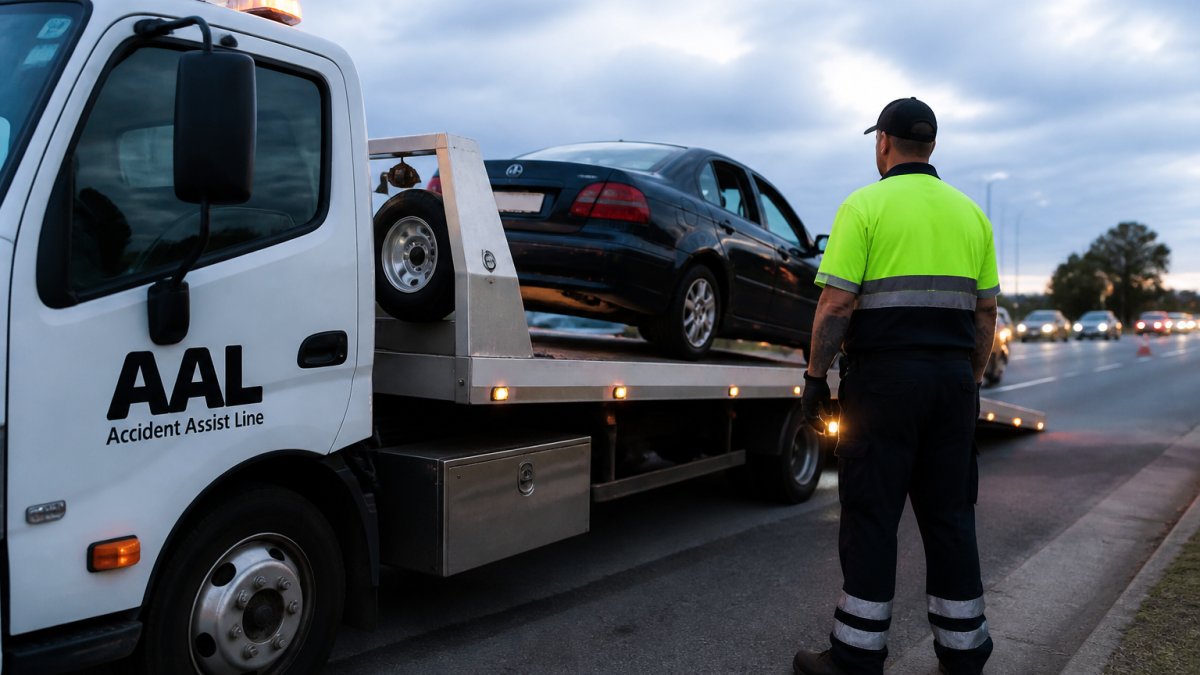
- Towing is organised. A tow truck is dispatched to your location. You do not need to source one yourself or wait for your insurer to authorise it.
- Repairs are coordinated. Your vehicle is directed to a repairer, and the assessment process begins.
- A hire car is arranged. Where you are eligible, a hire car is organised so you are not left without transport while your vehicle is being repaired.
- You decide what to do about your insurance. With the immediate crisis managed, you can make a considered decision about whether to lodge a formal claim, armed with the full picture of repair costs and your policy terms.
The thing nobody tells you about independent accident support is that it separates the logistics problem from the insurance decision. Those are two different problems, and they deserve to be handled independently.
The question of does independent accident support affect premiums comes up regularly, and the answer remains the same: no, because independent support is a logistics service, not an insurance transaction. The two operate in entirely different systems.
Frequently Asked Questions
Does using an independent accident support service count as an insurance claim?
No. Contacting an independent accident support service is not the same as lodging an insurance claim. An independent service organises towing, repairs, and hire cars on your behalf without formally notifying your insurer or triggering a claims process. Your insurer only records a claim when you formally report the incident and request a payout. Using independent support first gives you time to assess the situation before deciding whether to claim at all.
Will my insurance premium increase if I am not at fault?
Not necessarily, but it depends on your insurer and policy. Many comprehensive insurance policies protect your no-claim bonus for not-at-fault claims, provided the at-fault driver's details are supplied. However, some insurers still apply a premium loading at renewal, particularly if the at-fault party is unidentified or uninsured. Your claims history is recorded regardless of fault, so it is worth checking your policy's specific no-claim bonus protection terms before lodging a not-at-fault claim.
What should I avoid telling my insurer after an accident?
Never admit fault or speculate about liability when speaking to your insurer. Stick to the factual sequence of events. Avoid guessing at repair costs or agreeing to statements that could be interpreted as an admission. Insurers are required under Australian law to handle claims in good faith, but any inaccurate or misleading information you provide can affect your coverage or constitute a breach of your policy's disclosure obligations under the Insurance Contracts Act 1984.
What factors do insurers consider when calculating premium increases after a claim?
Insurers assess several factors: who was at fault, the total payout amount, your prior claims history, whether your no-claim bonus protection applies, and your vehicle's risk rating. They also factor in your age, location, vehicle make and model, and annual kilometres driven. A single at-fault claim can increase premiums by a meaningful amount at renewal, while a protected not-at-fault claim may leave your premium unchanged, depending on your insurer's underwriting rules.
Dealing with a vehicle accident is stressful enough without being forced into insurance decisions before you are ready. Accident Assist Line provides 24/7 independent support with no forms, no delays, and a callback in under 30 seconds to organise towing, repairs, and a hire car. Get the immediate help you need, then make your insurance decisions from a position of clarity. Call Accident Assist Line for help.
This article was written using GrandRanker