 how-to
Car Accident Recovery: 7 Simple Steps to Follow
Table of Contents
- Your First Steps at the Scene
- Seek Medical Assessment, Even if You Feel Fine
- Understand the Car Accident Injury Recovery Timeline
- The Insurance Claim Process After Car Accident
- What to Do After a Car Accident Checklist for Recovery
- Support Your Healing with Nutrition and Sleep
- Returning to Work and Daily Life
- Frequently Asked Questions
Last Updated: September 5, 2026
Your First Steps at the Scene
The moments directly after a collision are chaotic, but your actions in the first ten minutes shape your entire recovery. Prioritise safety, not blame.
Switch on your hazard lights and check that everyone is conscious and breathing. If anyone is injured or the road is blocked, call Triple Zero (000) immediately. Do not move seriously injured people unless they face immediate danger.
Move your vehicle to the roadside if safe and drivable; otherwise leave it, switch off the engine, and get everyone to safety. In Australia, you are legally obliged to stop and exchange details after any crash (legislation.gov.au).
Exchange names, addresses, phone numbers, registration numbers, and insurance details with the other driver. A police report is required in most states when someone is injured or vehicles cannot be driven. Photograph the damage, plates, and scene from several angles.

Seek Medical Assessment, Even if You Feel Fine
Adrenaline masks pain. Many people walk away feeling shaken but unharmed, only to wake up with stiffness, headaches, or pain signalling a soft tissue injury such as whiplash.
A medical assessment within 24 to 48 hours is critical (healthdirect.gov.au). A practitioner can identify injuries not yet symptomatic, document them in your medical records, and refer you to early treatment. This documentation also strengthens a later claim.
Even a minor impact can cause a concussion or aggravate an existing spinal condition. Describe every symptom to your doctor, including dizziness, nausea, or difficulty concentrating. These "invisible" symptoms are real and treatable, but only if you report them.
Understand the Car Accident Injury Recovery Timeline
Recovery is rarely linear. A common mistake is expecting to feel "back to normal" within a week because the car is repaired. Soft tissue injuries heal on their own schedule, from weeks for minor strains to months for significant injuries.
Most whiplash injuries improve substantially within six to twelve weeks with consistent treatment (peer-reviewed research). However, some experience ongoing pain and restricted mobility far longer, particularly if they delay treatment or return to full activity too quickly.
During the first weeks, gentle movement and physiotherapy usually beat complete rest. Your treatment plan might include physical therapy, stretching, and gradual return to normal movement. Listen to your body: sharp pain signals stop, while mild discomfort during rehabilitation is often expected.
The Insurance Claim Process After Car Accident
The insurance claim process after car accident notifications follows a structured sequence, but details vary by state and whether you claim against your own comprehensive policy or pursue a third-party claim. Understanding the mechanics before you call reduces stress and prevents costly mistakes.
Step 1: Notify Your Insurer Within the Required Window
Most Australian comprehensive policies require you to notify your insurer within 24 to 48 hours, even if you are not at fault. Check your Product Disclosure Statement (PDS) for the exact timeframe. Delaying can give the insurer grounds to reduce or deny your claim.
Step 2: Understand the Two Claim Pathways
There are two routes: a claim against your own policy or against the other driver's insurer. With comprehensive cover, your insurer typically handles repairs and seeks recovery from the at-fault party's insurer. With only third-party property damage cover, you must lodge directly with the other driver's insurer, which is slower and requires proving fault.
For personal injury, the pathway differs. In most states you claim through the compulsory third party (CTP) scheme included in your registration. Each scheme has its own forms, time limits, and medical assessment requirements. For example, in NSW you generally have 28 days to notify the at-fault driver's CTP insurer of your intention to claim, and up to three months to lodge a formal application.
Step 3: Gather the Evidence Your Insurer Expects
Insurers are document-driven. Before you call, assemble the following:
- Your policy number and the other driver's details
- The police report reference number, if one was taken
- Photographs of the damage and the scene
- Medical certificates and treatment records if you were injured
- Any witness contact details
Your insurer will assign a claim number and arrange a vehicle assessment, not the same as a repair quote. An assessor determines whether it is repairable or a total loss ("write-off"). In Australia, a vehicle is typically written off when repair costs exceed roughly 70-75% of its market value, though this varies by insurer and state.
Step 4: Know Your Rights on Repairers and Hire Cars
Many policies allow you to choose your own repairer, but insurers often have "preferred repairers" who guarantee their work. You are not legally obliged to use them, but doing so usually speeds up the process. If your car is not drivable, your policy may include a hire car benefit, check your PDS for limits. If you are not at fault, the at-fault driver's insurer may cover a hire car once liability is admitted.
Step 5: Handle Disputes Through Formal Channels
If your claim is denied or the settlement seems too low, every Australian insurer must have an internal dispute resolution process. If that fails, escalate to the Australian Financial Complaints Authority (AFCA), which can make a binding decision. You generally have two years from becoming aware of the dispute to lodge with AFCA. For CTP claims, each state has its own review body, such as the Personal Injury Commission in NSW or VCAT for TAC disputes.
Step 6: Track Everything in Writing
Keep a log of every call with your insurer, including the date, the person's name, and what was agreed. Follow up verbal conversations with an email summarising the discussion. A written trail protects you if a promise is not honoured.
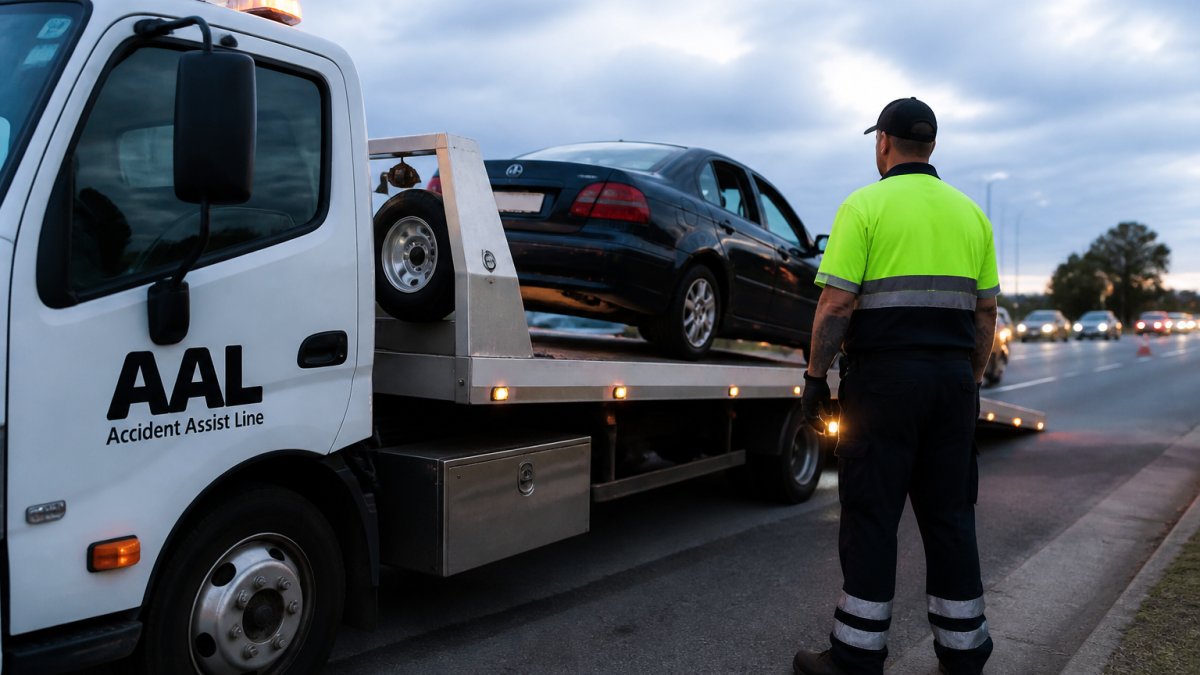
While you manage the paperwork, the practical logistics of towing, repairs, and a hire car can feel overwhelming. Accident Assist Line handles those tasks for you, with a callback in under 30 seconds, so you can focus on recovery rather than phone calls.
What to Do After a Car Accident Checklist for Recovery
A clear checklist helps you stay organised when stress clouds your thinking. Beyond the immediate scene, focus on documentation and consistent care.
Keep a dedicated folder for every document related to the accident: police report, medical certificates, treatment receipts, physiotherapy notes, correspondence with your insurer, and records of any days off work. Photograph or scan everything for digital backups.
Track your symptoms in a daily log: pain level out of ten, sleep quality, activities you could not complete, and how you felt emotionally. This becomes powerful evidence if your recovery takes longer than expected or you claim compensation for lost income.
Support Your Healing with Nutrition and Sleep
Most recovery guides stop at physiotherapy and pain medication, but your body rebuilds damaged tissue with the raw materials you provide. Nutrition and sleep are the biological foundation of tissue repair.
The Anti-Inflammatory Plate: What to Eat and Why
Soft tissue injuries trigger an inflammatory cascade essential in the first 48 hours but counterproductive if it lingers. The goal is not to eliminate inflammation entirely, that would halt healing, but to modulate it so it does not become chronic.
A practical anti-inflammatory plate follows a simple formula: half the plate colourful vegetables, a quarter lean protein, and a quarter complex carbohydrates, with a source of healthy fat added.
- Protein: Aim for 1.2 to 1.6 grams per kilogram of body weight per day during recovery. For a 70 kg person, that is roughly 84 to 112 grams daily. Good sources include chicken, fish, eggs, Greek yoghurt, legumes, and tofu. Protein provides the amino acids needed to rebuild collagen in ligaments and tendons.
- Omega-3 fatty acids: Found in oily fish such as salmon, sardines, and mackerel, as well as walnuts and flaxseeds. Omega-3s help resolve inflammation. Aim for two to three servings of oily fish per week, or consider a fish oil supplement, discuss the dose with your GP or a dietitian.
- Vitamin C: Essential for collagen synthesis. Citrus fruits, kiwi fruit, capsicum, and broccoli are rich sources. Unlike some vitamins, your body cannot store vitamin C, so spread your intake across the day.
- Zinc and magnesium: Zinc supports tissue repair and is found in oysters, beef, pumpkin seeds, and lentils. Magnesium helps with muscle relaxation and sleep quality; good sources include spinach, almonds, and dark chocolate.
Minimise heavily processed snacks, sugary drinks, and excessive alcohol during the acute phase. These promote oxidative stress and prolong inflammation. You do not need to be perfect, but reducing them while healing makes a measurable difference.
Sleep Hygiene for Pain Management: The Practical Protocol
Pain and sleep form a vicious cycle: pain disrupts sleep, and poor sleep lowers your pain threshold. Breaking this cycle requires deliberate sleep hygiene.
Positioning matters. If your neck is injured, sleep on your back with a supportive cervical pillow rather than your stomach, which twists the spine. For lower back injuries, sleep on your side with a pillow between your knees to keep your pelvis aligned.
Temperature and light. Your core temperature must drop about one degree Celsius to initiate deep sleep. Keep your bedroom around 18 to 20 degrees Celsius, use blackout curtains or an eye mask, and avoid bright screens for at least 60 minutes before bed.
The 20-minute rule. If pain wakes you and you cannot get back to sleep within 20 minutes, get out of bed. Sit in a dimly lit chair, read something boring, or do gentle breathing exercises. Return to bed only when drowsy.
Consistent timing. Go to bed and wake up at the same time every day, including weekends. This anchors your circadian rhythm, which regulates melatonin and cortisol release. Irregular schedules disrupt this rhythm and amplify pain perception.
Hydration and the Mechanics of Soft Tissue
Soft tissue is approximately 70-75% water. Even mild dehydration, as little as 1-2% of body weight, can impair cellular repair and increase cramping. A practical target is 30 to 35 millilitres per kilogram of body weight per day, spread across the day. If you take diuretics, check with your doctor about fluid needs.
The Unique Angle: A Holistic Recovery Protocol
Your body does not distinguish between a legal claim and a biological healing process. The paperwork will not repair your ligaments; the food you eat and the sleep you get will. Addressing nutrition and sleep with the same seriousness as your claim gives you the best chance of a full, and faster, recovery.
If you are struggling to know where to start, ask your GP for a referral to an accredited practising dietitian who can tailor a plan to your specific injuries, medications, and dietary needs. Most private health insurers offer rebates for dietitian consultations, and Medicare may cover a portion under a Chronic Disease Management plan if your recovery is prolonged.
Returning to Work and Daily Life
Returning to work after an injury is a milestone that requires planning. A staggered return with reduced hours or modified duties often works better than full capacity. Talk to your employer about what you need: a supportive chair, more breaks, or temporary relief from demanding tasks.
Your doctor and physiotherapist can provide a return-to-work plan that outlines safe activity levels. Occupational therapy may help if your job involves repetitive movement, driving, or heavy lifting. Do not be surprised if you feel fatigued more quickly than before; your body is still healing even when you feel ready to resume normal life.
The psychological impact of a crash is just as real as the physical injuries. Anxiety about driving, intrusive memories, and irritability are common responses. If these feelings persist beyond a few weeks or interfere with daily life, speak to your GP about support. Post-traumatic stress after a road accident is recognised and treatable, and seeking help early prevents it from becoming entrenched.
Recovering from a car accident involves more than repairing your vehicle. It demands attention to your medical needs, your paperwork, and your mental and physical wellbeing. The simple steps for car accident recovery outlined here give you a clear path forward, but you do not have to manage the logistics alone. Accident Assist Line provides 24/7 support across Victoria, New South Wales, Queensland, and the ACT, with no wait times, no forms, and a callback in under 30 seconds to organise towing, repairs, and a hire car. Call Accident Assist Line and let us handle the recovery process while you focus on getting better.
Frequently Asked Questions
What are the 7 important steps to follow when in an accident?
The seven steps are: 1) Stop and check for injuries, 2) Move to a safe location and turn on hazard lights, 3) Call emergency services if anyone is hurt, 4) Exchange contact and insurance details with the other driver, 5) Document the scene with photos, 6) Seek medical assessment, and 7) Contact your insurer or a service like Accident Assist Line to arrange towing and repairs. Following these steps helps protect your health and your claim.
How long does physical recovery typically take after a vehicle collision?
The car accident injury recovery timeline varies depending on the injury. Minor soft tissue injuries like whiplash often improve within a few weeks with physiotherapy. More serious injuries, such as fractures or concussions, can take several months. Your doctor or health practitioner will provide a treatment plan and estimated recovery timeline. Patient compliance with physiotherapy and rest is a major factor in how quickly you heal.
Will using a service like Accident Assist Line affect my insurance claim?
No, using an independent service does not affect your legal right to lodge an insurance claim. Accident Assist Line is not associated with your insurer, so it does not change your policy or premium. It simply helps coordinate the practical steps, like towing, repairs, and a hire car, while you focus on recovery. You still manage the claim process with your insurance company, and we can guide you on the documentation you need.
What should I do if I have been injured but don't feel pain right away?
Adrenaline after an accident can mask pain and symptoms. It is critical to get a medical assessment promptly, even if you feel fine. Conditions like whiplash and concussion can take hours or days to appear. A clinical diagnosis creates a medical record, which is important for your insurance claim and recovery. Early intervention with a health practitioner often leads to a faster and more complete recovery.
This article was written using GrandRanker