 ultimate-guide
24-Hour Emergency Vehicle Accident Assistance: A Complete Guide
Table of Contents
- What 24-Hour Emergency Vehicle Accident Assistance Covers
- What to Do After a Car Accident: Immediate Steps Checklist
- Accident Management vs Insurance Claim: Which Route to Take
- How 24/7 Emergency Vehicle Support Works in Practice
- Post-Accident Vehicle Hire Car Entitlement and Arrangements
- Coverage Areas and Regional Response Times
- Why Independent Accident Support Differs From Insurance-Led Recovery
- Conclusion
Last Updated: August 27, 2026
What 24-Hour Emergency Vehicle Accident Assistance Covers
24-hour emergency vehicle accident assistance is a different approach from calling your insurance company. Independent accident assistance services handle logistics directly, towing, vehicle recovery, roadside diagnostics, repair coordination, and hire car arrangements, often faster and with less paperwork.
At Accident Assist Line, we provide this support across Victoria, New South Wales, Queensland, and the ACT. The core benefit is speed: you get a real person on the phone within 30 seconds who immediately starts organizing recovery. The first 30 minutes after an accident are critical, your vehicle may be blocking traffic, you may be in shock, and decisions made then affect your entire recovery timeline.
What to Do After a Car Accident: Immediate Steps Checklist
The moments immediately after an accident determine how smoothly your recovery unfolds. The right actions protect your safety, preserve evidence for your claim, and position you to get help faster.
Safety first at the scene
Your physical safety comes before anything else. If your vehicle is in traffic, turn on hazard lights and move to a safe location if possible. If you can't safely exit, stay in the vehicle with seatbelts fastened and call emergency services (000) if there are injuries.
Check yourself and passengers for injuries. Shock can mask pain, and some injuries don't become apparent until hours later (peer-reviewed research). If anyone is injured, call 000 and wait for paramedics.
If there are no injuries and it's safe, move vehicles out of traffic. Stay calm and avoid confrontation with the other driver.

Information to collect before you leave
Before leaving the scene, gather details essential for your claim and roadside assistance service.
From the other vehicle, collect the driver's name, phone number, address, email, registration number, make, model, colour, insurance company name, and policy number. Take photos of their driver's licence if they're willing.
Document the accident scene: photograph damage from multiple angles, take wide shots showing road layout and traffic signs, and note any skid marks. Get witness names and phone numbers. Record the exact time, date, road name, and weather conditions.
If the accident occurred at a business, report it to the property manager or security. Call the police non-emergency line to report the accident, especially if there's significant damage or injuries (police.vic.gov.au). Note the officer's name and report number.
| Step | What to Collect | Why It Matters |
|---|---|---|
| Other driver details | Name, phone, address, licence number | Enables claim processing and contact |
| Vehicle information | Registration, make, model, colour | Identifies the other vehicle clearly |
| Insurance details | Company name and policy number | Routes claim to correct insurer |
| Scene documentation | Photos, witness names, road conditions | Proves accident circumstances |
| Official records | Police report number, incident report | Creates independent verification |
Accident Management vs Insurance Claim: Which Route to Take
Should you go through your insurance company or use an independent accident management service? The answer is often: both.
Insurance claims handle financial settlement. Your insurer investigates the accident, determines fault, and covers your costs or pursues the other driver's insurer. This protects you legally and ensures compensation for damage, injuries, and losses. However, investigations can take weeks.
Accident management services handle logistics and recovery. They organize towing immediately, arrange repairs at vetted facilities, and coordinate hire cars while your vehicle is repaired. They don't determine fault or handle financial claims, they simply get you back on the road fast.
Insurance is about money and liability; accident management is about speed and convenience. Using both simultaneously is allowed and often smartest. Your insurer still investigates and handles your claim while an independent service gets your vehicle recovered and repaired without waiting for insurance processes to complete.
How 24/7 Emergency Vehicle Support Works in Practice
Understanding the mechanics of 24/7 emergency vehicle support helps you know what to expect when you call.
The callback promise: what happens in the first 30 seconds
When you call an emergency vehicle support service, you reach a real person within 30 seconds. A trained operator listens to your situation and immediately begins organizing help.
The operator asks essential questions: Where are you? Is anyone injured? What's the damage? Are you safe? Based on your answers, they determine what you need first. By the end of the 2-3 minute conversation, you know exactly what's happening next, when the tow truck will arrive, and what to expect from the repair process.
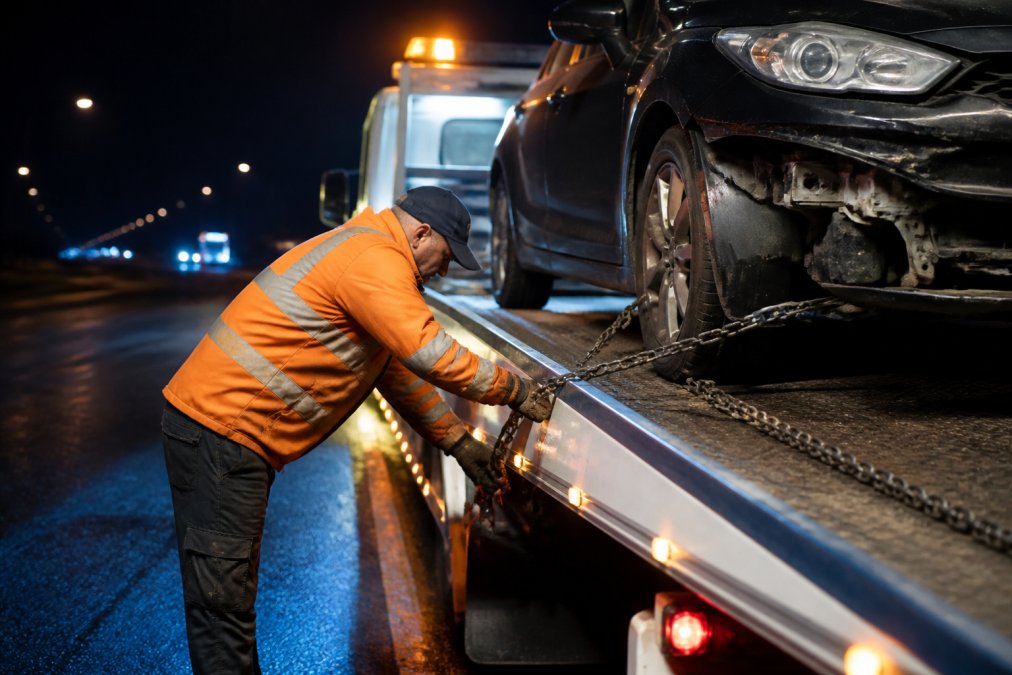
Towing and vehicle recovery coordination
Once the initial call is complete, the dispatch system alerts the nearest available tow truck. In metropolitan areas, response times for towing can vary. In regional areas, response may take longer depending on distance.
The tow truck operator arrives with the right equipment for your vehicle type and damage level. They secure the vehicle safely and communicate with you about destination. During transport, you receive updates on your vehicle's location and arrival time.
Mobile mechanic and roadside diagnostics
Not every accident requires a tow truck. A mobile mechanic can assess damage on-site and determine whether the vehicle is safe to drive or needs recovery. This saves time and money when damage is minor.
Mobile diagnostics give you a realistic assessment of what you're dealing with, crucial information for your insurance claim and repair decisions.
Post-Accident Vehicle Hire Car Entitlement and Arrangements
One of the most frustrating aspects of vehicle accidents is losing access to transport while repairs happen. A hire car solves this problem.
Many comprehensive car insurance policies include hire car cover, though entitlements vary (asic.gov.au). Check your policy documents to understand what you're entitled to.
If your insurer covers hire cars, you typically arrange one through their approved provider, a process that can take 24-48 hours. If you need a hire car immediately, independent accident assistance services arrange them within hours without waiting for insurance approval. Your insurer reimburses the cost as part of your claim settlement.
Hire car companies typically provide vehicles in the same class as your damaged vehicle. The rental period is usually covered until your vehicle is repaired and ready for collection.
Coverage Areas and Regional Response Times
24-hour emergency vehicle accident assistance is only valuable if it's available where you need it. Accident Assist Line operates across Victoria, New South Wales, Queensland, and the ACT, with response capabilities in metropolitan and regional areas.
In major metropolitan areas (Melbourne, Sydney, Brisbane, Canberra), response times for towing can vary. Regional areas have longer response times depending on distance to the nearest tow truck operator.
Coverage extends beyond towing to roadside assistance for battery replacement, flat tyre changes, lockout services, and fuel delivery. These services often resolve issues on-site without requiring towing.
Before using a service, confirm that your specific location is covered. When you call, the operator can immediately tell you response times for your location and what options are available.
Why Independent Accident Support Differs From Insurance-Led Recovery
Insurance companies are primarily focused on managing financial liability. Their investigation determines fault, claim value, and payment amount. This is essential for legal protection, but it's not optimized for speed. Investigations take time, and decisions about liability sometimes take weeks.
Independent accident support services focus on logistics and convenience. They're not determining fault or managing financial claims, they're organizing the fastest possible recovery and repair. They operate outside the insurance claim process, allowing them to act immediately without waiting for investigations or liability determinations.
This creates a practical advantage: you get immediate help while your insurance claim proceeds separately. Your vehicle is recovered and repairs are underway before your insurer finishes their initial investigation.
Another key difference is communication. Insurance claims involve formal documentation. Independent services prioritize direct conversation with a real person who can make decisions on the spot, reducing frustration and speeding up problem-solving.
Conclusion
Vehicle accidents create immediate pressure: your vehicle is damaged, you may be injured, and you're without transport. 24-hour emergency vehicle accident assistance eliminates the delay between accident and recovery. At Accident Assist Line, we provide a callback within 30 seconds, coordinate towing and repairs immediately, and arrange hire cars so you're not stranded while repairs happen. We operate 24/7 across Victoria, New South Wales, Queensland, and the ACT, meaning help is always available, regardless of when your accident occurs. Get started with Accident Assist Line and get back on the road fast.
Frequently Asked Questions
Q: What should I do immediately after a vehicle accident?
A: Move to safety if possible, turn on hazard lights, and check for injuries. Call emergency services (000) if anyone is hurt. Then contact your breakdown recovery or accident assistance service to arrange towing and vehicle recovery. Collect details from the other driver, take photos of the scene and damage, and document witness information. Avoid admitting fault at the scene. Notify your insurance company, but an independent accident support service can handle coordination while you focus on safety and next steps.
Q: Is 24-hour emergency vehicle accident assistance worth it if I already have insurance?
A: Yes. Insurance handles claims, but accident management handles logistics. A 24/7 emergency service arranges immediate towing, coordinates repairs, and organises a hire car without waiting for insurance approval. You avoid delays, paperwork bottlenecks, and the stress of managing roadside recovery yourself. Many drivers use both: insurance for claim settlement and independent accident support for immediate incident response and vehicle recovery.
Q: How does post-accident vehicle hire car entitlement work?
A: After an accident, you may be entitled to a replacement vehicle while yours is being repaired. An accident assistance service can arrange this immediately, often within hours. Your entitlement depends on your insurance policy and the accident circumstances. An independent accident management provider coordinates hire car booking directly, bypassing insurance approval delays. They ensure you have transport while your vehicle is in recovery and repair, keeping your life on track during the incident.
Q: What is the difference between roadside assistance and accident management?
A: Roadside assistance covers breakdowns, flat tyres, lockouts, and battery replacement. Accident management is specialised support after a collision: towing, damage assessment, repair coordination, and hire car arrangements. Emergency vehicle accident assistance combines both but focuses on post-accident incident response. It covers vehicle recovery, mobile mechanic diagnostics, and liaison with repair shops, ensuring you're not stranded and your vehicle gets back on the road fast.
Q: Will using an independent accident support service affect my insurance claim?
A: No. An independent accident management service works alongside your insurance, not instead of it. You still notify your insurer and proceed with your claim. The accident support service handles logistics, towing, repairs coordination, hire car, while your insurer handles claim settlement. This separation actually protects you: you get unbiased guidance on repairs and vehicle recovery, free from insurance company pressure, and faster incident response than waiting for insurance-led processes.
Q: Can emergency accident assistance reach me in regional areas?
A: Coverage depends on the service's operating footprint. Services operating across Victoria, New South Wales, Queensland, and the ACT can typically reach regional areas within those states, though response times vary by location and time of day. Ask your provider about specific coverage for your region before an incident occurs. A 24/7 service with a dedicated dispatch network can often reach regional locations faster than general roadside assistance, as they specialise in immediate vehicle recovery rather than standard breakdown calls.
Q: What happens if I call for emergency vehicle accident assistance at 2 AM?
A: A genuine 24/7 service answers immediately with a real person, not an automated system. They assess your situation, confirm your location and safety, and dispatch a tow truck and mobile mechanic within their response time window. You receive a callback within seconds (not hours), and a dedicated coordinator manages your case through recovery, repair, and hire car arrangement. True 24-hour support means you're never left waiting, even during late-night or early-morning incidents when you're most vulnerable.
This article was written using GrandRanker